MAIN MENU

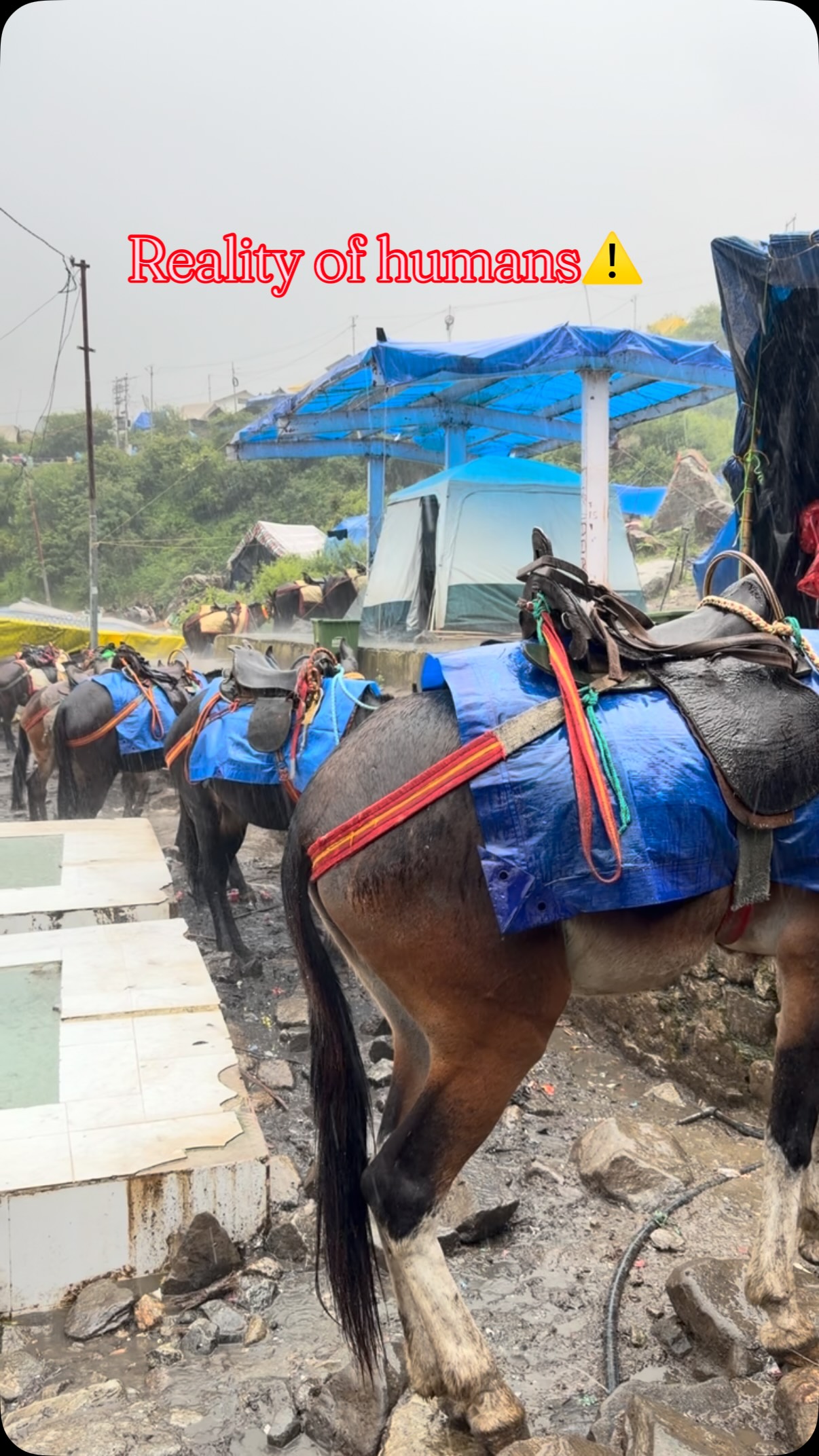
Kedarnath reel showing equines in heavy rain points to a recurring working-animal welfare problem
A June 2026 Instagram reel shows saddled equines standing in heavy rain at what the creator identifies as Kedarnath and condemns riders for leaving them exposed. The clip cannot establish individual responsibility or harm, but court records and government rules show that welfare of horses and mules on pilgrimage routes is a recurring regulatory issue, making shelter, rest and weather-response safeguards the larger question.
An Instagram reel posted on 26 June 2026 by Coco (@_kiki_kirti__coco) shows saddled equines standing on a wet pilgrimage route during heavy rain. In the accompanying Hindi commentary, the creator says the scene is at Kedarnath, says riders had dismounted because of the rain and left the animals exposed, and calls for this kind of animal-assisted pilgrimage to be banned.
The video is direct evidence of the scene it records and of the creator’s criticism. It does not, by itself, establish who owned or was responsible for each animal, how long they remained there, whether any particular animal became ill or died, or whether every rider had personally abandoned an animal. Those stronger claims therefore remain unproven from the reel alone.
The wider issue predates this reel
The underlying public-interest issue is not simply that animals were seen in rain. Horses and mules are working animals on the Kedarnath and other Himalayan pilgrimage routes, carrying pilgrims and goods in difficult terrain, and their treatment has been the subject of government rules and court scrutiny for years.
In August 2023, the Uttarakhand High Court recorded state data showing 213 equine deaths during the comparable first 95 days of the 2022 Kedarnath yatra and 114 in 2023. The state also reported thousands of health checks and treatments, hundreds of animals declared unfit, penalties and FIRs, a Mule Task Force, water troughs, veterinary facilities and restrictions on deployment between sunset and sunrise. The court nevertheless addressed allegations of overloading and cruelty and directed authorities to enforce rest and welfare measures.
The issue remained active nationally. In August 2025, the Union Department of Animal Husbandry and Dairying issued guidelines for working equines on religious pilgrimage routes, including compulsory registration and tagging, health certification and disease testing, and acclimatisation requirements. Uttarakhand’s Animal Husbandry Department then issued a specific 2026 SOP for equines operating on the Kedarnath, Yamunotri, Hemkund Sahib and Adi Kailash routes.
What the reel adds
The reel should therefore be read as an incident-level observation within a documented, recurring welfare and regulatory problem—not as proof that the entire system failed in this particular moment. Its significance is that the state already recognises these animals as a population requiring specific health, rest, monitoring and enforcement safeguards. A visibly exposed group of working equines during severe weather raises a legitimate question about how those safeguards operate on the ground when conditions deteriorate.
The creator’s demand for a ban is a normative position, not a fact established by the footage. The narrower evidence-supported conclusion is that working-equine welfare on pilgrimage routes is an established governance responsibility, and scenes such as this warrant scrutiny of shelter, supervision, rest and weather-response arrangements rather than assumptions about individual culpability.
Evidence boundary
IndiaFiles could verify the reel’s publication, caption and spoken commentary and could independently establish the longer-running regulatory and judicial concern over equine welfare on pilgrimage routes. The available evidence does not independently establish the precise filming date, the identity of the animals’ handlers or riders, the duration of exposure, or an injury or death caused by this rain episode.
