MAIN MENU

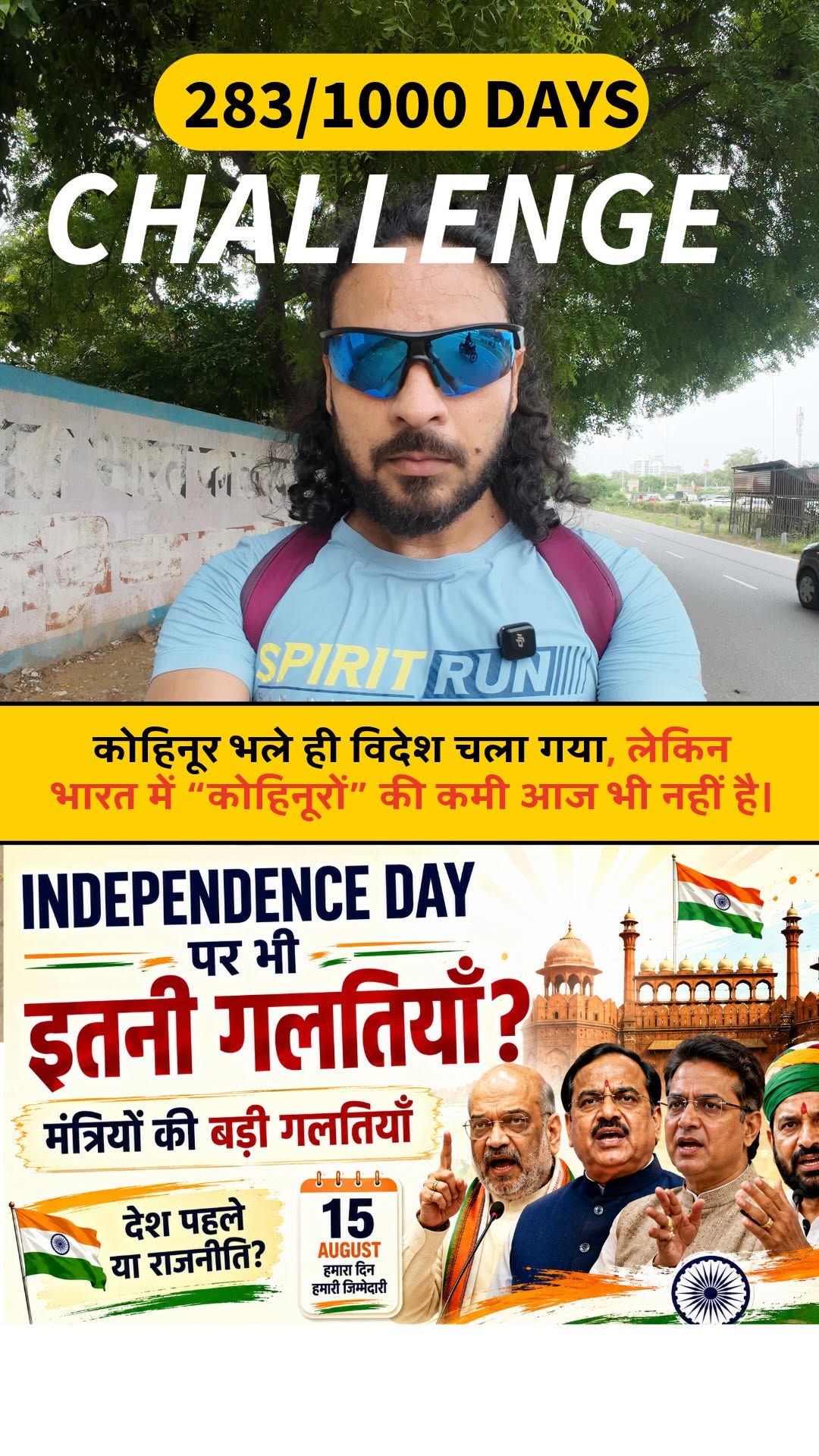
Koh-i-Noor was surrendered after Britain annexed Punjab; its return remains a live restitution dispute
An @rawfit_adi reel uses the Koh-i-Noor as a metaphor for India’s continuing “Kohinoors.” The historical premise is more consequential than that caption: the 1849 Treaty of Lahore required Maharaja Duleep Singh to surrender the diamond after British conquest and annexation of Punjab, alongside the loss of sovereignty and state property. Calls for return remain active, but this record does not adjudicate present-day legal title or which claimant has the strongest restitution claim.
The finding
A verified Instagram reel by @rawfit_adi says, in Hindi, that although the Koh-i-Noor went abroad, India still has no shortage of “Kohinoors.” The second half is metaphorical commentary, not a factual count. The historically important part is the first: the diamond did not simply “go abroad.” Its transfer to the British Crown was formalised after British military victory and the annexation of Punjab in 1849.
From conquest to treaty surrender
The Victoria and Albert Museum records that the ten-year-old Maharaja Duleep Singh surrendered the Koh-i-Noor under the last Treaty of Lahore in 1849 and that the East India Company presented it to Queen Victoria in 1850. The treaty settlement followed the Second Anglo-Sikh War and British annexation of Punjab. The same settlement ended Duleep Singh’s sovereignty and transferred property to the East India Company; the diamond’s surrender was therefore part of a conquest-and-annexation settlement, not an ordinary voluntary gift between equal parties.
That distinction matters because legal form and historical voluntariness are different questions. A treaty clause can document how possession was transferred without making the surrounding power relationship neutral. Describing the diamond only as “presented” or as having “gone abroad” omits the coercive colonial setting; describing present-day ownership as conclusively “stolen property,” however, would go beyond what this record establishes as a legal finding.
Why the dispute is still current
The Koh-i-Noor remains part of the British Crown Jewels. UK Parliament’s petitions service has repeatedly rejected return petitions on institutional grounds, saying a decision about the diamond would be a matter for the Royal Family rather than the UK Government or Parliament. India has long sought its return, and the issue remains politically live: in April 2026, Reuters reported that New York City Mayor Zohran Mamdani publicly encouraged King Charles to return the diamond to India.
The Government of India’s own public position has also treated return as an unresolved matter. A 2016 Ministry of Culture clarification said India would continue efforts to bring the Koh-i-Noor back through an amicable process.
What this does — and does not — establish
The evidence supports a bounded conclusion: the 1849 surrender occurred after conquest and annexation, making colonial coercion essential context for any account of the diamond’s acquisition. It also supports describing restitution as a continuing political and institutional dispute.
This record does not decide present-day legal title, determine which modern state or community has the strongest claim, or establish that a particular restitution remedy is legally required. The diamond passed through several rulers and polities before 1849, and its earlier history contains contested points. Those complexities do not erase the documented circumstances of the 1849 transfer, but they do limit any simple legal conclusion about the proper present-day recipient.
Why it matters
The Koh-i-Noor endures as a colonial symbol because the dispute is not only about where a gemstone is displayed. It is also about how conquest-era acquisitions are described: whether institutions distinguish formal transfer documents from free consent, disclose the power conditions under which possession changed, and decide whether historical coercion creates a case for present-day restitution. The reel’s metaphor cannot answer those questions, but its historical premise points to them.
Source limitation
Fresh Instagram metadata confirms the verified creator, caption, original audio and 114-second duration. A fresh automated transcript of the spoken audio could not be obtained during this reprocessing, so IndiaFiles does not attribute additional spoken propositions beyond the verified caption.
Sources
- Instagram — @rawfit_adi reel: initiating artifact and caption.
- Victoria and Albert Museum — Henry Cole and the Koh-i-Noor Diamond: surrender under the 1849 Treaty of Lahore and 1850 presentation to Queen Victoria.
- UK Parliament petitions — Return the Koh-i-Noor diamond to India: 2024 institutional explanation that return would be a matter for the Royal Family.
- Reuters — renewed return call, 29 April 2026: current political salience and historical summary.
- Press Information Bureau — 2016 Kohinoor clarification: Government of India position on amicable efforts to seek return.
- The Indian Express — historical overview: independent context on the diamond’s route to Britain and the ownership dispute.
