MAIN MENU

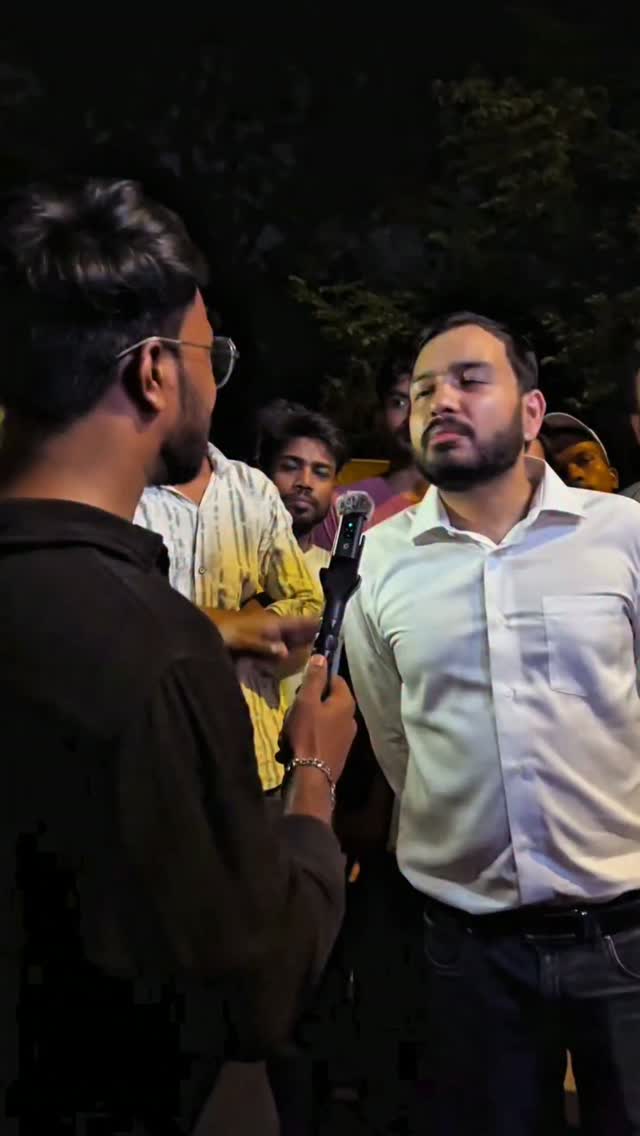
Jayesh Prakash’s “students first” stance captured a wider fight over protest policing and media framing
In a 23 July reel from the Jantar Mantar protests, educator Jayesh Prakash says his politics are whatever protects his students, criticises national-media framing and alleges violence against protesters. Independent reporting confirms a major student mobilisation, contested police action and a public dispute over unproven foreign-funding claims; later judicial scrutiny covers allegations against both police and protesters. The evidence supports a wider story about educator solidarity, protest accountability and competing media narratives, but not every allegation in the reel.
In a 23 July 2026 Instagram reel from the Jantar Mantar student protest, educator Jayesh Prakash says his political position is whatever protects his students. The clip is not simply a declaration of political neutrality: he criticises national television coverage of the agitation, argues that the dispute is about students rather than a political party, and says students who were hit by police or other attackers deserve accountability.
What the reel actually says
Prakash tells the interviewer that he has little expectation from national television media and praises some social-media reporters for their protest coverage. He objects to narratives portraying the protesters through allegations of Chinese funding, terrorism or violent intent. He says he has been raising NEET-related issues for two years, including through the Supreme Court and media, and argues that students took to the streets because accumulated anger over the education system had reached a breaking point.
His strongest claims require separation. The reel directly establishes what Prakash said and the position he took; it does not by itself prove that particular police officers or other people unlawfully assaulted particular students, or that particular media outlets knowingly spread falsehoods.
The protest and the policing dispute were real; responsibility remains under scrutiny
Independent reporting places the reel in a major July 2026 mobilisation centred on the NEET-UG paper-leak controversy and wider grievances about examinations, admissions and recruitment. The July 20 march toward Parliament produced clashes and police action. Later reporting records competing allegations: protesters accused police of excessive force, while authorities also alleged violence against security personnel.
That distinction matters. By September, the Supreme Court was supervising a high-powered committee examining allegations of police excesses as well as alleged violence against security personnel. The existence of that inquiry confirms that protest policing became a serious institutional issue; it is not a final finding that either side committed every act alleged.
Foreign-funding claims became part of the political and media battle
Prakash’s complaint about the protest being framed through foreign links also had a factual context beyond the reel. A petition filed in the Delhi High Court sought an NIA investigation into alleged foreign funding and violence connected to the July 20 march. The High Court declined to entertain the request for an NIA probe. Separately, when the Ministry of External Affairs was asked about alleged foreign funding, its spokesperson said the ministry had no information to share on the claim.
This does not establish that every report or political statement about foreign links was false, nor does it prove a coordinated media campaign. It does establish that unproven foreign-funding allegations became part of the public framing of a protest whose documented origins included the NEET paper leak and broader student grievances.
Educators’ solidarity became part of the protest itself
Prakash’s intervention was not isolated from the education sector. Physics Wallah co-founder Alakh Pandey also appeared at Jantar Mantar on 23 July, urged the government to talk to students, criticised descriptions of protesters as foreign-backed or terrorists, and described the agitation as broader than NEET alone. Reporting also documented other Physics Wallah teachers appearing at the protest.
That supports a bounded pattern: prominent educators associated with a large coaching platform publicly aligned themselves with student grievances during the protest. It does not establish that all teachers, all coaching institutions or Physics Wallah as a corporate entity held one political position.
Why the reel matters
The durable public-interest issue is not Prakash’s personal party preference. His “students first” formulation captures a conflict over who gets to define a student protest: the protesters and educators describing an examination-integrity and accountability crisis, or political and media narratives emphasising disorder, affiliations and alleged foreign influence.
The evidence supports treating the July agitation as a genuine student and public-accountability event whose policing and competing narratives warranted scrutiny. It does not establish Prakash’s broader dismissal of national media as a factual description of every outlet, prove a coordinated propaganda mechanism, or resolve individual allegations of violence. His reel is most useful as a primary record of educator solidarity and of the contested information environment surrounding the protest.
