MAIN MENU

Tag Student Protests
Student-led protests and demonstrations.
An Instagram critique accuses Jamia professors of enforcing administrative power. The October 2026 confrontation is real: staff approached hunger-striking students, the university moved classes online, and students still sought union elections. The record reveals a dispute over representation, campus order and the limits of faculty authority—not proof of every motive alleged in the reel.
ENTITIES : Jamia Millia Islamia
GEOGRPAHY : Delhi
TYPE : Analysis
PERIOD : 2026
UPDATED : 25 Oct 26 / 12:06 pm
No comments on Jamia professors, student protests and the struggle over union elections: When campus order collides with representation
After Delhi Police sought a ₹10,000 peace bond and the High Court allowed proceedings to continue, Neha Bora challenged whose peace the measure protects. Slogans against her outside a police station sharpen the question of equal treatment, but the legal notice and the final case remain distinct.
GEOGRPAHY : Delhi
TYPE : Analysis
EVIDENCE : Context verified
PERIOD : 2026
UPDATED : 25 Oct 26 / 11:55 pm
In a reel linked to the 10 October 2026 Delhi protests, a woman described as being from Manipur questions why police invoked Section 163 when she says she stood alone. Her challenge connects restrictions on peaceful dissent with the long-running violence and unfinished accountability in Manipur.
EVIDENCE : Primary Source
UPDATED : 19 Oct 26 / 7:20 pm
In 2005, students protested against Prime Minister Manmohan Singh at JNU. Contemporary reports confirm the black flags, while later testimony supports his request for leniency. The incident shows both the rights of protesters and the limits of a viral retelling.
GEOGRPAHY : Delhi
TYPE : Protest
EVIDENCE : Context verified
PERIOD : 2005
UPDATED : 19 Oct 26 / 4:29 pm
A woman at Delhi’s 16 October 2026 Tiranga March recalled joining anti-corruption protests before the BJP came to power and questioned today’s detentions. Records show police crackdowns under both governments, while the 2026 arrests and women’s justice protests raise fresh questions about necessary limits on peaceful dissent.
In a 21 July reel, a speaker at Delhi’s Jantar Mantar condemned police force against demonstrators and questioned India’s democratic accountability. The remarks followed reported clashes over NEET exam irregularities and raise a concrete question: when do public-order controls cross into unjust suppression of peaceful dissent?
ENTITIES : Delhi Police
GEOGRPAHY : Delhi
TYPE : Protest
EVIDENCE : Primary Source
PERIOD : 2026
UPDATED : 19 Oct 26 / 2:59 pm
Neha Bora and Abhijeet Dipke were detained during Delhi’s 16 October 2026 Tricolour march. Police cited crowd restrictions and public-order risks; the circumstances of Dipke’s immediate detention raise a sharper question about when prevention becomes excessive restraint on peaceful dissent.
TAGS : Anti-national label, CJP Protest, Police Accountability, Right to Peaceful Protest, Student Protests
ENTITIES : Abhijeet Dipke, Cockroach Janta Party (CJP), Delhi Police, Election Commission of India, Narendra Modi, Neha Bora
GEOGRPAHY : Delhi
EVIDENCE : Partially Verified
PERIOD : 2026
UPDATED : 19 Oct 26 / 2:44 am
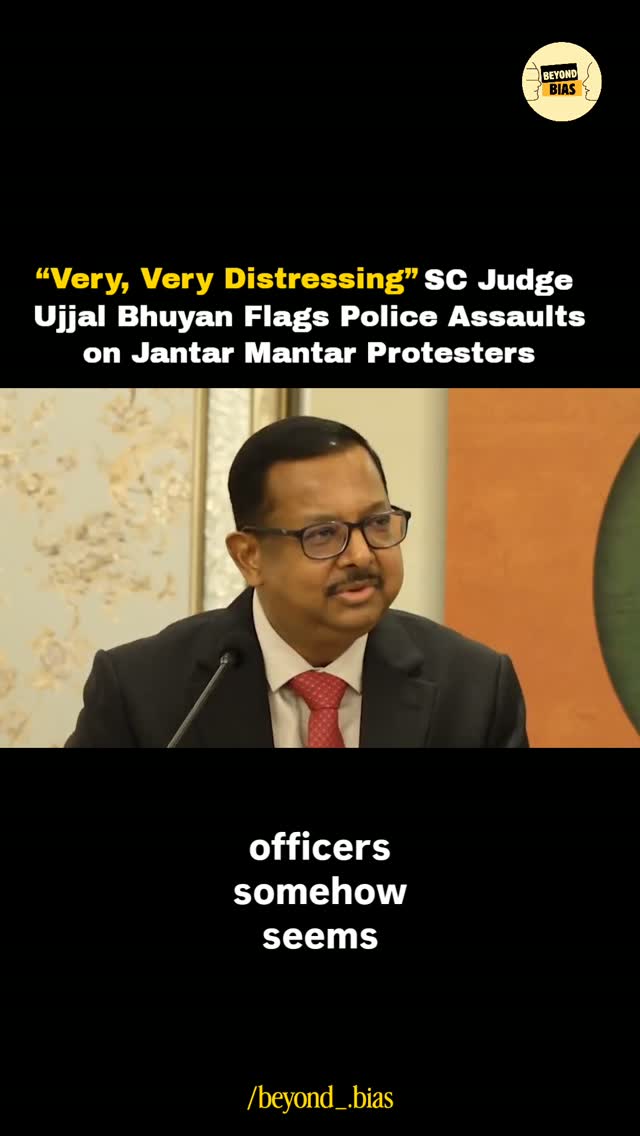
A Beyond Bias reel records Supreme Court Justice Ujjal Bhuyan calling police assaults on protesters “very, very distressing” and warning that professional detachment appears to be disappearing. Reporting corroborates his remarks, which place the July Jantar Mantar controversy inside a two-decade police-reform debate over professional independence, accountability and rights; they do not by themselves establish…
Muskan’s 20 July reel shows chaotic scenes from the CJP-led Delhi protest and urges students to remember how they were treated. Official and independent evidence confirms the underlying NEET-UG 2026 paper leak, violence and injuries during the Parliament march, and police use of significant crowd-control force that later drew judicial scrutiny; the reel itself does…