MAIN MENU

Old campaign slogans are not outcome measures: inflation, Ganga and Make in India show a mixed 2026 record
Rathee Thought correctly recalls Modi’s 2014 inflation slogan and real Namami Gange and Make in India branding, but it does not establish that these themes disappeared from 2026 election messaging. Current evidence is mixed: consumer inflation remained material, Namami Gange showed both unfinished work and measured water-quality improvement, and manufacturing recorded strong electronics gains while its economy-wide share remained below the longstanding 25% ambition. Accountability is better tested against outcomes than poster visibility.
Finding: The Rathee Thought reel correctly recalls Narendra Modi-era campaign and policy branding, but it does not establish that those themes have disappeared from election messaging. More importantly, whether an old slogan still appears on posters is a weak test of policy performance: inflation, Ganga rejuvenation and manufacturing each require different outcome measures, and the current record is mixed.
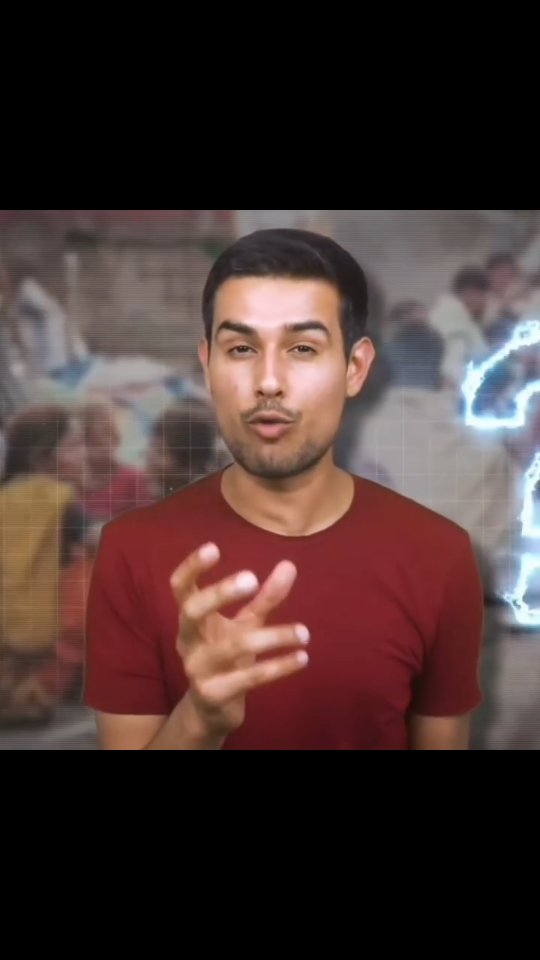
What the reel argues
The 47.3-second reel was posted on 24 April 2026 by the unverified Instagram account Rathee Thought (@dhruv_sir07). It contrasts the 2014 slogan “Bahut hui mehngai ki maar, abki baar Modi sarkar” with present-day political messaging and asks why votes are not being sought on inflation control, Namami Gange or Make in India. It then rapidly lists other schemes, slogans and policy themes as examples of political branding it says is no longer central to election appeals.
The reel is political commentary. Its literal historical references can be checked; its broader claim about what is or is not appearing across current campaigns would require a systematic review of campaign material that the reel does not provide.
The historical references are real
- The inflation slogan was used in Narendra Modi’s 2014 election campaign.
- Make in India was launched in September 2014 and remains an active government manufacturing-policy frame.
- Namami Gange was approved as a major Ganga-cleaning and rejuvenation programme in 2015, following the government’s 2014-15 launch of the programme.
- Modi’s political association with the Ganga and Varanasi is also well documented.
These facts establish that the reel is drawing on genuine earlier messaging. They do not establish that the programmes failed, succeeded, disappeared from politics or were abandoned.
Inflation: one headline rate does not settle the affordability question
By July 2026, India’s all-India consumer-price inflation was 4.45% year on year, while food-and-beverage inflation was 5.24%. Wholesale-price inflation was much higher at 9.78%. Those measures answer different questions, and a lower or higher annual inflation rate is not the same thing as the cumulative price level households face over many years.
The reel is therefore justified in treating inflation as a legitimate accountability subject, but its question about why a slogan is not being reused cannot substitute for an assessment of prices, wages, household budgets and the specific categories affecting citizens.
Namami Gange: the programme is active, incomplete and shows measured improvement
Official records show that Namami Gange had not disappeared by 2026. As of February 2026, 524 projects had been sanctioned and 355 completed. Central Pollution Control Board comparisons cited by the government reported improvement in the main stem of the Ganga between 2018 and 2025; 2025 median data also showed pH and dissolved oxygen meeting bathing criteria at all monitored main-stem locations.
That is evidence of continuing work and some measured environmental improvement, not proof that the river-cleaning objective is complete. A substantial share of sanctioned projects remained unfinished, and individual water-quality indicators and locations can differ. The defensible assessment is progress with unfinished work, not a binary success-or-failure verdict based on campaign visibility.
Make in India: sectoral gains coexist with an unfinished economy-wide ambition
Manufacturing also presents a mixed record. Revised national-accounts data put manufacturing at 14.8% of total GVA in 2025-26, while government policy continues to describe a long-term ambition of raising manufacturing’s share toward 25%. At the same time, electronics is a clear area of expansion: official 2026 data say electronics production rose from about ₹1.9 lakh crore in 2014-15 to about ₹12 lakh crore in 2024-25, with large increases in mobile-phone production and exports.
Those gains show why the disappearance of a logo from a particular poster would not demonstrate that the policy frame had ended. They also show why success in one sector should not be treated as proof that the broader manufacturing transformation is complete.
What the reel does not establish
IndiaFiles has not established that inflation, Namami Gange, Make in India or the other items rapidly listed in the reel are absent from all 2026 BJP or Narendra Modi campaign material. Nor does this record assess every additional scheme or slogan named in the montage. The narrower, reproducible conclusion is that the reel accurately invokes several real older political themes but uses their claimed decline in campaign visibility as a proxy for performance without measuring the underlying outcomes.
Why it matters
Campaign slogans are useful archival evidence of what political actors chose to emphasise at a particular time, but they are poor performance indicators by themselves. Public accountability is stronger when a promise or programme is matched to the right measure: consumer prices and household purchasing power for inflation, pollution and infrastructure outcomes for river rejuvenation, and output, productivity, jobs, value addition and manufacturing share for industrial policy.
The 2026 evidence does not support either a simple claim that these programmes vanished or a simple claim that their objectives were fully achieved. It supports a more useful conclusion: political branding can change while policies continue, and the public-interest test is what measurable outcomes followed.
