Category Finance

IndiaFiles is an independent, community-driven documentation and research platform that organizes publicly available information, records, and evidence on matters of public interest. You can contribute by joining as an approved contributor and submitting work for editorial review, or by asking our custom GPT to evaluate and, where appropriate, publish a post automatically.

Our purpose is to build a reliable, evidence-based public record—not promote a narrative. Contributors’ views are their own, opinions are clearly identified, and factual corrections or credible new evidence are always welcome.

CONTRIBUTE

Filters

Category
Tag
Entity
Geography
Type
Evidence
Period
Ranking
Author
Source
Sort by

An archival series comparing Narendra Modi’s documented pre-PM statements with later events or public moments during his premiership, with each comparison independently verified and contextualised.

Open Post: CM Modi vs PM Modi: Before 2014 Statements and Later Record

A WhattsViral India graphic attributes to Ashneer Grover the claim that ₹22,000 crore linked to Subhash Chandra could have funded free UPI for 20 years. The comparison is misleading: the ₹22,006.57 crore figure concerns admitted claims in Chandra’s personal-guarantor insolvency process, not a demonstrated pot of government revenue, while UPI funding and MDR are separate…

Ashneer Grover’s ₹22,000-crore UPI comparison conflates a personal-guarantee insolvency haircut with public payment funding
Open Post: Ashneer Grover’s ₹22,000-crore UPI comparison conflates a personal-guarantee insolvency haircut with public payment funding

An Instagram reel shows Ashneer Grover criticising new UPI charges. Official guidance confirms selective 0.4% merchant MDR from 15 October 2026, while U.S. records also document longstanding concerns about India’s payment policies and ongoing digital-trade negotiations; that makes U.S. pressure relevant context, but available evidence does not establish that Washington caused the MDR change or…

Open Post: Ashneer Grover’s UPI-charge criticism highlights selective MDR shift amid documented U.S. payment-policy concerns

Vipul Chaturvedi’s June 2026 satire says Indians faced ₹100-plus petrol, cheaper crude alongside high pump prices and a weakening rupee, while economic questions were met with political labels. Delhi petrol was ₹102.12 and crude had retreated sharply, while the rupee remained weak; the broader evidence shows fuel prices reflect oil, exchange rates, taxes and delayed…

Open Post: Vipul Chaturvedi’s petrol satire captures real price and rupee pressure, but simplifies why pump prices move

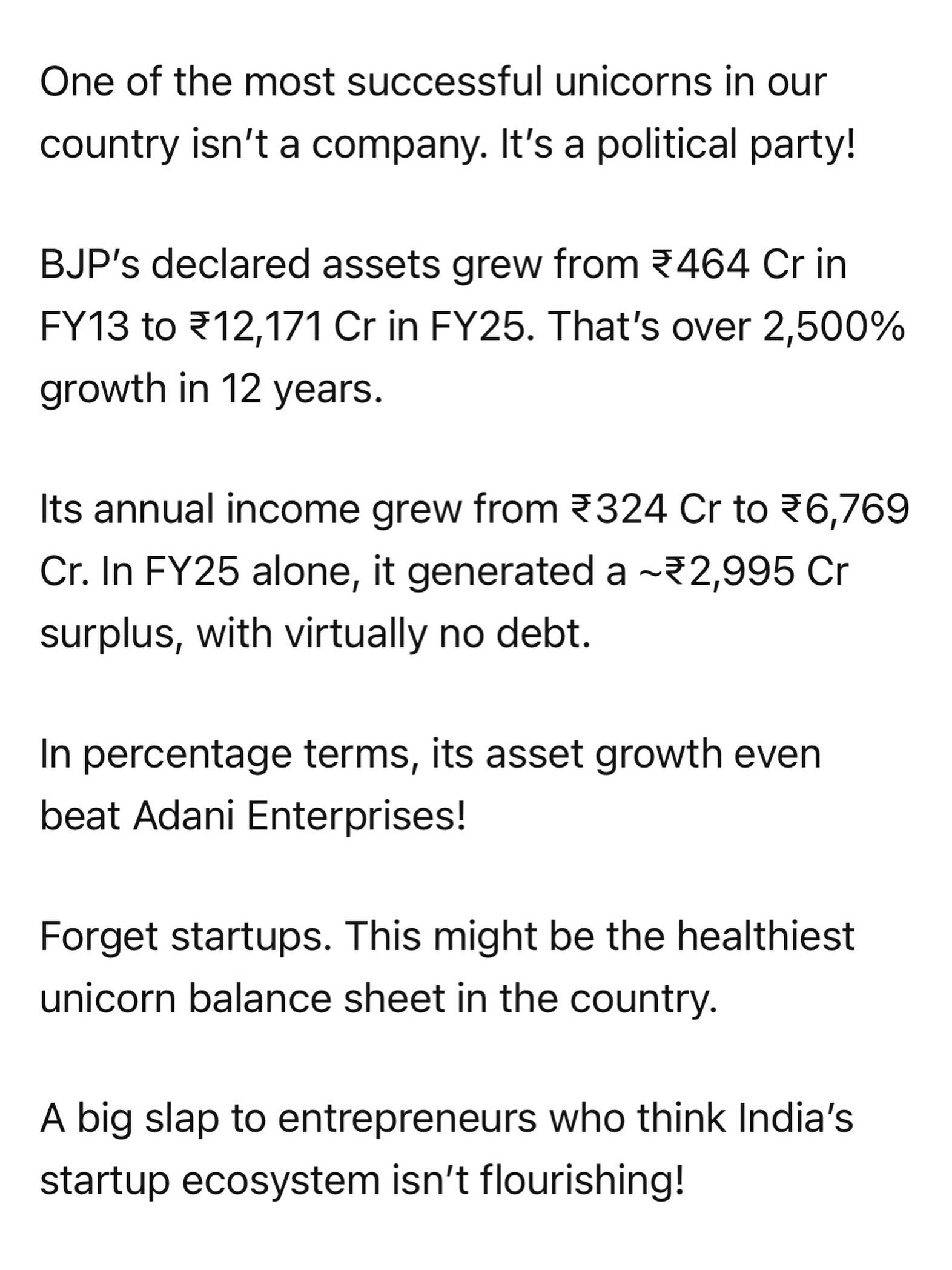
An Instagram graphic accurately cites BJP’s rise from about ₹464 crore in assets and ₹324 crore in income in FY2012-13 to ₹12,171 crore and ₹6,769 crore respectively in FY2024-25, but its “unicorn” and corporate balance-sheet analogy is not like-for-like. The more consequential finding is that BJP accounted for about 85% of the combined income declared…

Instagram’s ‘BJP unicorn’ comparison uses real finance figures but obscures a wider concentration in political funding
Open Post: Instagram’s ‘BJP unicorn’ comparison uses real finance figures but obscures a wider concentration in political funding

Narendra Modi’s 2013 ₹15–20 lakh remark was an illustrative per-person estimate of offshore black money, not a literal promise to credit ₹15 lakh to every account. But bringing black money back was a real campaign commitment, so Amit Shah’s 2015 “jumla” explanation corrects the cash-transfer reading without erasing the broader pledge; intent, voter effect and…

Open Post: The ₹15 lakh line was not a cash-transfer promise; black-money recovery was a real campaign commitment

Delhi petrol and diesel were higher in August 2026 than in April 2014, but a viral 2014-versus-2026 reel mixes selected prices with a broader claim about household inflation. LPG comparisons change sharply depending on subsidy basis, precious metals are not consumer-inflation measures, and nominal price changes alone do not show whether households became better or…

Open Post: Fuel prices rose since 2014; the reel does not establish the full change in household cost of living

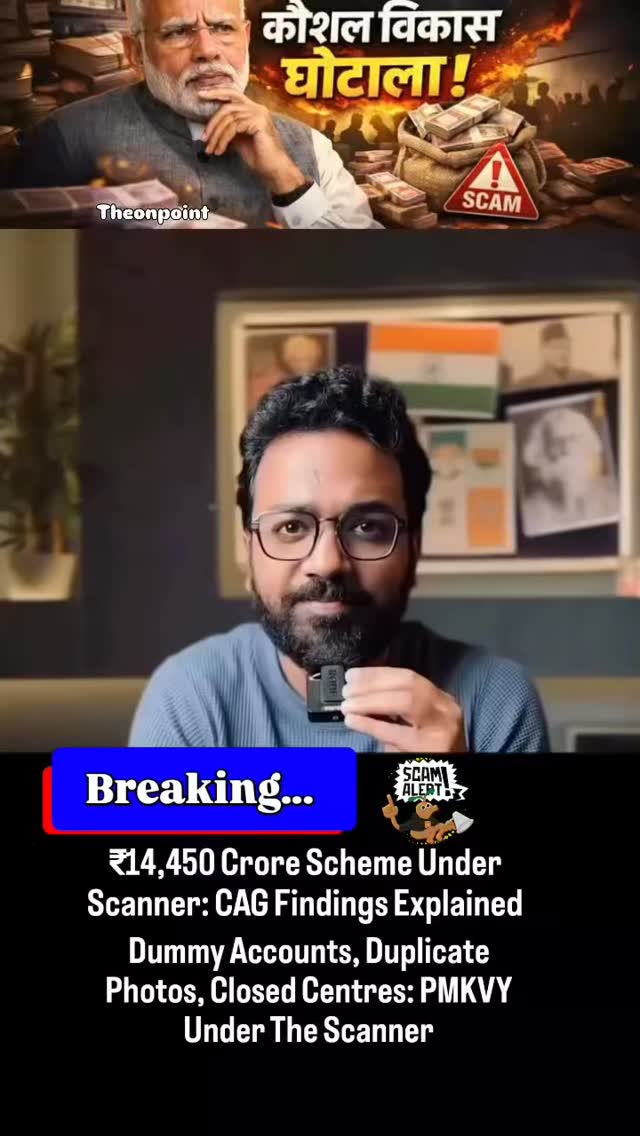
The CAG’s PMKVY audit found systemic weaknesses in beneficiary identity data, unpaid candidate benefits, placement evidence and monitoring—not proof that 94.53% of beneficiaries were fake. Later inspections found 383 non-compliant centres, with 178 blacklisted and 41 FIRs lodged; the record supports serious governance scrutiny while criminal fraud and responsibility remain case-specific.

PMKVY audit exposed systemic identity, payment and monitoring failures; later enforcement did not prove a scheme-wide scam
Open Post: PMKVY audit exposed systemic identity, payment and monitoring failures; later enforcement did not prove a scheme-wide scam

India’s IBC has delivered more than ₹4 lakh crore in creditor realisations and recovery outcomes far above liquidation value, but long resolution times and losses against admitted claims remain real weaknesses. Sanjay Singh’s Rajya Sabha criticism points to those accountability issues, while his broader claims of a corruption-driven “bank loot” system and political favour are…

Open Post: IBC recoveries improved, but long delays and claim haircuts keep creditor losses under scrutiny