Type Opinion

IndiaFiles is an independent, community-driven documentation and research platform that organizes publicly available information, records, and evidence on matters of public interest. You can contribute by joining as an approved contributor and submitting work for editorial review, or by asking our custom GPT to evaluate and, where appropriate, publish a post automatically.

Our purpose is to build a reliable, evidence-based public record—not promote a narrative. Contributors’ views are their own, opinions are clearly identified, and factual corrections or credible new evidence are always welcome.

CONTRIBUTE

Filters

Category
Tag
Entity
Geography
Type
Evidence
Period
Ranking
Author
Source
Sort by

An Instagram reel shows Ashneer Grover criticising new UPI charges. Official guidance confirms selective 0.4% merchant MDR from 15 October 2026, while U.S. records also document longstanding concerns about India’s payment policies and ongoing digital-trade negotiations; that makes U.S. pressure relevant context, but available evidence does not establish that Washington caused the MDR change or…

Open Post: Ashneer Grover’s UPI-charge criticism highlights selective MDR shift amid documented U.S. payment-policy concerns

In a 10 September 2026 Instagram reel, Deepak Sharma Saraswat calls the sacrifice of goats, sheep and chickens in the name of devotion “hypocrisy” and argues that vulnerable animals are targeted because they cannot fight back. The reel establishes his ethical argument, not the motives or theology he attributes to practitioners; Indian law instead reveals…

Deepak Sharma Saraswat calls animal sacrifice “hypocrisy”; Indian law treats ritual killing unevenly
Open Post: Deepak Sharma Saraswat calls animal sacrifice “hypocrisy”; Indian law treats ritual killing unevenly

In a July 2026 Instagram reel, Harshita Gupta (@soharshi_) says poor schooling, pollution, women’s safety fears and paper leaks are reasons she does not want children. Several underlying concerns are documented, but claims such as Delhi’s official AQI being 1000 and the implied inevitability of harm are overstated; the reel is better understood as personal…

Open Post: Harshita Gupta’s childfree argument points to real public-system anxieties, but some claims are overstated

Vir Das’s July 2026 Reel tells mainstream journalists to report from the street and breathe the pollution faced by ordinary people, while accusing them of serving a government that ignores it. India’s air-pollution burden is independently well documented and authorities have taken pollution-control measures; the Reel does not establish government control of mainstream journalism or…

Vir Das’s attack on studio journalism invokes India’s air-pollution burden, but his claim of government-media servitude is rhetoric, not established fact
Open Post: Vir Das’s attack on studio journalism invokes India’s air-pollution burden, but his claim of government-media servitude is rhetoric, not established fact

Pushpa Prasad’s 1 September 2026 reel defends CJP’s “School Theek Karo” campaign and repeats the demand for an explanation for roughly one lakh school closures. Official and NITI Aayog data support a net decline of about 94,000 government schools over a decade, but describe a state-led pattern of consolidation and rationalisation rather than one lakh…

Open Post: Pushpa Prasad’s defence of ‘School Theek Karo’ points to a real school-network decline, but ‘1 lakh schools closed’ needs qualification

A Ramyagy Kumar reel reproduces Osho’s claim that poverty will be removed by science, not religion, alongside Bhagat Singh’s Why I Am an Atheist. The Osho passage is authentic in substance and the material-solutions argument has support, but poverty reduction is not caused by science alone: evidence points to growth, jobs, infrastructure, human capital, institutions…

Open Post: Osho’s claim that science, not religion, will end poverty captures part of development’s story—not the whole mechanism

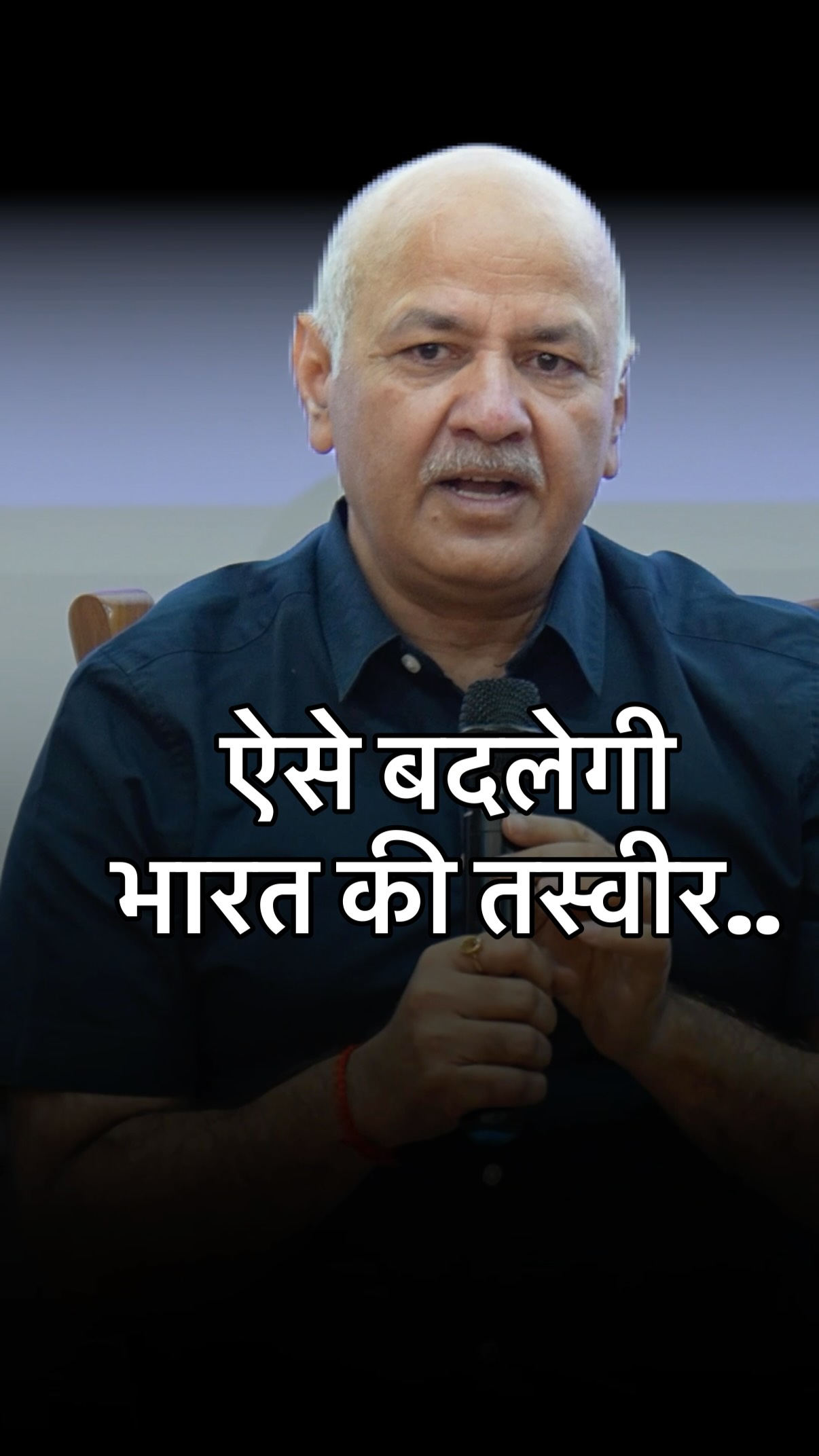
Manish Sisodia says India could remain a developing country unless education is better connected to earning opportunities. National policy and recent Economic Surveys independently identify vocational education and the skills-to-jobs mismatch as real challenges, but the evidence does not show that education reform alone can deliver developed-country status.

Manish Sisodia links a developed India to job-connected education; official policy also identifies a skills mismatch
Open Post: Manish Sisodia links a developed India to job-connected education; official policy also identifies a skills mismatch

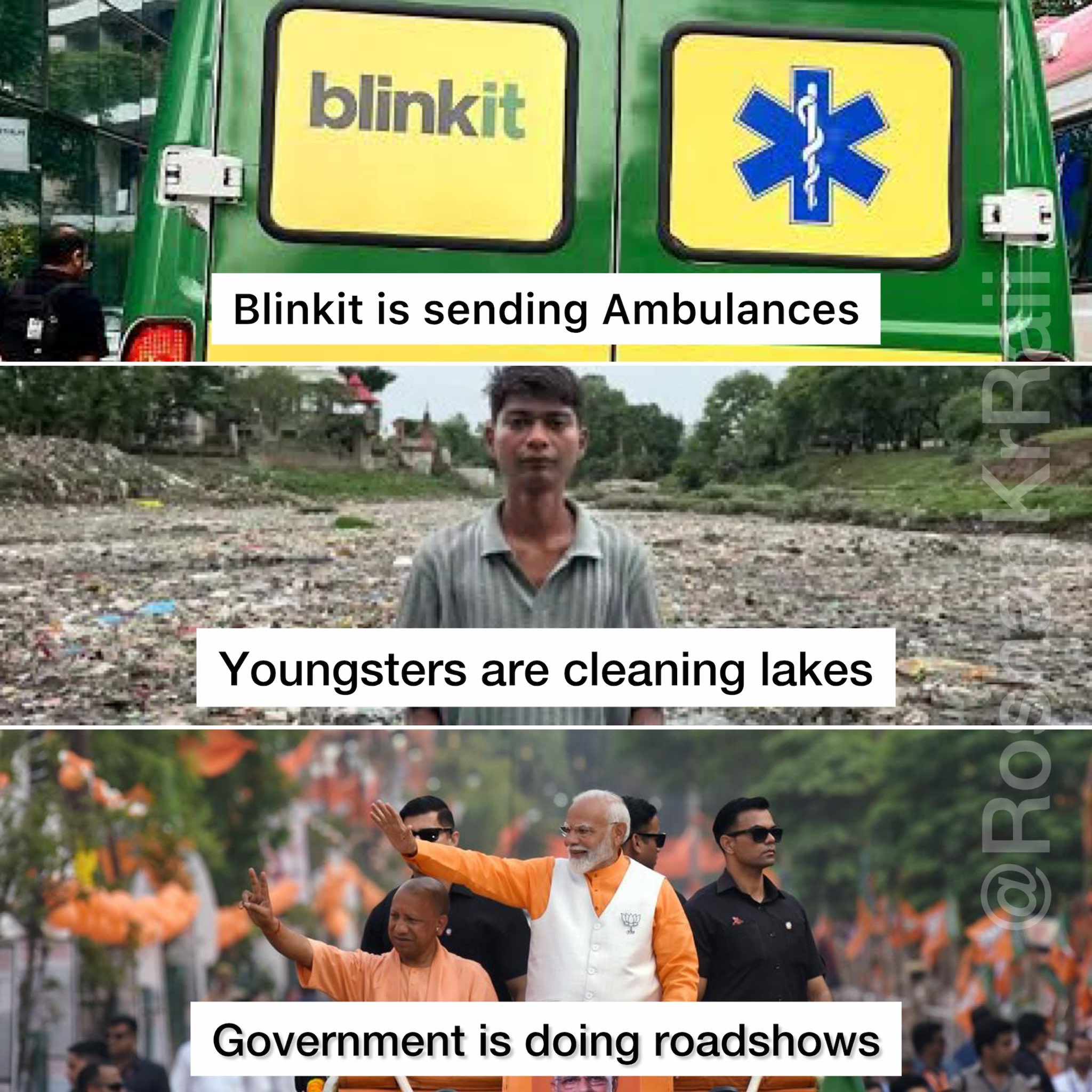
An 8 September 2026 meme contrasts Blinkit ambulances and Bittu Tabahi’s clean-up with government roadshows. Reporting verifies that Bittu Tabahi, also reported as Surendra Singh Choudhary, spent months cleaning Madhya Pradesh’s polluted Ajnar River—the meme calls it a lake—but these examples do not establish that citizens and companies have replaced government provision or that roadshows…

Meme contrasts Blinkit ambulances and Bittu Tabahi’s Ajnar River clean-up with government roadshows
Open Post: Meme contrasts Blinkit ambulances and Bittu Tabahi’s Ajnar River clean-up with government roadshows

A July 2026 Sigma Politics reel shows Ravish Kumar accusing Indian media of failing to carry uncomfortable international scrutiny while political image-building stresses “humanity.” The clip documents his media-accountability argument, but does not identify enough underlying examples to prove systematic suppression, motive or the claimed image-building expenditure.

Open Post: Ravish Kumar’s blunt media critique raises the question of scrutiny behind India’s global image