MAIN MENU

Mahim Khan’s Delhi Police criticism points to an unresolved Saket assault complaint by two journalists
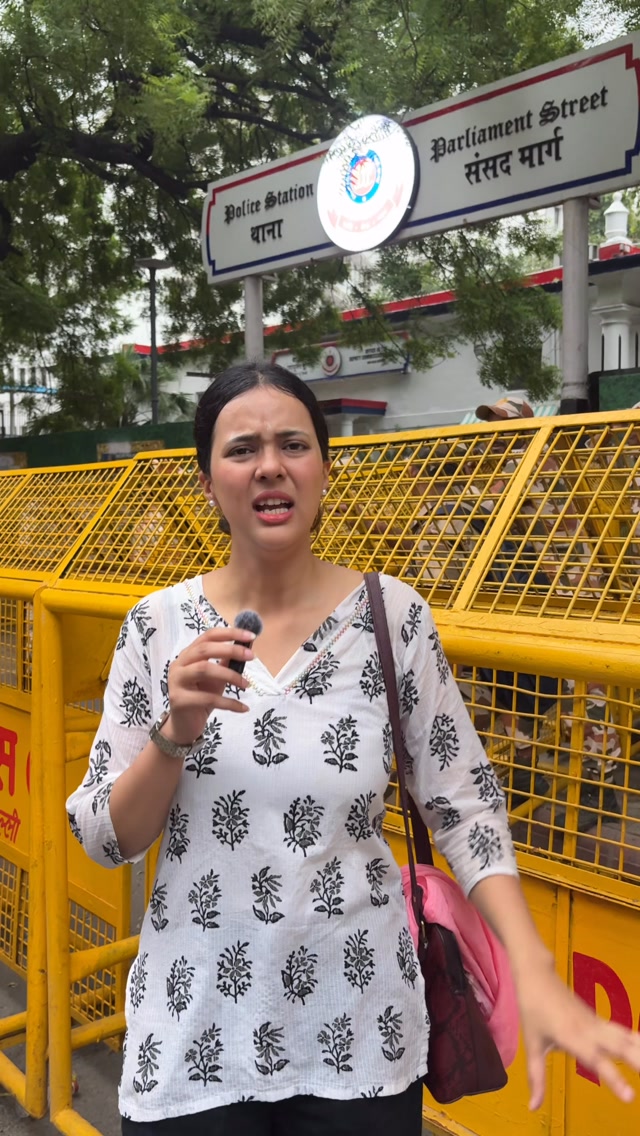
Mahim Khan’s reel outside Parliament Street Police Station criticises Delhi Police and cites the protest after journalists Shaheen Khan and Nafisa Khan alleged assault at Saket Police Station. The incident and conflicting accounts are documented, but Delhi Police denies assault and religious targeting; the broader issue is how an allegation against police can be independently tested when CCTV and station records may be crucial evidence.
In an Instagram reel posted on September 4, 2026, Mahim Khan speaks outside Parliament Street Police Station and sharply criticises Delhi Police. She says people seeking help should not expect prompt action, alleges that even obvious cases can require protests before an FIR is registered, and cites the previous night’s protest at Saket Police Station after two women journalists accused police personnel of beating them.
What the reel is referring to
The underlying incident is independently documented, but the most serious allegations remain disputed. Journalists Shaheen Khan and Nafisa Khan, associated with 4PM News Network, said they were detained on September 3 while covering the inauguration of a new wing at Max Smart Super Speciality Hospital in Saket, an event attended by Union Home Minister Amit Shah and Delhi Chief Minister Rekha Gupta. They alleged that police personnel assaulted them at Saket Police Station and that the treatment intensified after officers learned they were Muslim.
Delhi Police rejected that account. Police said the women had parked a scooter on a designated VVIP route, refused repeated directions to clear it, and were taken to the station for further enquiry. The force described allegations that they were assaulted for asking the Chief Minister questions as false, misleading and baseless.
What is established — and what is not
Multiple reports confirm the existence of the two sharply conflicting accounts, the journalists’ complaint, protests around the police station and calls from journalist organisations for an independent investigation. Videos circulated after the incident show the women describing injuries, but those images do not by themselves establish who caused the injuries or the alleged religious motive.
Mahim Khan’s broader claim that Delhi Police generally fails people who approach it is an opinion and generalisation that this single incident cannot establish. Her reel is more securely read as public criticism prompted by the Saket case, rather than proof of a system-wide rate of police inaction.
The core accountability issue
The public-interest issue is therefore not only the rhetoric in the reel but the unresolved evidentiary conflict over what happened inside a police station. The journalists have sought preservation and disclosure of CCTV footage. As of reporting in the days after the incident, their complaint had been accepted but an FIR against the accused police personnel had not been registered, while press organisations were calling for an impartial inquiry.
That matters because when police personnel themselves are accused of custodial or station-house violence, evidence controlled by the institution — CCTV footage, station records, duty rosters and medical documentation — can be central to testing both the complainants’ account and the police denial. The available public record supports scrutiny and preservation of that evidence; it does not yet support treating the alleged assault, religious targeting, motive or responsibility of particular officers as established fact.
Conclusion
Mahim Khan’s reel accurately points to a real and unresolved controversy involving allegations against Delhi Police, but it goes further when it generalises from the episode to Delhi Police as a whole. The strongest supported conclusion is narrower: two journalists made serious assault and religious-targeting allegations, Delhi Police denied them and offered a different account of why the women were taken to the station, and potentially important evidence and an independent investigation remain central to resolving the dispute.
