MAIN MENU

Reel links Modi birthday diyas in Patna to Bihar floods; mass lamp programme is verified, oil-waste figures are not
An Instagram reel criticises Modi birthday diyas in Patna during Bihar’s floods and says huge quantities of edible oil were wasted. The mass lamp campaign and flood context are documented, as are Modi’s calls to cut edible-oil use, but available evidence supports about 25,000 planned diyas in Patna—not “lakhs”—and does not establish the reel’s oil-volume claims or Modi’s personal direction of the event.
An Instagram reel posted on 17 September 2026 by agra_cockroach, with adityayoyo_ as a co-author, shows rows of earthen lamps being prepared in Patna and criticises the celebration of Prime Minister Narendra Modi’s birthday while Bihar was facing serious flooding. The reel says that “lakhs” of diyas were being lit in Patna and that thousands—and later “lakhs”—of litres of edible oil would be consumed, contrasting this with Modi’s earlier appeals to reduce edible-oil use.
What the evidence establishes
The central event behind the reel is real, but some of its quantities are not supported by the evidence IndiaFiles found. Bihar BJP organised an Aashirwad ka Diya programme across the state for Modi’s 76th birthday as part of its Seva Sankalp Abhiyan. Contemporary reporting said Chief Minister Samrat Choudhary was scheduled to participate in Patna, and post-event reporting documented the programme there. One report on the Patna programme said 25,000 lamps were planned in the city; separate reporting on the statewide event said more than 20 lakh diyas were lit across Bihar. These figures support a large lamp-lighting campaign, but they do not establish the reel’s claim of “lakhs” of lamps in Patna itself.
The reel’s oil claim is weaker. IndiaFiles did not find a documented figure for the quantity of oil used in the Patna or statewide lamp programme. The reel first says “thousands of litres” and later escalates this to “lakhs of litres”. Without procurement records, organiser figures, a reliable estimate of oil per lamp, or another primary record, those quantities remain unverified.
The edible-oil comparison has a factual basis
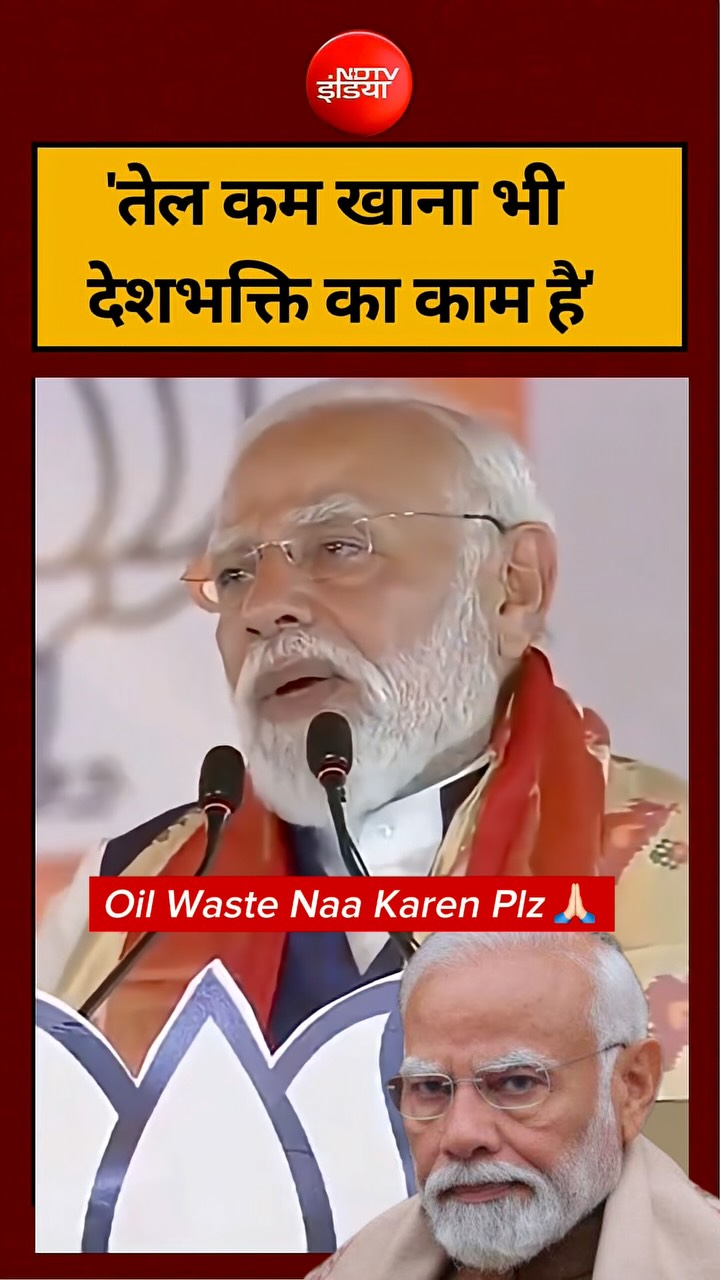
The reel accurately recalls a real theme in Modi’s public messaging, although it compresses two different rationales. In 2025 he repeatedly urged households to cut cooking-oil consumption by 10% as part of an anti-obesity message. In May 2026, amid concern about foreign-exchange costs and import dependence, he said reducing household edible-oil use would be a contribution to patriotism and would benefit both the national treasury and family health. India remains heavily dependent on imported vegetable oils, making consumption and prices economically significant.
That does not by itself prove hypocrisy by Modi personally. The evidence reviewed here establishes a BJP-organised birthday campaign involving mass lamp-lighting; it does not establish that Modi ordered the lamp programme, selected its scale, or determined how much oil it would use. The reel’s criticism is therefore best understood as political commentary built around a real contrast, not proof of personal responsibility for the event.
Why the flood context matters
The flood backdrop was also real. Reporting in September described severe flooding across multiple Bihar districts, including inundated villages, disrupted roads, relief camps and community kitchens. This makes the juxtaposition in the reel intelligible as a question about public priorities during a disaster. But the existence of a ceremonial programme alongside flood relief does not, without budget or operational evidence, establish that the lamp event reduced relief spending or caused a shortfall in assistance.
What this record shows
The strongest supported finding is narrower than the reel’s rhetoric: Bihar’s ruling-party organisation mounted a large, statewide birthday lamp campaign during an active flood emergency, while Modi had recently urged citizens to conserve edible oil for health and economic reasons. That contrast is documented and can reasonably invite scrutiny of political symbolism and public priorities. The reel’s specific claims about “lakhs” of diyas in Patna and enormous volumes of wasted oil go beyond the evidence currently available.
Evidence boundary: IndiaFiles found evidence for the lamp campaign, for a 25,000-diya Patna plan, for a statewide total reported above 20 lakh, for serious contemporaneous flooding, and for Modi’s edible-oil appeals. It did not find a reliable measurement of oil used, evidence that lakhs of diyas were lit in Patna alone, or evidence that Modi personally directed the event or its resource use.
