MAIN MENU

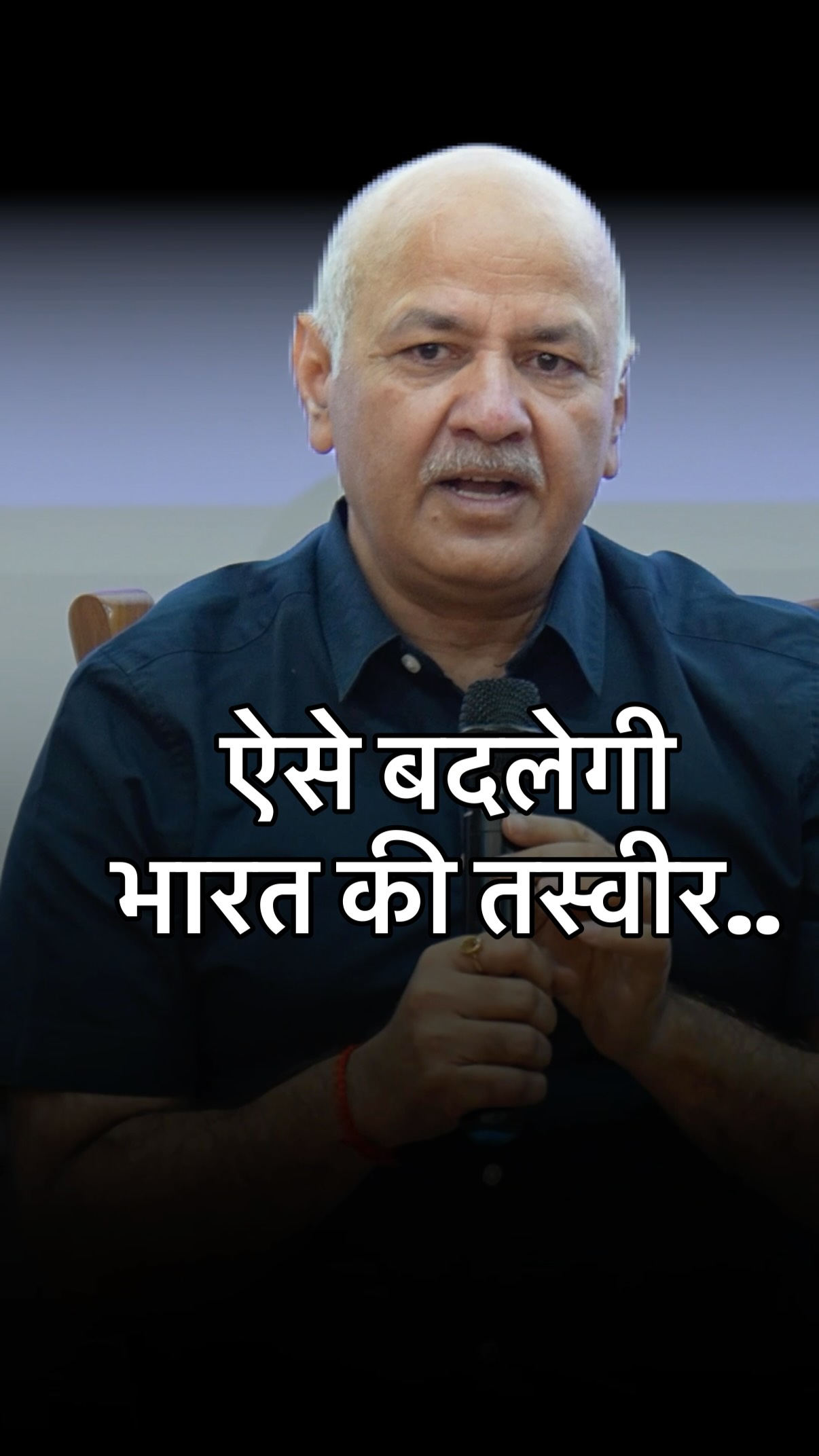
Manish Sisodia links a developed India to job-connected education; official policy also identifies a skills mismatch
Manish Sisodia says India could remain a developing country unless education is better connected to earning opportunities. National policy and recent Economic Surveys independently identify vocational education and the skills-to-jobs mismatch as real challenges, but the evidence does not show that education reform alone can deliver developed-country status.
In an Instagram Reel published on 30 August 2026, Manish Sisodia argues that India has been described as a “developing country” across generations and warns that this may continue unless education is more deliberately connected to earning opportunities. The accompanying caption goes further, saying a developed India will come through education reform and referring to business education for younger students.
The clip is evidence of Sisodia’s argument, not proof that one education reform can determine whether India becomes developed. “Developed country” itself is not a single universally decisive school-textbook category: development is measured through multiple economic and human-development indicators, and reaching high-income status depends on much more than education alone.
The underlying issue is the education-to-work transition
On the narrower point behind the rhetoric, current evidence supports a real policy problem. India’s National Education Policy 2020 calls for vocational education to be integrated into mainstream schooling and higher education, with exposure beginning at younger ages, links to local opportunities and industry, and an explicit aim of helping India realise its demographic dividend. The policy also includes entrepreneurship among areas where schools can draw on local expertise.
The government’s Economic Survey 2024-25 likewise identified a mismatch between educational attainment and occupational skill requirements and argued for closer alignment between education and labour-market needs. Using PLFS 2023-24 data, it reported that 90.2% of workers had secondary-level education or less and that 88.2% were in elementary- or semi-skilled occupations. The following Economic Survey continued to stress early vocational exposure and alignment with labour-market requirements.
Implementation has expanded but remains incomplete. The Economic Survey 2023-24 reported skill education in 29,342 schools by March 2024 and approved upper-primary exposure for more than 108,000 schools in FY2025. In February 2026, the World Bank said India still faced a persistent mismatch between what young people are trained for and what firms need, while announcing support for an overhaul of Industrial Training Institutes.
What the evidence does — and does not — establish
Sisodia’s central policy proposition therefore overlaps with an already established national reform direction: education, vocational skills, employability and entrepreneurship are being treated as connected policy areas, and the skills-to-jobs gap remains material. His warning is best understood as an opinion and prediction about the consequences of failing to improve that connection.
But the stronger causal implication — that connecting education to earnings will by itself turn India from a developing into a developed country — is not established by the Reel or by the cited evidence. The World Bank’s assessment of India’s path to high-income status by 2047 points to a wider package including faster and more inclusive growth, higher investment, increased labour-force participation, productivity growth, human-capital investment and creation of more and better jobs.
The public-interest significance of the clip is therefore not the repeated label “developing country” on its own. It is the continuing challenge of converting schooling and training into productive, adaptable skills and better work, while recognising that education reform is one part of a much broader development strategy.
