MAIN MENU

CJP’s 48-hour demand for Gyanesh Kumar’s resignation: Why the deadline passed but protests continued
Akash Banerjee’s satirical response questioned whether CJP understood the Chief Election Commissioner’s position. The deadline did not bring a resignation, but later protests, police detentions and opposition demands show that the accountability dispute continued.
Listen to this article
Detecting language…
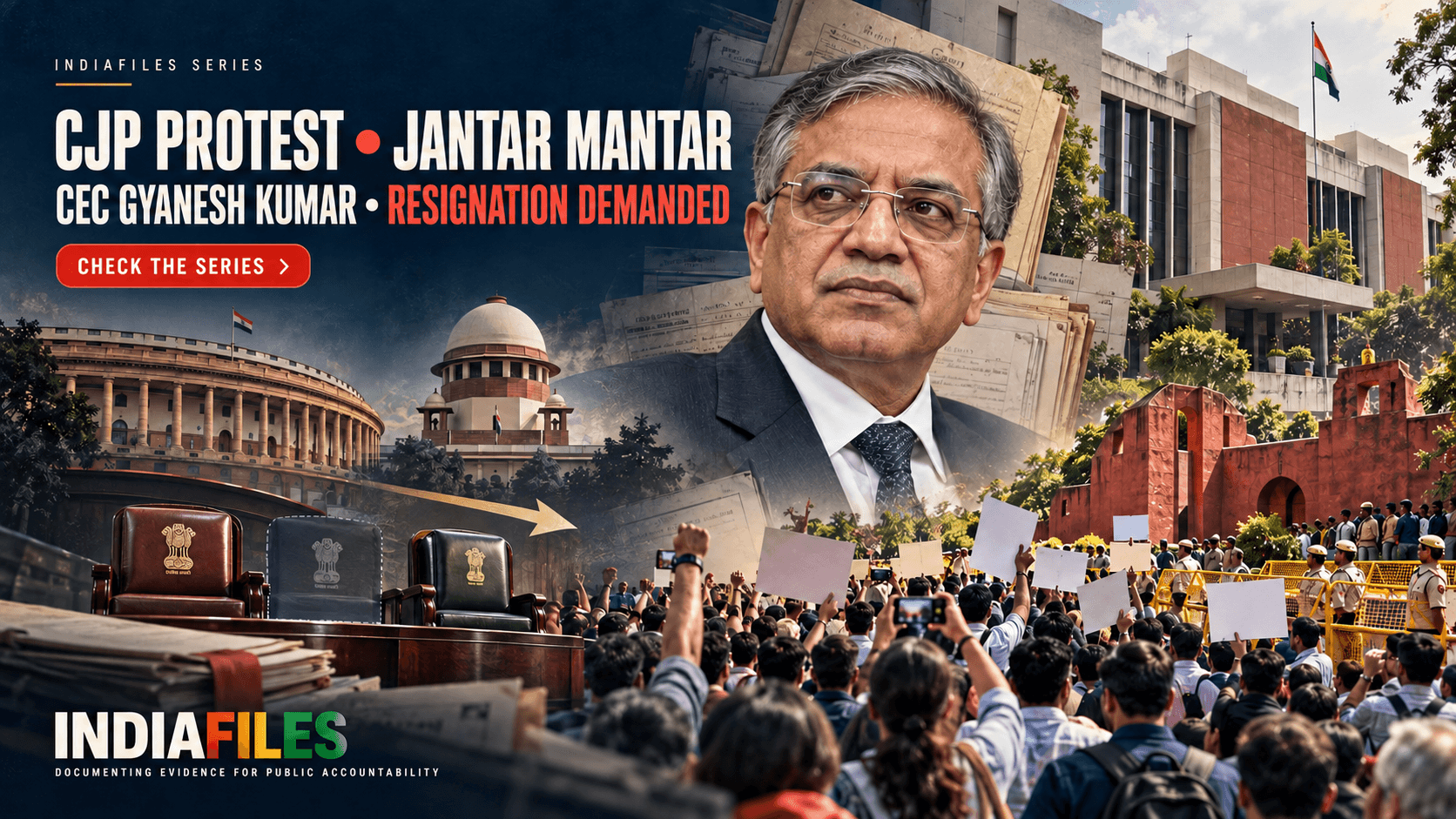
On 24 September 2026, the Cockroach Janta Party (CJP), led by Abhijeet Dipke, gave Chief Election Commissioner Gyanesh Kumar 48 hours to resign or face nationwide agitation. The deadline passed without the resignation that activists demanded. A 28 September Instagram reel from Akash Banerjee’s The Deshbhakt used the fictional pro-government character “Bhakt Banerjee” to mock the ultimatum, then raised a serious question: had the protesters underestimated how difficult it would be to force Kumar from office?
What the ultimatum promised — and what it could achieve
Contemporary reporting confirms that CJP announced a 48-hour deadline and threatened renewed protests. The call followed reporting about disagreements within the Election Commission over electoral-roll decisions, as well as wider disputes about voter registration and deletions. The deadline was a political demand, not a legal mechanism that automatically ended the Chief Election Commissioner’s term. A resignation would have been Kumar’s own decision; an organiser could not bring it about merely by setting a date.
The reel deliberately plays on this difference. Its comic persona boasts that Kumar cannot be removed, while the subsequent political commentary predicts that the central leadership would resist losing him. That prediction is opinion. The reel’s suggestion of personal protection, hidden dependence or misconduct on behalf of particular politicians is not established by the video or by the mere fact that Kumar remained in office.
Why a Chief Election Commissioner cannot simply be dismissed
Article 324(5) of the Constitution protects the Chief Election Commissioner against removal except in the same manner and on the same grounds as a Supreme Court judge. That involves a demanding parliamentary process, rather than dismissal following a protest ultimatum. The Chief Election Commissioner and Other Election Commissioners Act, 2023 also governs appointment and service conditions. Its Section 16 restricts court proceedings concerning acts done, or purportedly done, in official duties; it should not be confused with a general finding of innocence, an unlimited personal immunity or the constitutional removal procedure. These protections aim to safeguard the independence of election administration from political pressure. They must not become an excuse to avoid explaining decisions or correcting errors.
The dispute was not over when the 48 hours expired
The September deadline did not force an immediate resignation. Yet the wider campaign continued. Reuters reported CJP-linked protests and detentions in Delhi on 16 October, and The Indian Express reported further detentions and opposition criticism around the Connaught Place mobilisation. On 17 October, a CJP gathering in Pune also demanded Kumar’s resignation and defended the right to peaceful protest. These later developments do not prove that every allegation made against the Election Commission was correct. They do show why treating the passed deadline as the end of the campaign would be misleading.
The electoral questions still require evidence
Protesters and opposition figures allege that the Special Intensive Revision of electoral rolls and other registration decisions wrongly excluded eligible voters or favoured the ruling BJP. The Commission and government-side representatives have defended the revision process and disputed accusations of partisan manipulation. A credible assessment needs the underlying rolls, orders, reasons for deletion, notice and appeal records, and independently checked outcomes—not assumptions based on either political camp’s language. Internal disagreement between commissioners can justify closer scrutiny but does not, by itself, prove deliberate election-rigging or personal wrongdoing by Kumar.
Pressure, institutional independence and the right to protest
The standard here is twofold. Election officials should not be removed simply because a vocal group dislikes their decisions; secure tenure protects independent elections. Equally, the public has a legitimate right to seek answers and peacefully campaign for accountability when voting rights may be affected. The reported mass detentions and restrictions on demonstrations demand specific justification in terms of necessity, proportionality and available less restrictive steps. Peaceful criticism of a constitutional office is not, by itself, a threat that warrants suppression. Police authorities may enforce lawful, narrowly tailored safety restrictions, but the scale of a protest or the political sensitivity of its demand alone does not justify indiscriminate detention.
The result is more complex than the reel’s taunt. CJP could not make the Chief Election Commissioner resign by counting down 48 hours; nor does the missed deadline establish that Kumar is personally indispensable to Modi and Shah. By mid-October the demand had continued through protests and opposition mobilisation. The defensible public question is whether electoral-roll decisions withstand transparent, independent scrutiny while protesters retain their right to peaceful dissent. Those tests matter more than either the ultimatum or claims about what political leaders secretly want.