MAIN MENU

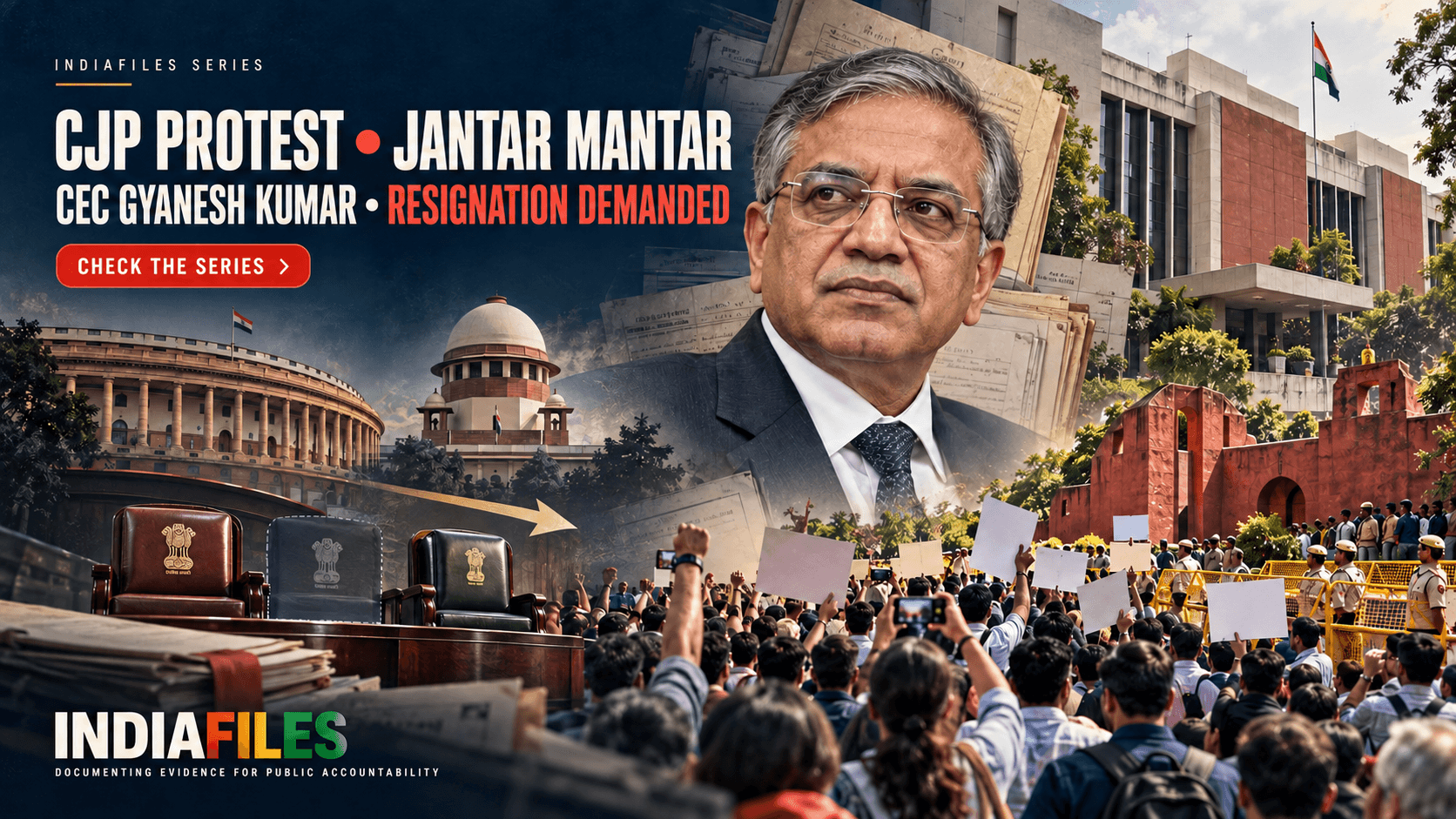
CJP’s Jantar Mantar protest: Why detentions have not ended the demand for Gyanesh Kumar’s resignation
An 11 October reel argues that detaining Cockroach Janta Party supporters was no victory for the government. The October protests, disputed voter-roll deletions and the legal challenge to restrictions on Jantar Mantar show why the controversy extends beyond arrests.
Listen to this article
Detecting language…
When police detained people during the Cockroach Janta Party (CJP) campaign against Chief Election Commissioner Gyanesh Kumar, a commentator on Instagram argued that the government had not won by stopping one demonstration. The reel, posted by Mukesh Bharti on 11 October 2026, makes a clear political point: detentions may interrupt a protest, but they do not settle the grievances behind it.
That distinction matters in Delhi’s October protests. Reporting confirms substantial detentions and disruption as demonstrators tried to gather over changes to electoral rolls. But the reel also makes sweeping claims about who was detained and the scale of the security deployment. Those details require stronger proof than the commentary supplies.
What the CJP protests were demanding
CJP activists called for Gyanesh Kumar to resign, alleging that the Election Commission’s Special Intensive Revision (SIR) of electoral rolls had wrongly removed eligible voters and benefited the ruling BJP. The Election Commission and BJP deny manipulation. A large number of removed entries, by itself, cannot show how many eligible people were wrongly excluded: deaths, moves and duplicate registrations must be distinguished from errors affecting living, eligible voters. The real test is whether individuals were removed lawfully, received fair notice and had an effective route to correction.
The campaign was not confined to a single reel or demonstration. CJP founder Abhijeet Dipke publicly called for a 10 October mobilisation at Jantar Mantar, and Reuters reported that authorities detained more than 2,000 people and restricted access in parts of Delhi on the day of the planned protest. Other student and opposition groups also criticised the election-roll process and policing of demonstrations.
What the 11 October reel actually argues
The Instagram commentary portrays police detentions as an interruption, not a defeat, and says the movement’s organisers must have anticipated arrests. It points to closures and restrictions as signs that a comparatively new protest movement has acquired influence. These are the commentator’s interpretations, not independently proven assessments of government motives or of the movement’s future success.
The reel’s account also groups several prominent names together as if their detentions were established and refers to an enormous security deployment. The available reporting supports large-scale detentions and transport disruption, but does not substantiate every named detention or the claim of 50,000 soldiers. Those assertions cannot be used as evidence that each named person was taken into custody or that the quoted number of personnel was deployed. Nor does the reel itself prove that demonstrators reached Jantar Mantar or that their demands were accepted.
Why Jantar Mantar became a dispute in its own right
Jantar Mantar’s role as a familiar, central place for protest became another point of conflict. Delhi Police subsequently removed its designation as a protest venue, identifying Ramlila Maidan, Burari Ground and CBD Ground as alternatives. Police said the change followed a Supreme Court order concerning suitable alternative protest sites. The legal and practical question is not simply whether another ground exists: it is whether restrictions on a visible, peaceful demonstration are necessary, proportionate and applied fairly.
The decision has been challenged in court. On 15 October, the Supreme Court sought responses from the Centre and Delhi Police concerning the change. Seeking responses is not a final judicial ruling that the restrictions were unlawful. The government’s duty to maintain public safety is real, but crowd-control needs do not by themselves justify broad, indiscriminate detention of peaceful participants. Any restriction requires specific grounds, workable alternatives and proper safeguards.
Detentions, election rolls and democratic accountability
Two issues now run together without becoming the same claim. First, whether the SIR process has wrongly excluded eligible voters and whether remedies are timely and effective. Second, whether police measures around CJP demonstrations were justified by concrete safety risks rather than an excessive response to dissent. Evidence of a protester’s detention does not prove election manipulation; equally, official denial of manipulation does not answer an individual voter’s documented exclusion or resolve the proportionality of police action.
The available record supports a firm democratic judgment: peaceful criticism of an election authority, including a demand for its chief to resign, deserves meaningful space in public life. Sweeping restrictions without demonstrated necessity would be unjust, especially when they make a central public protest effectively impossible. The reported mass detentions and contested venue change deserve scrutiny, while the legality of particular actions and the correctness of particular voter-roll entries must be judged on their evidence.
What the events establish
The reel’s central prediction—that the movement is not over—cannot be proved merely by its confidence. Yet continuing protests after 10 October, additional detentions and court challenges show that stopping one gathering did not resolve the underlying disputes. CJP’s demand for Gyanesh Kumar’s resignation remains a political demand, not a judicial finding of wrongdoing. What requires answers is both whether eligible voters were improperly removed and whether Delhi’s response to peaceful assembly stayed within lawful, necessary limits. Those questions, rather than an unsupported claim of victory by either side, are the enduring significance of the Jantar Mantar protests.