MAIN MENU

Delhi protest restrictions and the call to approach the Supreme Court: what Article 32 can—and cannot—do
After Delhi Police refused permission for the 10 October CJP protest, an Instagram speaker questioned the scale of police deployment and urged citizens to write to the Chief Justice. The refusal is documented, but policing figures need date-specific checks and an email is not itself an Article 32 writ petition. The dispute tests how public-order restrictions can be justified without emptying the right to peaceful protest.
Listen to this article
Detecting language…
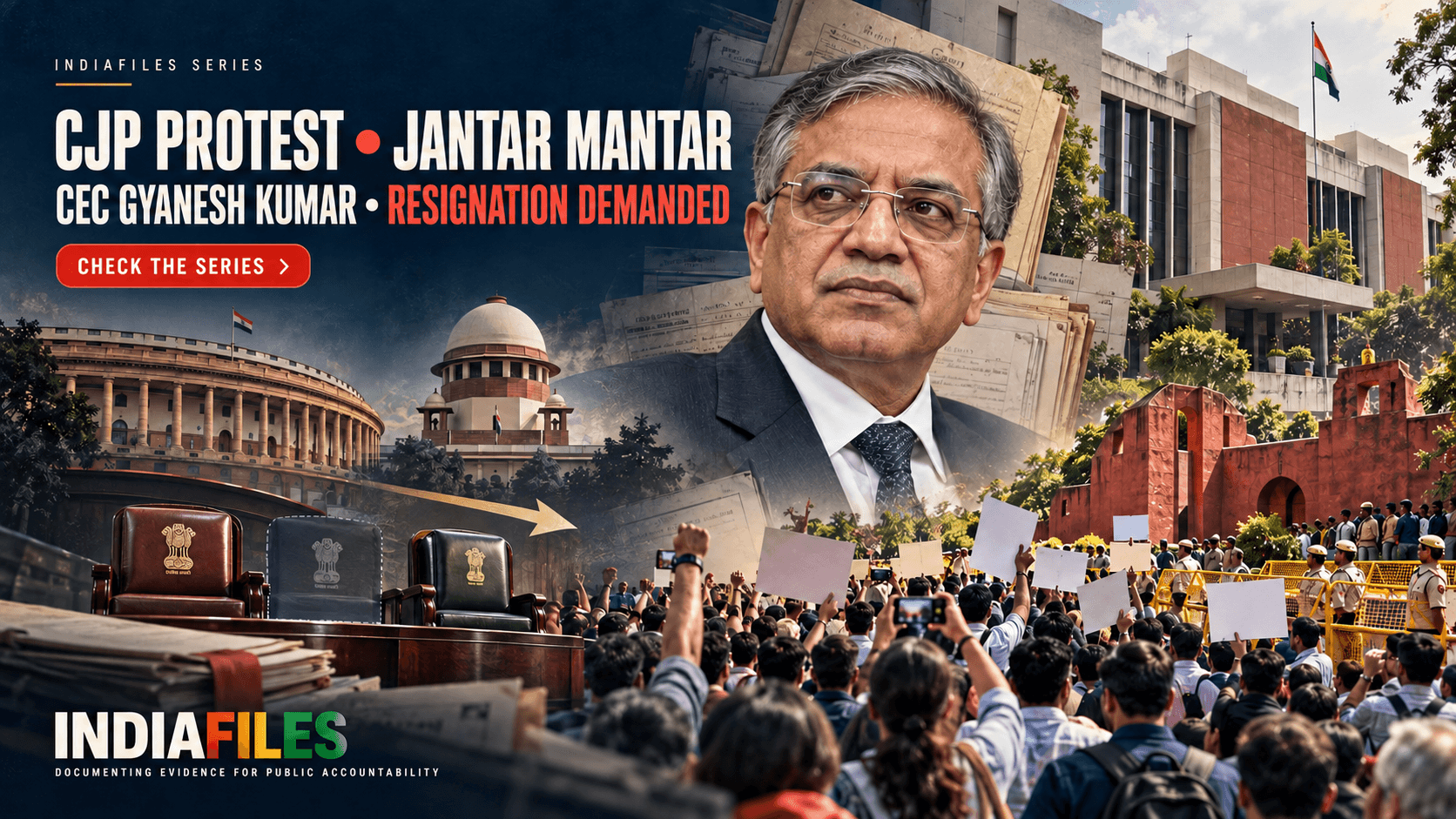
After Delhi Police refused permission for the Cockroach Janta Party (CJP) protest planned at Jantar Mantar on 10 October 2026, an Instagram speaker asked a pointed question: if the authorities could organise extensive barricading and surveillance, why was three days’ notice considered too short to arrange security for a protest? The speaker then urged citizens to contact Chief Justice of India Surya Kant and seek Supreme Court intervention under Article 32 of the Constitution.
The question brings together two separate issues: whether the police justified restrictions on a peaceful gathering, and what citizens can actually do when they believe their fundamental rights have been infringed. Both deserve scrutiny, but the reel’s deployment numbers and suggested legal procedure cannot all be taken at face value.
Why the October 10 protest was refused
CJP and allied protesters were demanding the resignation of Chief Election Commissioner Gyanesh Kumar over alleged irregularities in revisions to electoral rolls. Those allegations remain disputed; a demand for resignation is not proof of electoral wrongdoing.
Delhi Police cited late notice, previous violations of protest conditions and public-order risks in refusing permission for the Jantar Mantar gathering. Reporting on the refusal said organisers had applied on 7 October for the 10 October event, whereas the police required a longer advance notice period. The police subsequently told the Supreme Court that their approach also reflected previous clashes and alleged breaches of directions at a July march. These are the authorities’ explanations, not a judicial finding that every restriction was necessary.
Can a large security operation be reconciled with insufficient notice?
The speaker contrasts the short-notice explanation with claimed deployment of 25,000 personnel, 300 CCTV cameras, 12 detention centres and seven layers of barricades. The larger point is legitimate to examine: a government cannot settle a protest-rights dispute merely by saying it found policing easier than facilitating an assembly.
But each number needs the correct date. A published report describing more than 25,000 police and paramilitary personnel refers to security for a separate CJP-linked 16 October march at Connaught Place, after this reel was posted on 13 October. It therefore cannot establish that the same deployment occurred for the 10 October Jantar Mantar protest. The other precise figures in the reel have not been independently substantiated for the 10 October event in the sources reviewed here. A large deployment in itself also does not prove it could safely have been redeployed to manage a gathering of a different size and risk profile.
Even so, the police have a duty to show why the actual threat required the measures chosen. The scale and geography of the expected gathering, earlier specific incidents, available alternatives, traffic effects and less restrictive options all matter. Past misconduct by some participants, if proved, does not automatically justify treating every future participant as a threat.
Police powers are real; peaceful assembly is a right
Article 19(1)(a) and Article 19(1)(b) protect freedom of expression and peaceful assembly without arms, subject to constitutionally permitted restrictions. Police may regulate the place, route and timing of demonstrations and may act against concrete dangers to safety. But a permission requirement should not turn a fundamental right into a privilege that authorities can withhold through broad predictions alone.
In a Supreme Court affidavit reported on 15 October, Delhi Police defended the measures taken around 10 October as preventive action based on previous experience and intelligence inputs. In a separate affidavit, the Union Home Secretary apologised to the Court and explained a 24-hour suspension of cellular internet within a four-kilometre radius of Raisina Hill. These statements make the official case more specific, but they do not by themselves resolve whether each restriction was proportionate. That question requires assessment of evidence, necessity, alternatives and safeguards, not merely a choice between believing police or protesters.
What Article 32 actually offers
Article 32 allows people to approach the Supreme Court for enforcement of fundamental rights. The Court may issue directions and writs, including mandamus, which can require a public authority to perform a legal duty. Whether a particular petition merits relief depends on its facts, the right invoked and the Court’s assessment.
In the reel, the speaker asks viewers to copy an email addressed to the Chief Justice, seeking suo motu intervention over protest restrictions and voter-list allegations. Sending a message can communicate a grievance or request action, but it does not automatically register an Article 32 writ petition, create a court case or require the Chief Justice to take suo motu cognisance. The Supreme Court has formal filing arrangements, including an official e-filing portal and public-interest-litigation guidelines. Someone seeking judicial relief should check those procedures and obtain appropriate legal advice rather than assume a mass email has filed a writ.
The caption also requests directions to the Election Commission concerning the Special Intensive Revision and an independent audit of alleged vote theft. Those are requests by the speaker, not findings that the allegations have been proved or relief that a court has granted.
What this dispute establishes
The 10 October refusal and subsequent preventive measures are documented. The police have offered reasons grounded in notice, earlier events and anticipated disorder. Protesters are entitled to challenge whether those reasons justified restrictions of this breadth. The precise deployment comparison in the reel remains partly unsupported and partly entangled with reporting about a later event.
The strongest conclusion is not that the authorities had no right to regulate the protest, nor that refusing permission was automatically justified. A serious assessment must ask what specific risk existed on 10 October and why workable, less restrictive arrangements were insufficient. Restricting peaceful citizens more than the evidence and public safety require would be unjust, even if the rules invoked were formally available. Article 32 offers a constitutional path to challenge rights violations, but that path should be explained accurately rather than reduced to a claim that one email files a case.