MAIN MENU

London protest over India’s voter rolls puts Election Commission accountability and legal immunity in focus
At a London demonstration, Dhruv Rathee challenged restrictions on protests in India and legal protection for election commissioners. The dispute connects concerns over voter-list revisions with the scope of official immunity and the right to peaceful dissent.
Listen to this article
Detecting language…
A demonstration at Parliament Square in London on 17 October 2026 brought India’s dispute over electoral-roll revisions and the accountability of election officials into an overseas public space. In a speech shared on Instagram on 19 October, Dhruv Rathee criticised the government’s response to protests in India and questioned the legal protection available to election commissioners. His contrast between protesting in Britain and India was political criticism; the underlying questions about voter registration, official accountability and peaceful assembly require separate examination.
What the London demonstration was about
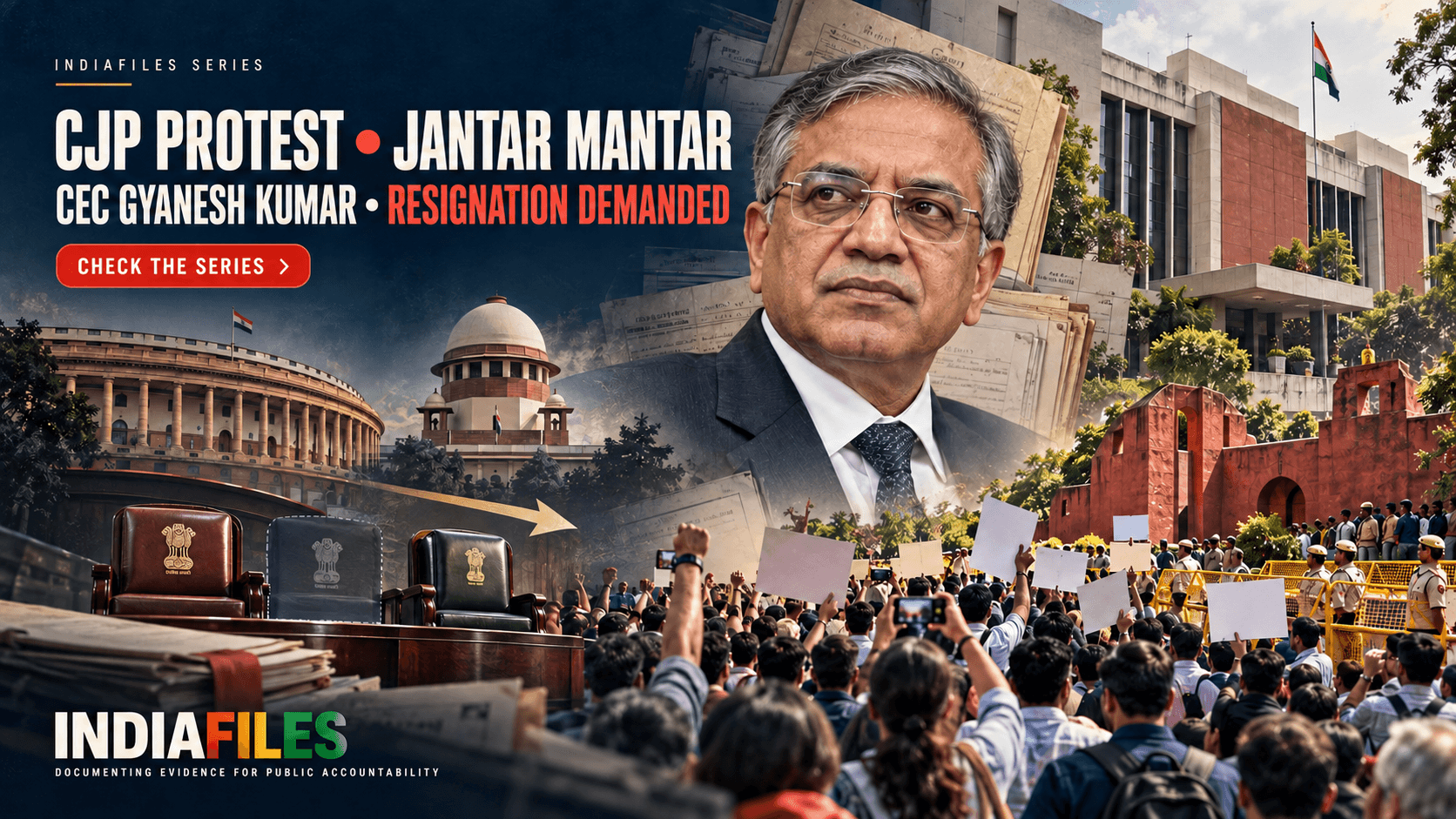
Indian student groups and opposition supporters demonstrated near Mahatma Gandhi’s statue at Parliament Square, calling for greater transparency in the Election Commission’s Special Intensive Revision (SIR) of electoral rolls and for Chief Election Commissioner Gyanesh Kumar to resign. Supporters of the Indian government held a counter-protest. The demonstrations reflected competing political positions, not a settled finding that elections had been manipulated.
In the circulated speech, Rathee argued that protesters had travelled to the country that once colonised India to demonstrate outside its Parliament while protests at home faced restrictions. His claim that the prime minister feared accountability is an expression of political opinion; it cannot establish Narendra Modi’s state of mind.
What the law actually protects
Section 16 of the Chief Election Commissioner and Other Election Commissioners (Appointment, Conditions of Service and Term of Office) Act, 2023 prevents courts from entertaining or continuing civil or criminal proceedings against present or former election commissioners for conduct connected to the discharge, or purported discharge, of official duties. It is already law, rather than a newly proposed measure, and it is not a blanket protection for unrelated private conduct. The protection also covers other election commissioners, not only the chief.
The scope is substantial because the provision restricts an important route for holding public officials legally answerable. Supporters of protections for constitutional officials can argue that they help prevent vexatious litigation or intimidation over difficult decisions. But a broad bar on court proceedings raises a serious accountability problem if it leaves no effective remedy for alleged abuse of official power. Protection against harassment should be narrowly designed and matched with independent scrutiny and workable remedies.
The Supreme Court has issued notice on petitions challenging Section 16, including one brought by the Association for Democratic Reforms. A notice and pending constitutional challenge are not a final judicial ruling that the provision is unlawful.
Why voter-list revisions sparked the dispute
The Election Commission says the SIR exercise is intended to remove duplicate, deceased, relocated or otherwise ineligible entries while retaining eligible voters, and points to enumeration and claims-and-objections processes. Critics argue that the scale and documentary requirements have left eligible citizens, particularly vulnerable groups, at risk of exclusion. Reporting on individual voters missing from draft lists gives concrete grounds for investigation; it does not, by itself, prove a centrally directed plan to favour any political party.
The Commission has also argued in litigation that absence from a newly prepared draft electoral roll does not necessarily represent a final deletion and that people can seek inclusion through the available procedures. That distinction matters legally and administratively. It does not remove the practical hardship for an eligible voter who must correct an error before the next election. Transparent reasons for exclusions, accessible corrections and timely independent review are necessary tests of whether the process is fair.
Protest rights in India and Britain
Indian citizens have constitutional rights to speech and peaceful assembly, subject to lawful, reasonable restrictions. Authorities may regulate demonstrations for genuine public-order reasons, but those powers do not justify suppressing peaceful criticism simply because it targets the government or an institution. Detentions and restrictions around recent demonstrations in Delhi therefore deserve examination by reference to their actual orders, reasons, necessity and available less restrictive measures; the fact that one London protest proceeded cannot alone settle the legality of every restriction in India. Britain, too, places legal limits on some public protests.
The strongest established conclusion is more specific than the speech’s sweeping comparison: an overseas protest has highlighted an unresolved accountability dispute. Section 16 provides broad official-duty litigation protection, the legal challenge to it is pending, and problems reported by voters during SIR warrant transparent correction and scrutiny. Peaceful critics should be able to demand that scrutiny without disproportionate restrictions. None of these findings establishes deliberate election rigging or proves the political motives attributed in the speech.