MAIN MENU

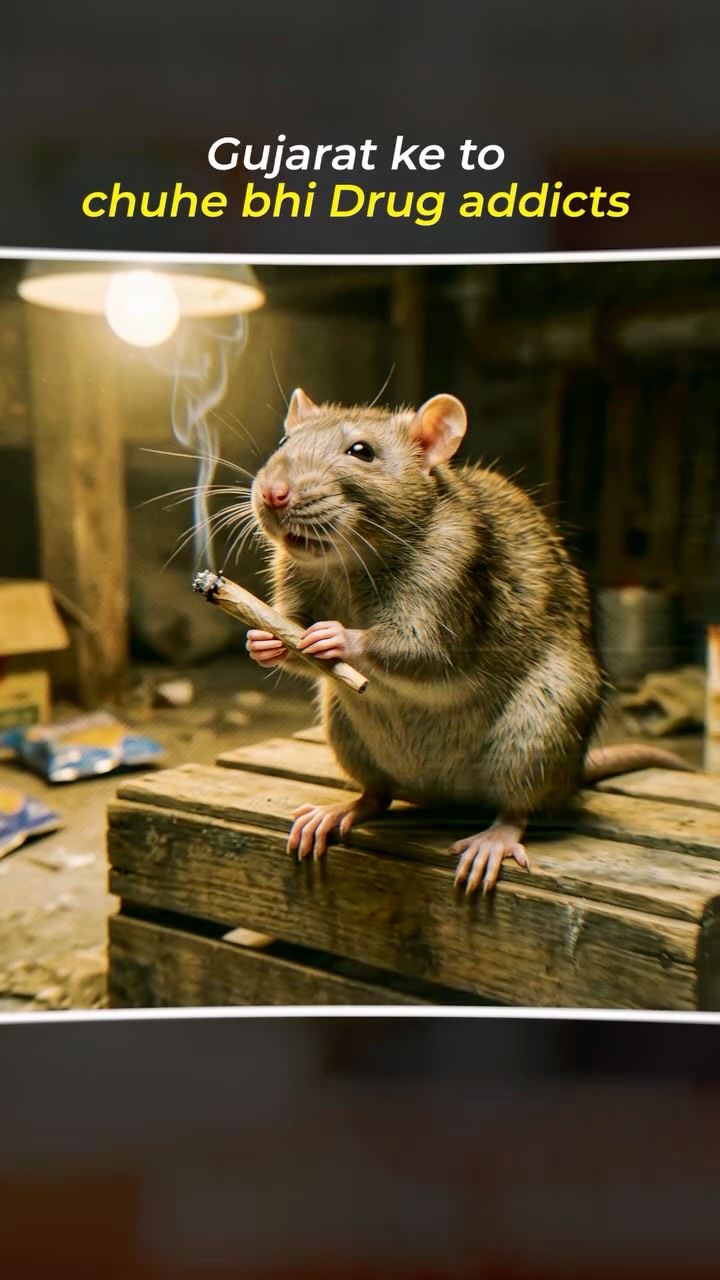
Gujarat’s narcotics record shows a real custody gap and a major port seizure; AAP rhetoric conflates the two
Gujarat’s 2026 CAG audit documents a serious custody-and-disposal gap in seized narcotics, while the 2021 Mundra case documents a separate 2,988 kg heroin seizure from Afghanistan via Iran. AAP rhetoric links the two into a stronger story, but the audit did not say rats ate the entire gap, the Mundra consignment did not come from Colombia, and the reviewed evidence does not establish that Gujarat routes exceed Pakistan-linked supply into Punjab.
A May 31, 2026 reel from Aam Aadmi Party Punjab shows Punjab Chief Minister Bhagwant Mann arguing that drug trafficking is a national problem rather than only a Punjab issue. He cites two Gujarat examples: a claim that 2,200 kg of seized drugs were “eaten by rats” and the 2021 seizure of roughly 3,000 kg of heroin at Mundra Port, which he says came from Colombia and later became unaccounted for.
The durable public-interest issue is not whether every line in the reel is simply true or false. The two examples concern different parts of drug control: custody and disposal of seized evidence, and interception of an international trafficking consignment. Both raise legitimate accountability questions, but the reel compresses them into one political narrative in ways the underlying records do not support.
What the Gujarat audit establishes
The Comptroller and Auditor General of India’s 2026 Gujarat compliance audit found serious weaknesses in the handling of seized narcotics. In CID Crime and Railways records examined by the audit, agencies had reported 6,510.54 kg of narcotics and 848 bottles in 17 cases. The quantity shown as actually disposed was 4,177.86 kg, leaving a variation of about 35%.
Officials attributed the shortfall to several causes, including theft of about 144.180 kg of ganja, destruction by rats because of inadequate storage, drying of cannabis and opium plants, and moisture loss in poppy straw. The audit did not accept those explanations as sufficient for the full discrepancy. It also identified broader control failures: inadequate storage infrastructure, long delays in forensic and disposal processes, and weak supervisory oversight.
So the underlying governance problem is stronger than the viral shorthand but different from it. There was a large, inadequately explained custody-and-disposal gap. The audit did not establish that rats ate 2,200 kg of narcotics. Treating the entire gap as a rodent-loss finding replaces an institutional-control problem with a more dramatic but unsupported single explanation.
The Mundra seizure is a separate evidence chain
The second example concerns an international smuggling case, not the later disposal gap in Gujarat police records. A Directorate of Revenue Intelligence release says two containers that reached Mundra from Kandahar, Afghanistan via Bandar Abbas, Iran were detained in September 2021. Detailed examination led to the seizure of 2,988 kg of heroin concealed in a talc-stone consignment.
The National Investigation Agency later took over the case. In August 2022 it said members of an international trafficking network had been charge-sheeted in connection with the 2,988.21 kg seizure and described the heroin as moving from Afghanistan to India for distribution in several states. That official record contradicts the reel’s claim that the consignment came from Colombia and also contradicts the implication that the seized heroin simply vanished without an investigation or prosecution record.
A port seizure can still be evidence of a serious maritime trafficking route and of the scale of attempted smuggling. But a seizure is also an interdiction event: it cannot, by itself, prove how much contraband successfully entered circulation or establish that Gujarat ports supply more drugs to Punjab than the Pakistan border.
The broader Gujarat-versus-Pakistan claim remains unproven here
Mann says less contraband reaches Punjab from Pakistan than through Gujarat ports. The reel caption similarly frames Gujarat as the larger source. IndiaFiles did not find a primary dataset that makes those two channels directly comparable for the period being discussed. Official enforcement records document substantial maritime and land-border trafficking risks, but seizure totals across agencies and routes are not automatically measures of successful supply into Punjab.
The comparative claim therefore remains a political assertion rather than a verified trafficking statistic. Later in June 2026, AAP national convenor Arvind Kejriwal repeated the “2,200 kg eaten by rats” formulation and separately claimed that 70% of drugs entering Punjab were coming from Gujarat. That repetition establishes a recurring party talking point; it does not independently validate the percentage or the simplified interpretation of the audit.
What the evidence means
The strongest finding is a distinction that political rhetoric obscures. Gujarat’s audit record documents a genuine institutional accountability problem in the storage, tracking and disposal of seized narcotics. The Mundra case documents a major international trafficking attempt that was intercepted and became the subject of DRI and NIA proceedings. Those are both matters of public concern, but they are not evidence of the same failure.
Conflating them creates two errors at once: it overstates the CAG finding by assigning the entire custody gap to rats, and it misstates the Mundra consignment’s origin while implying that an officially seized consignment disappeared. The evidence supports scrutiny of Gujarat’s narcotics-custody safeguards and of maritime trafficking routes; it does not support the stronger claims that 2,200 kg were eaten by rats, that the 2021 heroin came from Colombia, or that Gujarat ports have been shown here to exceed Pakistan-linked routes as a source of drugs entering Punjab.
Evidence boundary: the audit establishes control weaknesses and an inadequately explained quantity variation, not who was responsible for every missing kilogram or whether diversion occurred. The DRI and NIA records establish the Mundra seizure, route and prosecution history, not the total volume of drugs that successfully moved through Gujarat. No reviewed evidence proves a political actor’s private motive or the electoral effect of the rhetoric.
