MAIN MENU

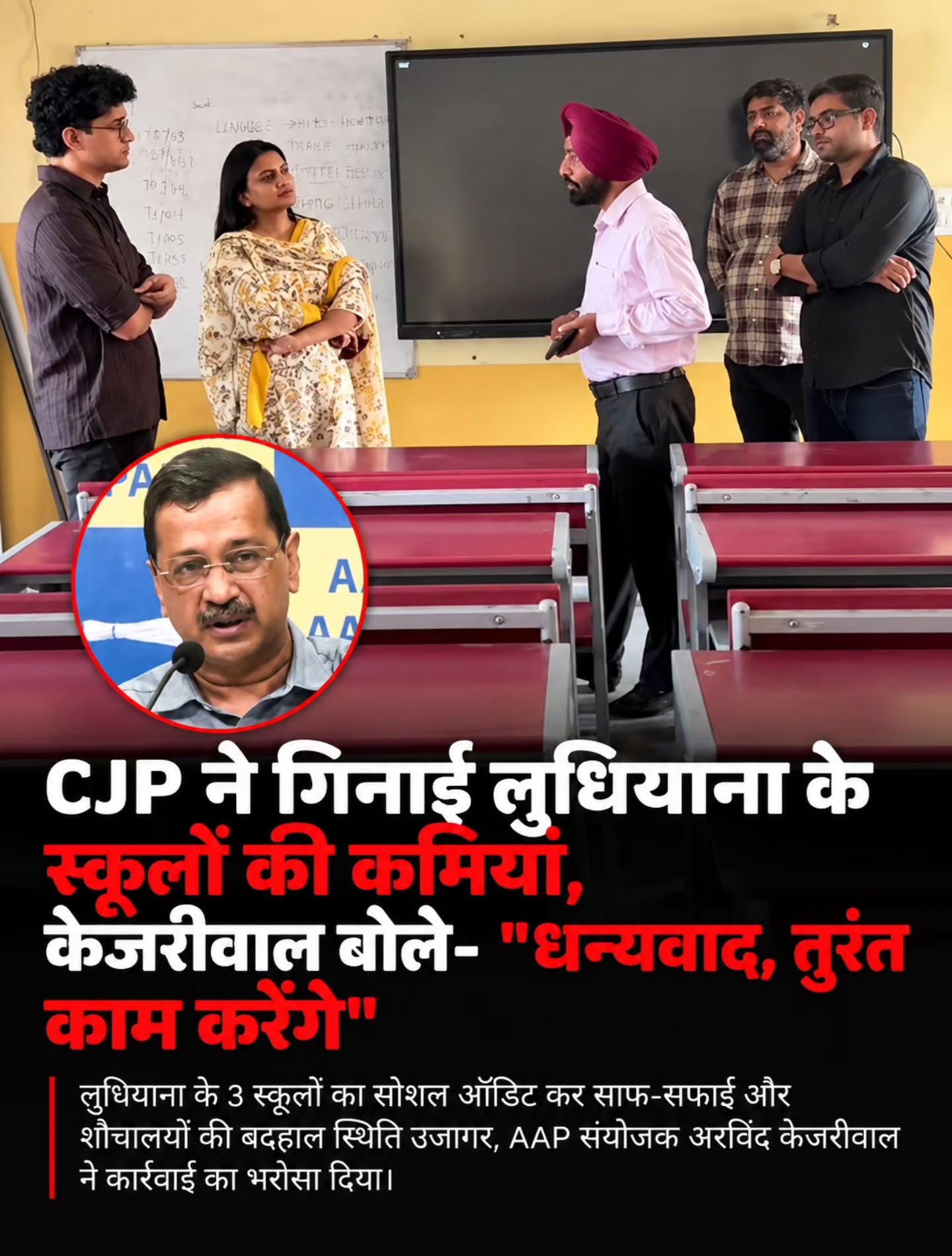
Kejriwal thanks CJP over Ludhiana school gaps, highlighting a more open response to citizen audits — with limits
CJP’s audit of three Ludhiana government schools praised a School of Eminence but found sanitation, toilet and ageing-infrastructure problems elsewhere; Arvind Kejriwal thanked the group and promised action. The response contrasts with some confrontational reactions to citizen school audits in other states, but evidence does not support a blanket claim that AAP is more receptive than other parties, and three schools cannot represent Punjab as a whole.
A social audit by the Cockroach Janta Party (CJP) of three government schools in Ludhiana produced a mixed picture rather than a blanket indictment of Punjab’s school system. The team praised the modern facilities at the School of Eminence in Sector 32, while flagging sanitation, toilet and ageing-infrastructure problems at two government schools in Jandiali. Multiple news reports independently describe the same broad findings.
The Instagram graphic submitted to IndiaFiles says Arvind Kejriwal thanked CJP for identifying the shortcomings and promised that they would be addressed quickly. That response is supported by contemporary reporting: Kejriwal publicly thanked the group, while Punjab Education Minister Harjot Singh Bains said he had taken note of the problems and would monitor their resolution.
What the episode shows
The public-interest issue is not simply whether one party accepted criticism. Citizen school audits are testing how governments respond when outsiders document failures in basic public services. In this instance, AAP leaders did not publicly reject the Ludhiana findings; they acknowledged deficiencies and promised corrective action. That is a meaningful accountability signal because the audit concerned a state governed by AAP itself.
There is a documented contrast with some responses elsewhere. During CJP’s Rajasthan campaign, volunteers alleged that they were attacked while attempting a school inspection; BJP leaders denied involvement, and the Rajasthan government subsequently imposed restrictions on outsiders entering school campuses. Those events make Punjab’s public acknowledgement look comparatively receptive. But the contrast must be bounded: it does not establish that AAP is generally more tolerant of scrutiny than BJP, Congress or every other party.
Why the broader partisan claim remains unproven
There is counter-evidence to any simple party-wide comparison. Haryana’s BJP government has also taken action on unsafe school structures amid the wider school-audit campaign. Congress leader Sachin Pilot, meanwhile, challenged CJP to scrutinise AAP-run Punjab with the same intensity as other states, reflecting an active dispute over whether the Punjab audit itself was sufficiently tough. CJP says its campaign is intended to examine government schools irrespective of which party rules.
Nor can three Ludhiana schools establish the condition of Punjab’s entire government-school system. The audit itself found sharp variation: one flagship school had strong facilities while older schools had basic maintenance and sanitation deficiencies. Earlier reporting from Ludhiana also documented unfinished toilet work under the Punjab government’s school-improvement programme, suggesting that maintenance and execution deserve scrutiny beyond a single visit, but not proving a statewide failure.
IndiaFiles assessment
The immediate claim is supported: CJP documented deficiencies in the Ludhiana schools it visited, and Kejriwal publicly thanked the group and promised action. The stronger inference is narrower than “AAP is different from other parties.” What this episode demonstrates is a comparatively open response in this case: criticism of an AAP-governed public service was publicly acknowledged rather than dismissed. Whether that openness is consistent, whether the promised repairs are completed, and whether comparable audits receive similar treatment across parties and states remain questions for follow-up.
