MAIN MENU

Tag Political Accountability
Records examining consistency, responsibility and public accountability of political actors and institutions.
A reel contrasts Congress-era dissent, cinema, RTI, fuel prices, science and markets with today's India. Historical records support the RTI law and Antarctic milestones, but the claims that markets never fell or critics were never suppressed do not survive scrutiny.
No comments on Was criticism freer and governance stronger under Congress? A viral comparison mixes real achievements with sweeping claims
A Hindi political parable shows parrots abandoning their escape to fight over red and blue food bowls. It raises a democratic question: when rival groups compare what others receive, who is holding power accountable? Research supports the risk, but not every claim of deliberate division.
A satirical Instagram comparison points to the BJP’s nearly ₹10,000 crore in cash and equivalents in March 2025. Audited filings confirm a large BJP–Congress funding gap, but the post’s Congress balance and party-office counts are not established by the evidence examined. The larger issue is unequal financial capacity and voters’ right to know who funds…
GEOGRPAHY : India
UPDATED : 20 Oct 26 / 12:23 am
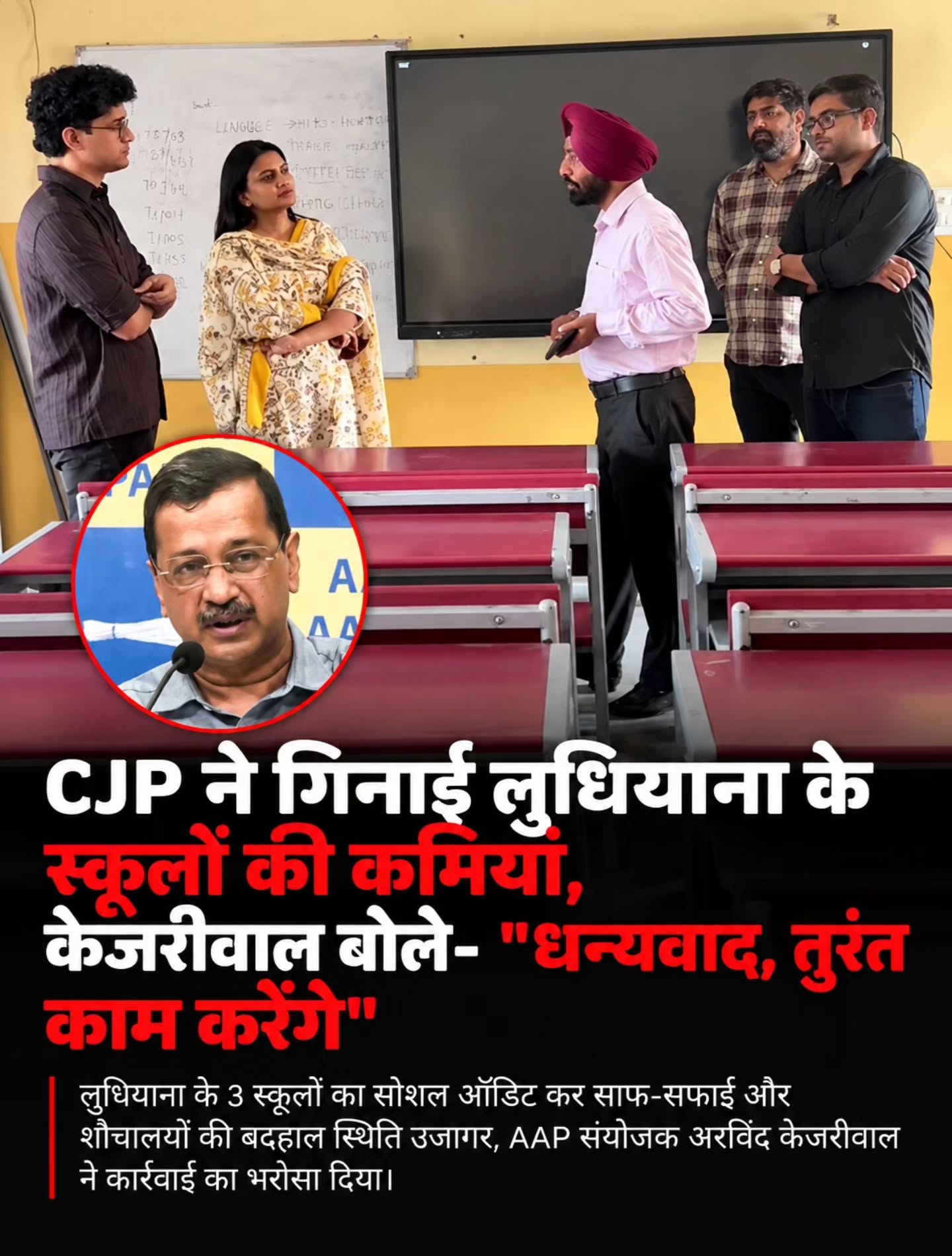
CJP’s audit of three Ludhiana government schools praised a School of Eminence but found sanitation, toilet and ageing-infrastructure problems elsewhere; Arvind Kejriwal thanked the group and promised action. The response contrasts with some confrontational reactions to citizen school audits in other states, but evidence does not support a blanket claim that AAP is more receptive…
EVIDENCE : Context verified
PERIOD : 2026
CHECKOUT : CJP (Cockroach Janta Party)
UPDATED : 15 Sep 26 / 6:08 pm
Pushpa Prasad’s 1 September 2026 reel defends CJP’s “School Theek Karo” campaign and repeats the demand for an explanation for roughly one lakh school closures. Official and NITI Aayog data support a net decline of about 94,000 government schools over a decade, but describe a state-led pattern of consolidation and rationalisation rather than one lakh…
A Hindustan reel from an event branded “9th Bihar Chhatra Sansad” argues that aspiring politicians should clear an “Indian Political Service” exam. India currently has no general education or competitive-exam requirement for MPs or MLAs; the deeper issue is whether competence screening would improve representation or exclude citizens from elected office.
Swatantra Bhardwaj publicly claimed that political connections helped him avoid jail after a June 2026 Jantar Mantar assault. Delhi Police disputed the injury severity and denied interference; he was later arrested and remanded to judicial custody through 21 September, while the self-defence and political-protection claims remain unresolved and no guilt finding has been made.
The Samajwadi Party Media Cell used the real Swatantra Bhardwaj assault controversy to argue that BJP-linked spaces are governed by "goons" and poor law and order. The incident supports scrutiny of political access and policing, but it does not establish a party-wide pattern; Bhardwaj was later arrested and remanded to judicial custody, while political interference…
ENTITIES : Samajwadi Party Media Cell, Swatantra Bhardwaj, Nishu Azad, Sanjay Kumar, Bharatiya Janata Party
GEOGRPAHY : Delhi
EVIDENCE : Partially Verified
PERIOD : 2026
UPDATED : 13 Sep 26 / 11:33 am
In ANI's 16 April 2014 interview, Narendra Modi said that if allegations against him over the 2002 Gujarat riots were proven he should face exemplary punishment rather than be forgiven through apology; earlier in the same interview he separately proposed fast-track courts for criminal cases against MPs and MLAs. A 2026 reel merges those exchanges…
TAGS : 2002 Gujarat riots, SIT investigation, Political Accountability, Cropped Video, Misinformation, Narendra Modi, Political Rhetoric
CHECKOUT : Narendra Modi
UPDATED : 13 Sep 26 / 11:33 am