MAIN MENU

How the 2023 Election Commissioner appointment law gave the government a 2–1 advantage—and why independence is at stake
The Supreme Court's March 2023 interim panel included the Chief Justice of India. Parliament's later law replaced the CJI with a Cabinet minister nominated by the Prime Minister, giving the government side two of three seats. What the change means for independent elections, and where the 2026 court challenge stands.
Listen to this article
Detecting language…
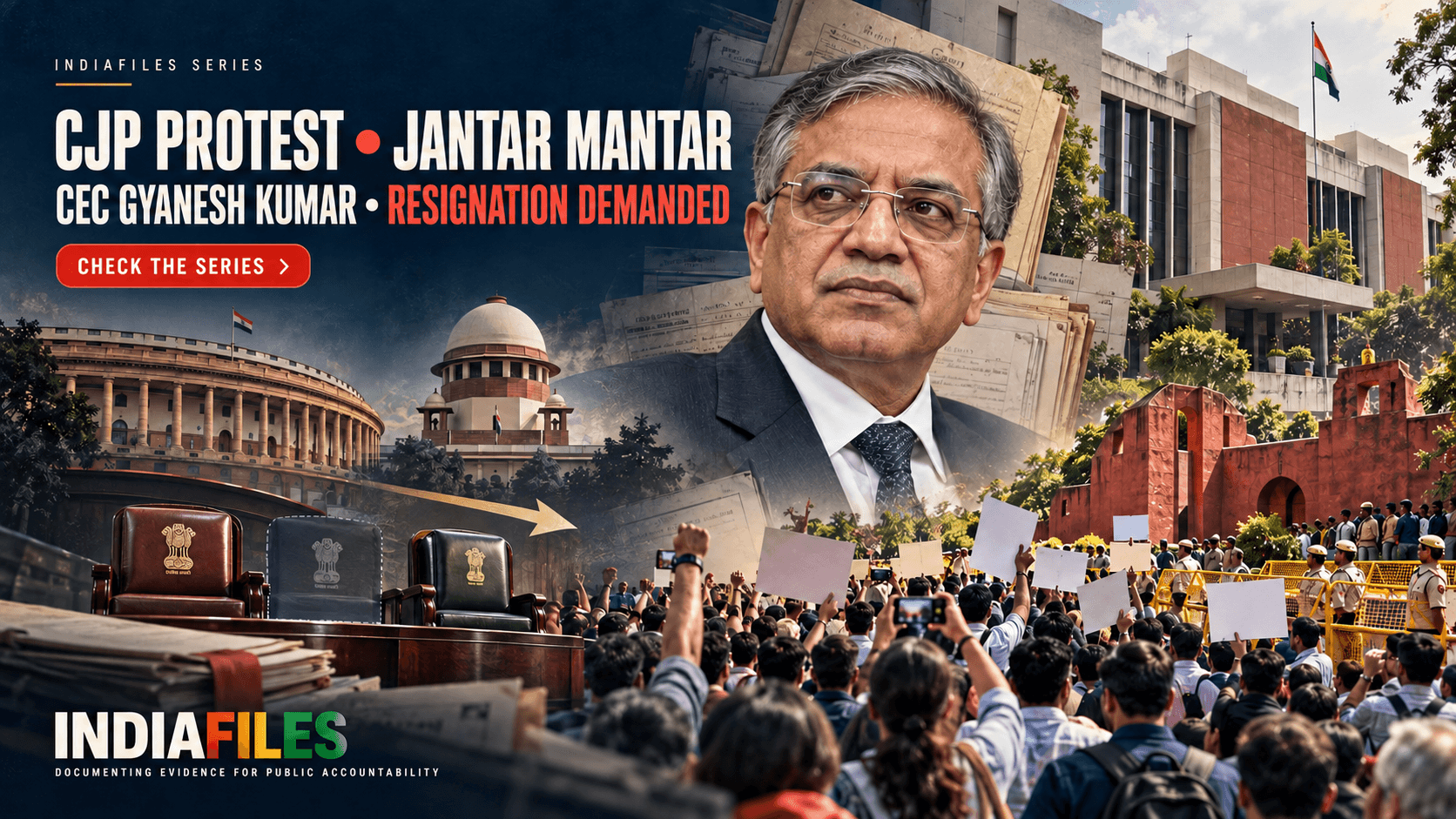
Who should select the officials who oversee elections in which the government itself competes? That is the central question raised by a video from Tarun Kumar Kedia and by India’s 2023 change to the appointment process for the Chief Election Commissioner (CEC) and other Election Commissioners. The critical change is real: Parliament replaced the Chief Justice of India (CJI) on a three-member selection committee with a Union Cabinet minister nominated by the Prime Minister. The result is a committee with two government-side members and one opposition member.
What the Supreme Court ordered in March 2023
Article 324 of the Constitution provides for the Election Commission and says appointments are made by the President, subject to a law enacted by Parliament. For decades, there was no dedicated parliamentary law setting out a selection panel for these appointments; in practice, the Union executive’s advice determined appointments. In Anoop Baranwal v Union of India, decided on 2 March 2023, a five-judge Supreme Court bench sought to protect the Commission’s independence by setting an interim selection process: the Prime Minister, the Leader of Opposition in the Lok Sabha (or leader of the largest opposition party where necessary), and the Chief Justice of India would recommend the CEC and other Election Commissioners.
The Court’s direction was expressly to operate until Parliament made a law. It was not a permanent constitutional amendment, nor did the judges themselves formally appoint commissioners: appointment remained with the President on the committee’s recommendation.
What Parliament changed later that year
Parliament passed the Chief Election Commissioner and Other Election Commissioners (Appointment, Conditions of Service and Term of Office) Act in December 2023; the Act came into force on 2 February 2024. Section 7 creates a different three-member selection committee: (1) the Prime Minister as chairperson, (2) the Leader of Opposition in the Lok Sabha, and (3) a Union Cabinet minister nominated by the Prime Minister. The CJI no longer has a seat under this law.
This is the key arithmetic. When the Prime Minister and nominated minister agree, the government side holds two of three seats. The opposition member can object, but does not have a veto under Section 7. This does not mean the Prime Minister personally makes every appointment or that the President’s constitutional role disappears. It means the structure gives the executive a decisive advantage in deciding whose name the committee recommends.
Section 6 also places the preparation of a shortlist of five candidates with a search committee headed by the Union Law Minister and two senior officials. Section 8 allows the selection committee to consider a person outside that shortlist. Taken together, these rules make both the preparation of candidates and the final recommendation important to assessing how much effective influence the government holds.
Does Parliament have the power to make this change?
Yes, Article 324(2) expressly anticipates a law made by Parliament on appointments. The government’s argument, made during parliamentary debate, was that the Supreme Court’s March arrangement was a stop-gap pending legislation and that involving the judiciary in the permanent executive appointment process raises separation-of-powers questions. Those are serious legal points: the March committee was not meant to prevent Parliament from ever legislating.
But Parliament’s power to pass a law is a different question from whether the particular design adequately protects an independent constitutional body. The Supreme Court’s 2023 judgment emphasised that free and fair elections require an Election Commission insulated from improper executive pressure. Critics argue that substituting a minister who serves in the government for the CJI moves the selection process away from that safeguard. The mere existence of parliamentary legislation does not settle whether its provisions satisfy constitutional requirements.
Why the 2–1 advantage is unfair in institutional terms
The Election Commission must supervise contests involving the same political leadership that participates in choosing its members. A selection panel controlled numerically by that leadership creates a foreseeable conflict of institutional interests. The issue is not whether every Cabinet minister will obey the Prime Minister on every occasion, or whether an opposition member has no voice. The issue is that the opposition’s participation need not change the result if the government-side members agree.
Under a basic standard of fair institutional design, a body supervising the government at elections should not depend for its appointments on a selection mechanism the government can normally dominate. On that standard, removing the independent judicial member and replacing that seat with a government minister is an unjustified weakening of the appointments safeguard unless sufficient counterbalancing protections can be shown. The Act supplies formal process and an opposition seat, but those features do not remove the numerical imbalance. Equally, the CJI’s participation was not a guarantee of neutrality or a perfect solution; broader options could include a genuinely cross-party appointment agreement, independent screening with published criteria, and meaningful scrutiny of the shortlist.
This judgment is about the fairness of the appointment design. It is not proof that a named commissioner has acted on political instructions, that an election was rigged, or that the law has already been declared unconstitutional.
What actually happened in the courts after the law
The law faced constitutional challenges. In March 2024, the Supreme Court did not suspend the new appointments law as an interim measure. Proceedings continued. In a significant development on 23 September 2026, Justices Dipankar Datta and Satish Chandra Sharma delivered differing opinions on whether the challenges should go to a larger Constitution Bench; the papers were to be placed before the Chief Justice for further directions. That procedural split was not a final ruling on the constitutionality of Section 7. The statutory selection procedure therefore cannot be described as struck down on the basis of that September order.
The wider democratic significance
The reel’s most important factual comparison stands: the Supreme Court’s interim three-person panel included the CJI; Parliament’s later panel does not, and instead includes a Union minister chosen by the PM. Its suggestion that the government now holds ‘all power’ goes too far: commissioners have statutory responsibilities and protections after appointment, and courts can examine unlawful decisions. Still, protections after appointment cannot fully make up for an appointment process in which the government has a built-in numerical advantage.
India’s election authority needs both actual independence and a selection procedure that voters across political lines can reasonably trust. The 2023 change weakened that public safeguard by giving the executive the stronger hand in selecting those who supervise its elections. Whether the law is unconstitutional remains a question for the Supreme Court; whether its selection design is sufficiently independent is a public-interest question that can already be answered critically on the text of the law.