MAIN MENU

Denied Permission to Protest at Jantar Mantar: How Far Can Delhi Police Restrict Peaceful Dissent?
A 9 October reel asks how Indians can exercise their right to protest when permission is refused even at designated venues. Delhi Police gave public-order reasons for rejecting a 10 October rally; the later closure of Jantar Mantar and Supreme Court scrutiny raise a harder question about whether workable space for dissent remains.
Listen to this article
Detecting language…
In a 9 October 2026 Instagram reel, The Deshbhakt challenges the refusal of police permission for a planned 10 October protest at Delhi’s Jantar Mantar. The speaker argues that citizens cannot meaningfully exercise their constitutional right to protest if permission is refused even at a place ordinarily set aside for demonstrations. He criticises dismissing opposition protests as political drama and says the right must apply regardless of which party people support.
The question is important, but one factual distinction matters at the outset: Delhi Police did provide reasons for refusing this particular protest. The difficult question is whether those reasons, and the much wider restrictions that followed, were necessary, fair and proportionate.
Why permission was refused on 10 October
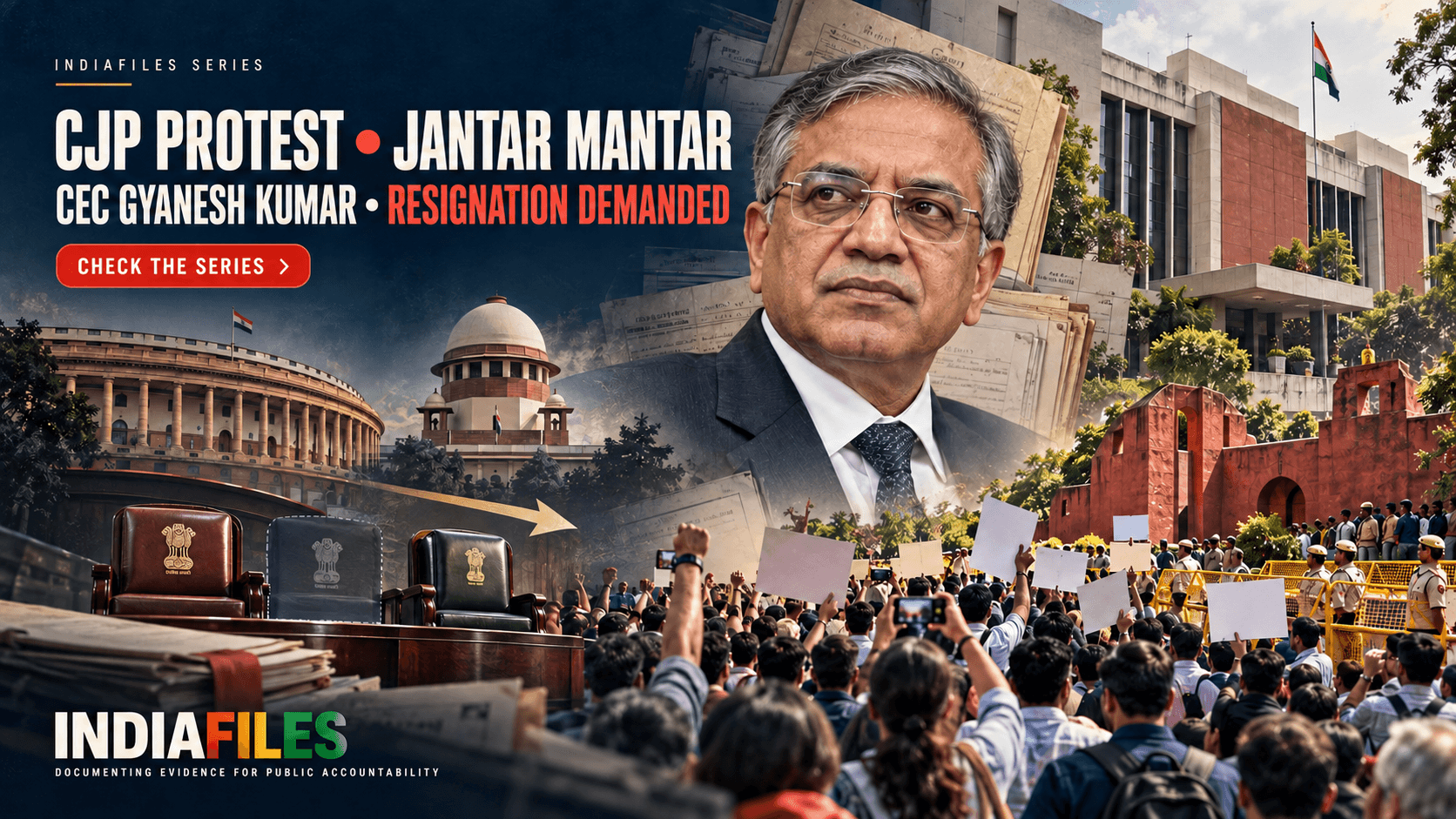
The Cockroach Janta Party (CJP) sought to hold a demonstration demanding accountability from Chief Election Commissioner Gyanesh Kumar over disputed electoral-roll revisions. Delhi Police said organisers applied on 7 October for the 10 October gathering, rather than giving the required advance notice. Officers also cited conduct during earlier protests, concerns about crowd control and the effect of a large demonstration on public safety and traffic. Police invoked prohibitory powers and planned extensive restrictions in central Delhi.
These are real, publicly stated reasons, contrary to the reel’s suggestion that no explanation was offered. They are not, by themselves, proof that a ban was justified. The relevant questions are whether the police assessment was supported by the facts, whether organisers could meet reasonable safety conditions, and whether a smaller or differently managed demonstration could have proceeded.
What happened to the protest venue?
The argument became more consequential after the reel appeared. Delhi Police subsequently removed Jantar Mantar from the list of designated protest sites and identified Ramlila Maidan, Burari Ground and CBD Ground as alternatives. CJP activists continued demonstrating; Reuters reported detentions at Jantar Mantar on 13 October after some protesters crossed barricades. These later incidents should not be mistaken for events already known when the 9 October reel was published.
On 15 October, the Supreme Court sought responses from the Centre and Delhi Police to a challenge against removing Jantar Mantar’s status as a protest site. That is judicial scrutiny, not a final ruling that the order was unlawful. The police have also defended the October measures by referring to earlier violence and disruption. The organisers’ objections and the police account both need testing against the actual orders, crowd conditions and less restrictive options.
There is significant counter-evidence to the reel’s broader claim that authorities will not allow protest anywhere: on 18 October, news reports said Delhi Police had granted permission for a Congress rally at Ramlila Maidan on 1 November. Approval for one rally does not settle whether other groups received fair treatment. It does show why a claim of a complete nationwide prohibition would be inaccurate.
What the Constitution and Supreme Court require
Articles 19(1)(a) and 19(1)(b) protect freedom of expression and peaceful assembly. The Constitution also allows specified reasonable restrictions, including those linked to public order. This is not an unlimited entitlement to occupy any road, enter a protected zone or ignore lawful safety directions.
In the Supreme Court’s 2018 Mazdoor Kisan Shakti Sangathan v Union of India judgment, the court treated peaceful demonstrations as a fundamental democratic right while recognising residents’ rights and the need for rules on time, place and manner. It called for a workable system allowing regulated protests around Jantar Mantar rather than an unqualified exclusion. The judgment expressly contemplated prior permission, with clear criteria for deciding requests.
That balance is central here. A permit system can be legitimate if authorities apply it consistently, explain refusals, make decisions in time and provide realistic alternatives. But forcing every peaceful group through an approval process that offers no usable place, or imposing sweeping barriers without evidence of necessity, would empty the constitutional protection of practical value.
Do earlier political protests change the principle?
The reel refers to BJP figures, including Arun Jaitley, protesting the Election Commission, and to Atal Bihari Vajpayee arriving at Parliament in a bullock cart. Vajpayee’s 1973 bullock-cart demonstration against fuel-price increases is documented. A precise matching instance for the reel’s Arun Jaitley claim has not been established by the sources examined for this account, so it cannot be treated as a verified parallel.
Historic protests do not prove that every gathering was permitted under earlier governments. They do illustrate why political theatre and peaceful dissent cannot simply be dismissed as illegitimate because a party dislikes the message. The same standard should apply to BJP supporters, Congress supporters, Aam Aadmi Party supporters, CJP supporters and people with no party affiliation.
The rights test is practical, not partisan
Police have a duty to prevent credible violence and protect commuters, residents and other members of the public. Where there is reliable evidence of danger or serious disruption, targeted restrictions can be justified. But that duty does not give authorities a blank cheque to suppress peaceful criticism. They must explain why a restriction is needed, why narrower measures would not suffice, and where lawful demonstrations can realistically take place.
The documented refusal of the 10 October rally, the later removal of Jantar Mantar’s status and the Supreme Court’s decision to examine that removal justify serious scrutiny. Police explanations cannot be dismissed as nonexistent, nor can they be accepted without examination. The strongest conclusion is that preserving a genuine, accessible route for peaceful protest is a constitutional obligation. When restrictions make that route practically unusable without adequate justification, they are unjust, whatever political party the protesters support.