MAIN MENU

Delhi’s 10 October protest on foreign news, and the attack on ‘cockroaches’ at home: what the coverage reveals
A reel contrasts hostile Indian television commentary about the Cockroach Janta Party with international reports of detentions and restrictions during Delhi’s 10 October protest. Confirmed police measures raise serious questions about the right to peaceful dissent, while claims about who was removed from voter rolls need careful qualification.
Listen to this article
Detecting language…
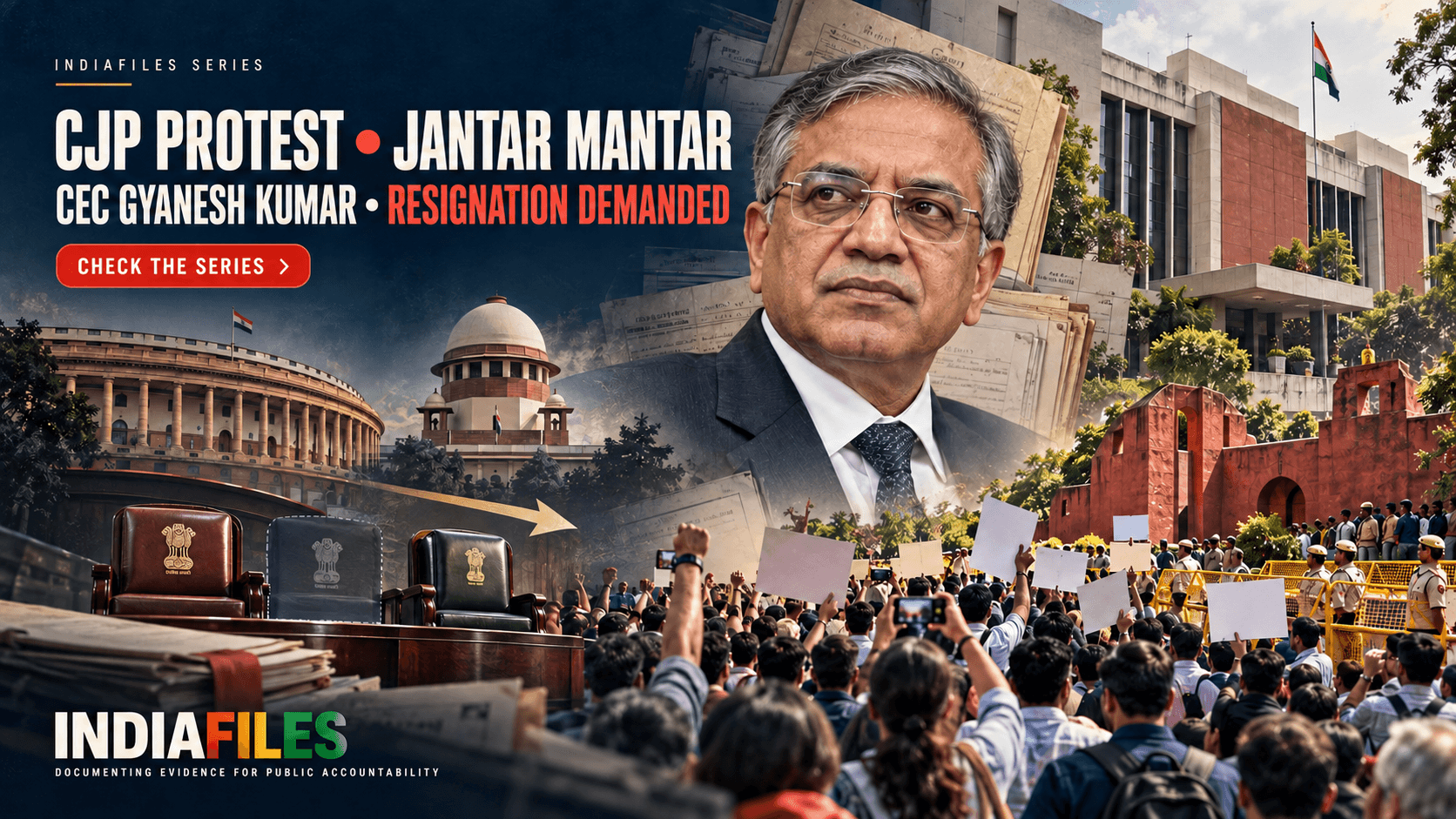
On 10 October 2026, Delhi’s planned demonstration against Chief Election Commissioner Gyanesh Kumar became an international news story. Police detained protesters, restricted movement in central Delhi and disrupted transport and mobile internet services. A widely shared Instagram compilation placed hostile language from an Indian television segment beside English-language international reporting of those restrictions. The contrast raises two connected questions: how was the protest described to different audiences, and what do the actual police measures tell us about the space for peaceful dissent?
What the contrasting clips show
The compilation opens with an Indian television speaker referring to protesters as ‘anti-national’, questioning who funds them and alleging that they want Sharia law. Those are accusations and political rhetoric, not facts established by the clip. The following excerpts, presented as foreign television news, describe the detention of Cockroach Janta Party founder Abhijeet Dipke, large numbers of protesters stopped from reaching the demonstration, transport restrictions and an argument about India’s democratic reputation. The montage selects brief excerpts and does not establish how every Indian or foreign newsroom covered the event. Nor does it independently identify and authenticate each excerpt’s original broadcast.
The group’s provocative ‘Cockroach’ name arose from a satirical youth movement. Describing people as traitors, suggesting secret funding or imputing religious aims without evidence replaces scrutiny of their demands with suspicion about their loyalty. Equally, the reel’s slogan ‘Godi Media Exposed’ is the uploader’s opinion, not proof of a uniform media conspiracy.
What happened on 10 October
The Cockroach Janta Party and allied groups called for a march around Jantar Mantar seeking Gyanesh Kumar’s resignation over the Special Intensive Revision (SIR) of electoral rolls. Reuters reported more than 2,000 detentions and widespread restrictions in Delhi, including interruptions to transport and mobile internet. The Guardian and Indian Express also documented extensive police deployments and limits on access to central Delhi. These independently reported events are stronger evidence than the montage itself.
Delhi Police said permission had not been granted and relied on prohibitory orders and public-order concerns. In a subsequent Supreme Court affidavit, police cited violence at an earlier July protest and disruption from demonstrations earlier in October. These are the authorities’ reasons; they do not by themselves establish that every detention, closure or communication restriction was necessary or proportionate. The different situations of peaceful marchers, people accused of violence and people simply travelling through Delhi should not be treated as one case.
The electoral-roll dispute behind the rally
The dispute is substantive. Reuters reported that approximately 130 million names had been removed during the wider electoral-roll revision, while the Election Commission has said the exercise addresses deceased, duplicate, relocated or otherwise ineligible entries. The protest movement and opposition parties dispute the fairness of the revision and warn that eligible citizens may have been removed. Reports of affected residents finding incorrect status entries show that wrongful exclusions need serious investigation.
But the assertion in the montage that the removed names were predominantly minorities and opposition voters is not established by the cited total alone. A removed entry is not automatically proof of a living eligible voter deliberately disenfranchised; neither does an administrative explanation rule out serious wrongful deletions or discriminatory effects. Reliable answers require roll-by-roll comparisons, transparent reasons for removal, correction outcomes and evidence about the affected populations. Accusations that the government deliberately engineered partisan exclusions remain allegations, not established legal findings.
What freedom of protest requires
Article 19 of the Constitution protects speech and peaceful assembly, subject to lawful, reasonable restrictions. Public safety can justify targeted measures where there is a genuine risk, but restrictions must be supported by evidence and proportionate to that risk. Preventively stopping large numbers of peaceful people, severely limiting access to a protest location or shutting communications without adequate justification is unjust, even where the authorities have a legitimate responsibility to prevent violence. A denied permit is not a blanket answer to whether every measure was justified.
The gap between the mocking Indian television excerpt and the international descriptions matters because citizens need reporting that tests official claims and protest demands alike. International coverage is not automatically more accurate; its numbers, anonymous commentary and claims also require checking. The stronger finding here is narrower and more important: a real large-scale police operation sought to prevent a political protest, and it deserves transparent scrutiny rather than automatic defence or automatic acceptance of every protester’s allegation.
Developments after the demonstration
Protests continued. On 16 October Reuters reported that police detained Dipke and student leaders ahead of another march, while the Indian Express reported subsequent police cases over alleged breaches of orders. By 19 October, accounts from voters in Delhi continued to describe disputed deletions and difficulties obtaining corrections. These later events reinforce that the electoral-roll controversy and protest-rights dispute were unresolved, not that the reel’s every allegation has been proved.
Conclusion: The reel preserves a pointed contrast: some domestic television rhetoric questions the patriotism and intentions of protesters while foreign coverage foregrounds the state’s restrictions on them. The 10 October detentions and disruptions are well documented. That conduct demands a rigorous, rights-based explanation from authorities. The broadcaster’s accusations and the reel’s sweeping media verdict cannot be adopted as facts, just as the scale of roll deletions cannot by itself establish partisan intent. A democracy is better served when both allegations of electoral exclusion and the state’s treatment of peaceful protesters are tested against evidence.