MAIN MENU

Protester says Gyanesh Kumar should be jailed: What election-law protections, voter-roll disputes and protest detentions actually show
A September 2026 protest clip accuses Chief Election Commissioner Gyanesh Kumar of escaping accountability while critics face action. India's 2023 law does protect commissioners over official acts, but allegations of vote theft are not proven by the speech. Appointment rules, voter-roll challenges and protest arrests reveal the wider accountability test.
Listen to this article
Detecting language…
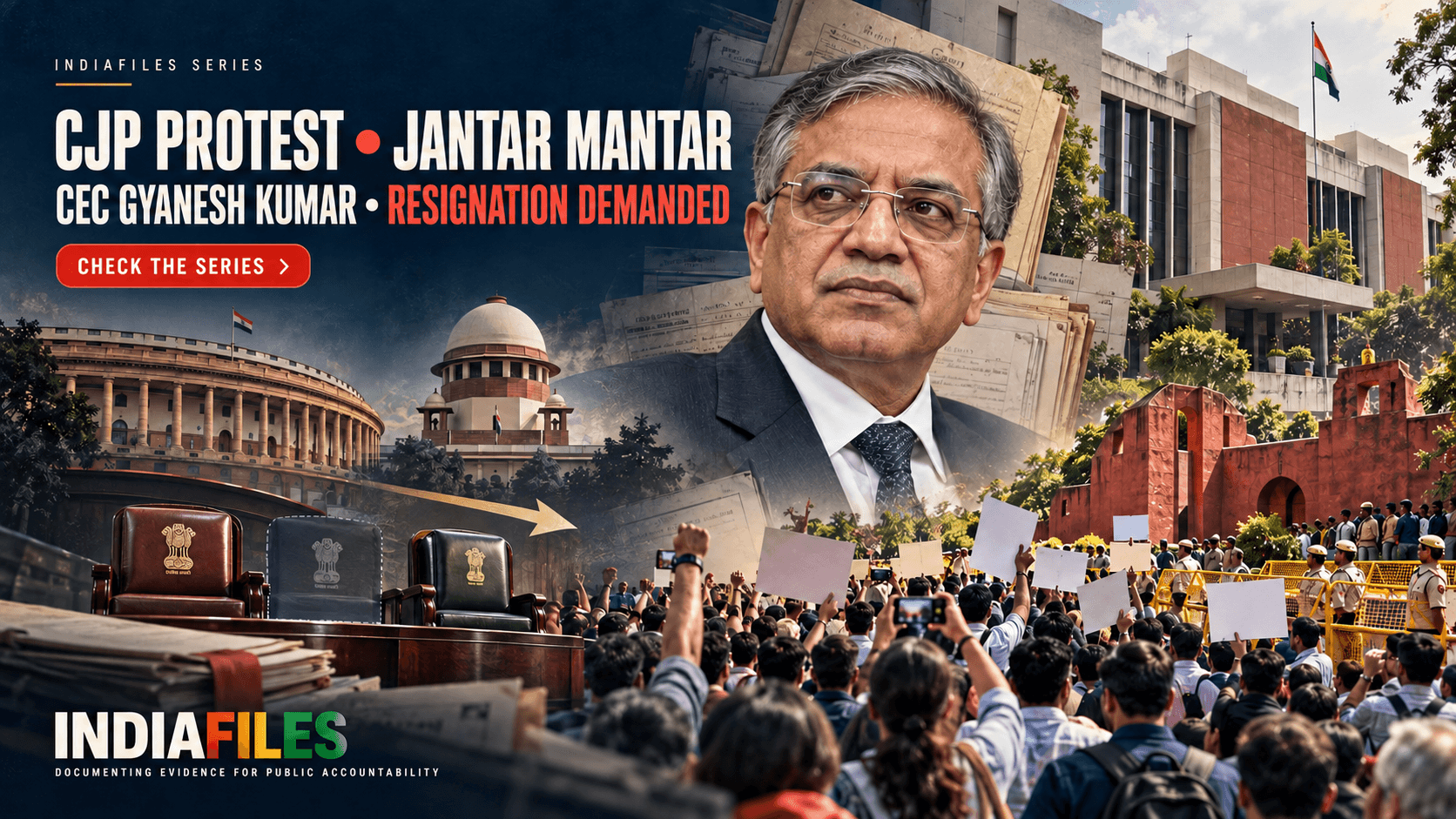
In a protest video shared by Truth Of Mirror on 25 September 2026, a young speaker argues that Chief Election Commissioner Gyanesh Kumar should face jail if breaking the law were punished equally. She contrasts allegations of wrongdoing in voter-list revisions and the way election commissioners are appointed with the treatment of citizens who challenge the government or the Election Commission. The allegation that Kumar carried out vote theft is not established by the clip, but the unequal-accountability question deserves an examination of the actual law and documented events.
What the accusation is about
The speaker criticises Kumar, says citizens face punishment for speaking about democracy, objects to how commissioners are selected, and refers to names being removed from electoral rolls. These are linked claims about whether the officials who administer elections face adequate scrutiny and whether people can challenge them without disproportionate police action. Her accusation of criminality is an allegation, not a court finding. The video does not supply an independently verified transaction or order proving that Kumar personally committed electoral fraud.
What protection does an election commissioner actually have?
Section 16 of the Chief Election Commissioner and Other Election Commissioners Act, 2023 says courts cannot entertain or continue civil or criminal proceedings against current or former election commissioners over acts or words done while carrying out, or purporting to carry out, official functions. This is a substantial legal shield, including after leaving office. It is not a declaration that every private act is lawful, nor proof that an official has committed a crime. The precise scope of protection in a contested case is a legal question, not one the reel decides.
The distinction matters. Disputes about election administration and challenges to official decisions do not automatically become personal criminal prosecutions. Even so, a protection written this broadly raises a serious accountability question: when an official act is alleged to be deliberate misconduct, citizens need meaningful routes to examine documents, challenge decisions and obtain independent review. Legal protection should not be confused with public vindication.
Why the appointment system is disputed
Section 7 of the 2023 Act places the Prime Minister, the Lok Sabha Leader of Opposition, and a Union Cabinet Minister nominated by the Prime Minister on the three-member selection committee. This gives the government side two seats. It replaced the Chief Justice of India in the temporary selection arrangement laid down by the Supreme Court in 2023. Kumar took office as Chief Election Commissioner on 19 February 2025 under a government notification. The existence of a government-majority selection panel does not by itself establish that a particular commissioner acted on political orders.
The appointment system remains under constitutional challenge. On 23 September 2026, two Supreme Court judges differed over the route for considering the challenge, and the case was sent to the Chief Justice of India for an appropriate larger bench. That was not a final declaration that the law was invalid. The still-open dispute goes to the perceived independence of the body supervising elections.
Voter-list changes: evidence of a serious problem is not proof of a personal crime
India’s Special Intensive Revision (SIR) of electoral rolls has led to wide-ranging deletions or non-inclusions and challenges from affected voters. Critics allege that eligible people have been unfairly excluded and that the process may harm particular communities; the Election Commission says the exercise is meant to update and clean voter records, including removing entries of deceased, moved or untraceable people, and points to claims-and-objections procedures. These positions are not interchangeable with an independent adjudication of every disputed deletion.
In proceedings concerning Goa, the Commission argued that omission from an SIR draft roll is not the same as a final deletion and that voters can seek inclusion through the prescribed process. That distinction may matter legally, but it does not erase the practical harm if eligible voters encounter incorrect records, burdensome documentation or delays before voting. A meaningful assessment requires the electoral-roll data, reasons for each exclusion, appeal outcomes and checks for unequal impact. The protester’s language of theft goes beyond what this reel proves about Kumar personally.
On 15 October 2026, reports said the Supreme Court sought records from the Election Commission in a challenge to SIR decisions. Seeking records signals scrutiny; it is not a final judicial finding of vote-rigging.
What happened to people challenging the Commission?
The speech’s comparison with the treatment of dissent has a documented basis in subsequent demonstrations, though each incident must be judged on its facts. Protesters calling for Kumar’s resignation were detained in Delhi and other cities in October. Police have cited restrictions on protest locations and preventive legal orders. Protesters and rights advocates have challenged whether these measures were proportionate. Reuters reported the detention of Cockroach Janta Party leaders after a confrontation over earlier legal undertakings. An arrest or detention does not itself show that criticism of the Election Commission was legally made a crime.
Peaceful political criticism deserves strong protection. When authorities detain non-violent protesters, they should show an actual lawful and necessary public-safety basis, apply restrictions consistently and allow review. Detaining peaceful critics merely because their allegations embarrass powerful officials would be an unjust use of power. Whether that happened in each particular detention requires examination of the police grounds, conduct and court records.
The accountability gap this debate exposes
The clearest established finding is not that Kumar has committed a proved crime. It is that Parliament gave election commissioners significant protection for official conduct, while the 2023 appointment process places a majority of selection seats with the Union government, and contentious voter-roll changes are being challenged through courts and protests. These arrangements create a justified need for transparent, independent oversight. Judicial scrutiny and correction of voter-roll errors are not substitutes for each other; both matter.
The speaker’s demand for equal accountability is a legitimate democratic criticism, but imprisonment needs evidence of a defined criminal offence and lawful proceedings. Electoral independence does not mean immunity from scrutiny, and electoral controversy does not make every allegation of theft true. The defensible standard is clear: eligible voters must have workable correction and appeal routes, officials must answer evidence-based questions, and peaceful critics must not face disproportionate punishment.