MAIN MENU

“Murderers get bail, nationalists in jail”: Two October 2026 cases raise different questions about liberty and political power
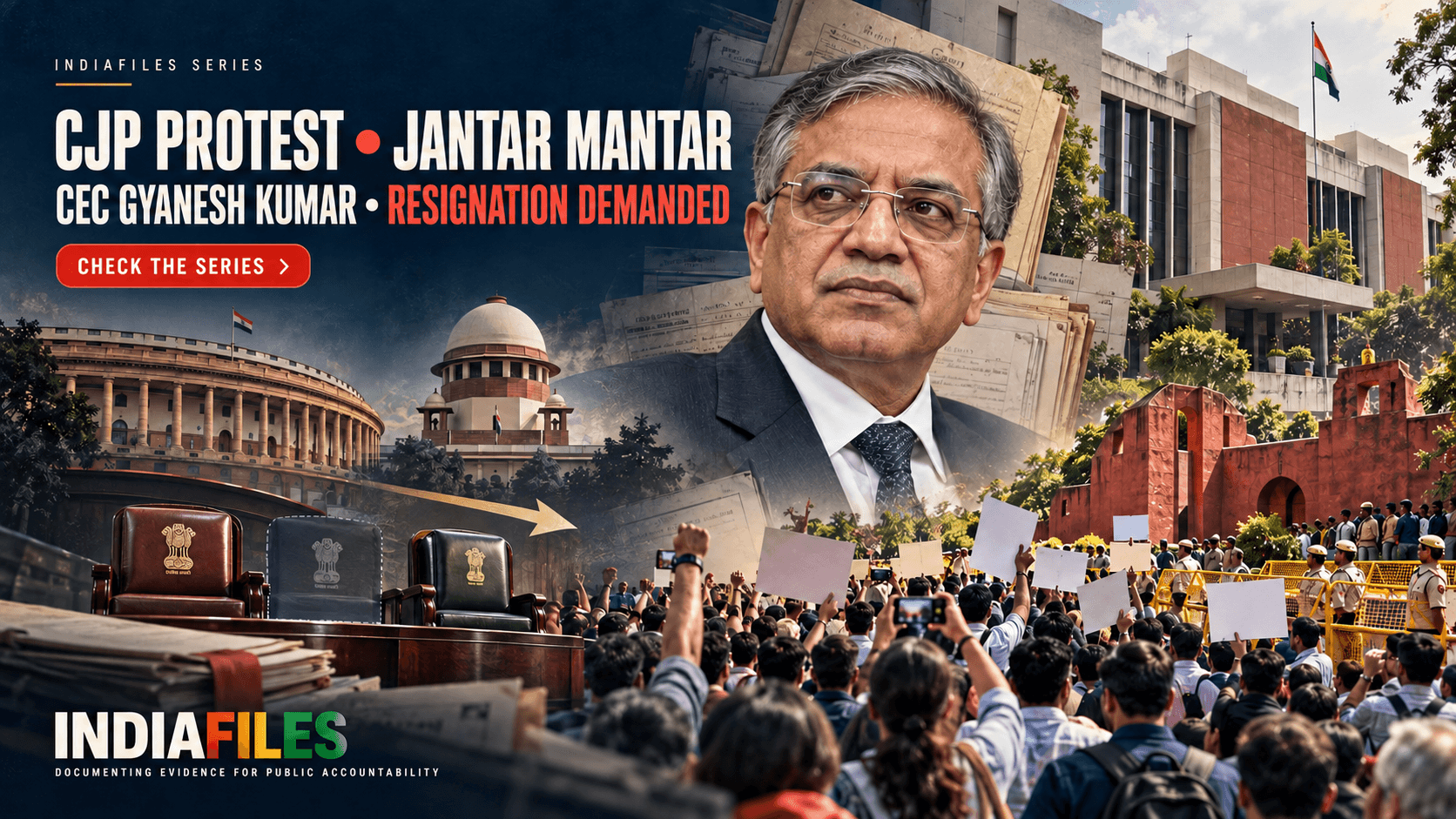
As Delhi protesters Saurav Das and Ashutosh Ranka remain in preventive custody, the Allahabad High Court has stayed murder convict Nandlal Rai’s conviction and sentence pending appeal. The contrasting orders raise serious questions about proportionality and equal treatment, but do not prove a political deal.
Listen to this article
Detecting language…
On 20 October 2026, two very different legal cases were being discussed together. In Delhi, Cockroach Janta Party (CJP) organisers Saurav Das and Ashutosh Ranka remained in custody after entering the Jantar Mantar protest area. In Uttar Pradesh, the Allahabad High Court had suspended the murder conviction and life sentence of Nandlal Rai, also known as Babloo Rai, while his appeal was pending. Rai had told the court he wanted to contest the 2027 Assembly election, as an independent or potentially on a BJP ticket.
The contrast is troubling, but precision matters. The Delhi pair have not been convicted of murder or of any comparable crime; their custody arises from preventive proceedings over alleged breaches of police restrictions and peace bonds. Rai, meanwhile, was convicted by a trial court, and his conviction has been temporarily stayed rather than overturned by a final acquittal. These are different legal procedures, and neither outcome establishes that a party influenced a judge.
Why the Jantar Mantar protesters are in jail
Police say the CJP protesters entered an area that had ceased to be a designated protest site, crossed barriers and repeatedly breached restrictions. The group says its members were carrying the national flag and raising slogans. Waving the flag is not by itself a crime, but neither does it settle whether they broke a lawful restriction. The actual justification for continued custody must be assessed against what they did, the likelihood of an immediate threat, and the safeguards available to them.
Ranka and Das were taken into custody on 14 October and initially sent to Tihar Jail for five days. On 19 October, a Special Executive Magistrate extended their detention by two days. The official reasoning referred to earlier peace bonds, alleged repeat violations and the risk of further disruption. Their lawyers challenged the sufficiency of those grounds and the handling of sureties. By 20 October, CJP had approached the Delhi High Court alleging arbitrary preventive detention and denial of liberty under Article 21. Those allegations had not yet been established by a final court ruling.
Preventive detention proceedings are not a criminal conviction. A Special Executive Magistrate exercises limited powers to prevent a feared breach of peace; the office is not a criminal trial court deciding guilt. That makes a prompt, reasoned hearing and a genuine opportunity to furnish a bond especially important. Where officials keep people in custody mainly because they may protest again, they must explain a concrete risk and why less restrictive conditions are insufficient. Prolonged detention based on vague fears rather than evidence would be an unjust interference with peaceful political participation.
Why the Allahabad High Court granted relief to Nandlal Rai
Rai and Sheshnath Sharma were convicted and sentenced to life imprisonment by a Varanasi court in April 2025 over the 2017 killing of Pramod Kumar Nigam. In an order dated 5 October 2026, Justices Siddharth and Vinai Kumar Dwivedi granted relief while the appeal proceeded. Reports of the order say the bench considered both the proposed election bid and the impact of continuing imprisonment while an appeal awaited final hearing. It suspended the conviction and sentence and granted bail; the trial judgment has not been finally reversed.
The fact that Rai expressed a wish to stand on a BJP ticket does not mean the BJP selected him as its candidate. It also does not prove that his political connections caused the court’s order. The court’s reasoning and the legal standards for suspending a conviction are open to scrutiny, particularly because the relief can affect eligibility to contest elections. The victim’s interests, the seriousness of the offence, the status of the appeal, and whether comparable applicants would receive the same consideration are relevant to evaluating the decision.
What the comparison shows—and what it does not
There is a real public-interest question here: why do people held preventively over a protest remain behind bars while a person convicted of murder at trial receives interim relief? The apparent difference in treatment warrants careful scrutiny. At the same time, comparing the length of custody alone cannot establish unlawful discrimination: the statutory tests, facts, decision-makers and stages of proceedings differ.
Two standards must apply consistently. Restrictions on non-violent protest should be necessary, proportionate and open to prompt judicial review. Exceptional relief from a serious criminal conviction must have transparent, case-specific reasons rather than preferential treatment for political ambition. The Delhi authorities’ reported reliance on possible future disorder demands particularly close examination because loss of liberty before any criminal conviction is a severe measure.
The strongest supported conclusion is not that murderers are generally favoured over patriots, nor that a political party secretly directed either court. It is that these two documented outcomes put the fairness, reasoning and proportionality of decisions affecting liberty under sharp public scrutiny. If the Delhi detention cannot be justified by a concrete threat and fair procedure, its continuation is unjust. The Allahabad High Court’s decision also deserves scrutiny on its stated legal reasons, without treating interim relief as an acquittal or political collusion as an established fact.