MAIN MENU

Journalist Harsh showed his press card during Delhi’s 2 October protest detentions — what the incident says about reporting rights
A 2 October 2026 reel identifies journalist Harsh as he repeatedly refers to his press card during police action near Jantar Mantar. Independent reporting confirms large protest detentions that day, but the individual detention and its legal basis require separate scrutiny. Later detentions of reporters deepen the press-freedom question.
Listen to this article
Detecting language…
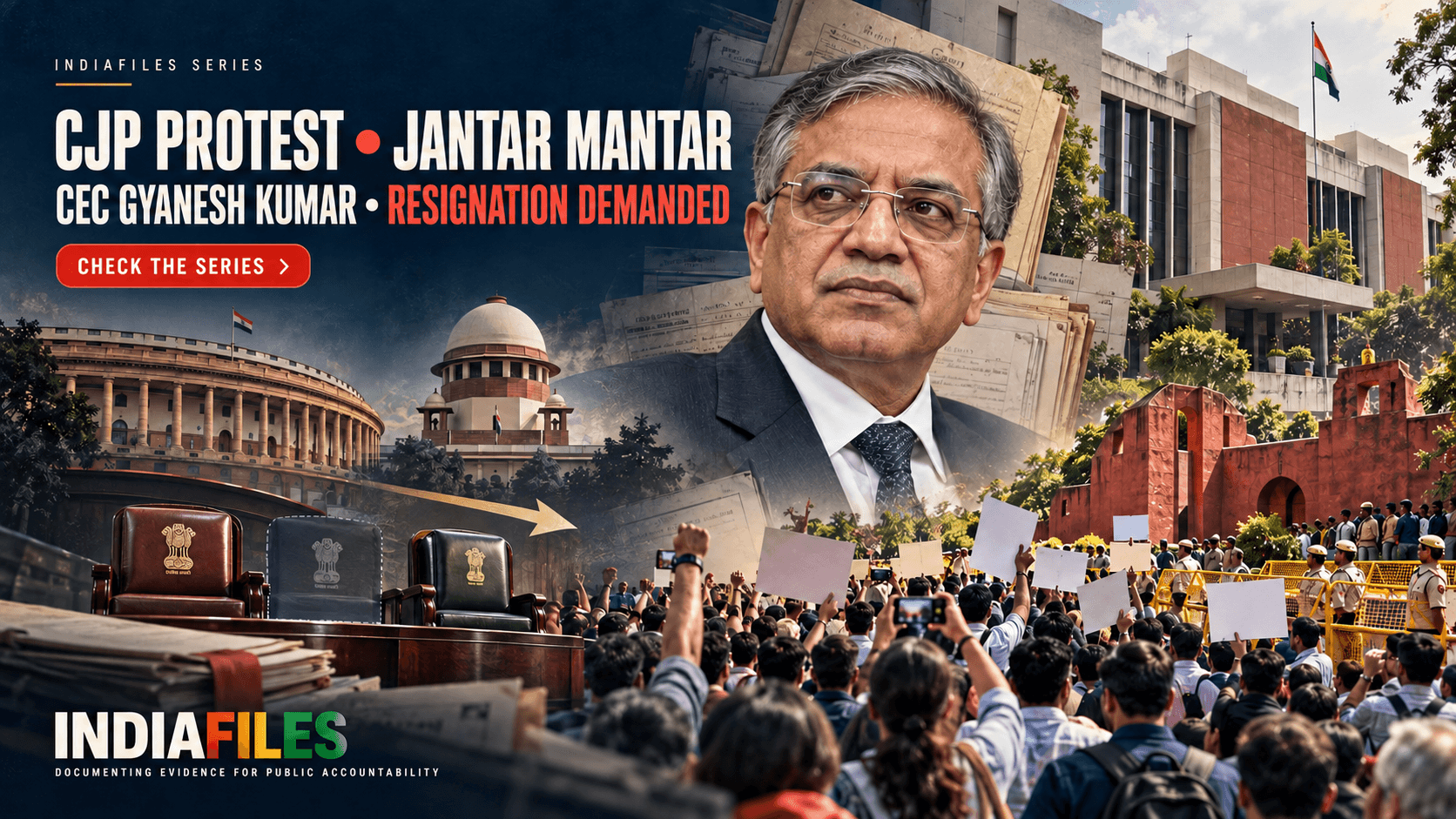
On 2 October 2026, The Observer Post shared a short video identifying the man seen holding up a press identification card as independent journalist Harsh. The outlet reported that Delhi Police detained him while he was covering protests against Chief Election Commissioner Gyanesh Kumar around Jantar Mantar. In the recorded exchange, a man repeatedly says in Hindi that he has a press card. The clip raises a specific question: why would a person identifying himself as a reporter be taken into custody while documenting a public demonstration?
What happened on 2 October
The protest was called by opposition parties and student groups demanding Gyanesh Kumar’s resignation over alleged irregularities in the Special Intensive Revision (SIR) of electoral rolls. Those allegations were the protesters’ position, not findings established by the demonstration. Police restricted access to the Jantar Mantar area and took protesters to police stations.
Contemporaneous reporting by The Indian Express records that police put the number detained at about 550, while some accounts placed it above 700. It reports deployment of more than 4,000 officers and quotes police as saying the detained protesters had all been released by around 6 pm. Delhi Police said restrictions under Section 163 of the Bharatiya Nagarik Suraksha Sanhita would apply in the area until 21 October. Police denied manhandling protesters. These figures concern protesters broadly; they do not independently establish the precise circumstances of Harsh’s detention.
What the Harsh recording establishes — and what it does not
The Observer Post’s reel shows a man displaying what appears to be an identification card and repeatedly referring to his press card. The outlet identifies him as Harsh and says police detained him. The account also tagged @harshdelhise. The video is relevant evidence of his attempt to identify himself as press, but the short extract alone does not establish which officer authorised any detention, the formal grounds given, its duration or how the encounter ended. An automated Hindi transcription contains uncertain names and unrelated speech; those parts are not reliable enough to attribute to an officer or make allegations about any named person.
Even so, the central distinction matters. A press card does not exempt anyone from lawful, necessary and proportionate police directions. But covering a protest is not, by itself, grounds for treating a journalist as a participant in an unlawful gathering. Authorities should be able to explain the particular conduct and legal basis for interfering with reporting, rather than assuming presence near demonstrators is sufficient.
Why this is not just one disputed encounter
Reporting in October describes further detentions of journalists at demonstrations linked to the same dispute over electoral rolls. Hindustan Times reported that at least 12 journalists were detained while covering protests on 11 October, including journalists who said they displayed press identification. Reuters reported complaints from journalists and press-freedom advocates about treatment during those later protests. Those are separately dated incidents, not proof of Harsh’s full experience on 2 October. They do, however, show that access to protests and the treatment of identifiable reporters became a recurring and documented public issue.
The public-interest test
Police have a legitimate duty to manage safety, crowd movement and restrictions lawfully imposed in busy areas. That duty must be balanced against the public’s right to know what officials and demonstrators do. Detaining someone solely for reporting a peaceful protest, if that is what happened, would be an unjustified interference with press freedom. A proportionate police response should distinguish observation and reporting from actual prohibited conduct, use less restrictive alternatives where feasible, and allow the grounds for detention to be examined.
For this specific encounter, the available reel and outlet’s account support a serious question requiring an explanation from Delhi Police; they do not yet establish a court finding of unlawful detention or identify a particular officer as responsible. The wider 2 October detentions are independently reported, and later incidents involving journalists provide additional reason to demand clear, case-specific answers. The principle is concrete: public demonstrations must remain reportable, including when the authorities restrict participation in them.