MAIN MENU

Polling-station CCTV: Gyanesh Kumar’s privacy defence and the case for checking late-voting claims
A 2025 political reel disputes the Chief Election Commissioner’s refusal to release polling-station footage, arguing that recordings could test claims about late arrivals. Voter privacy is a legitimate concern, but it does not explain why carefully supervised access, preservation and independent scrutiny should be ruled out.
Listen to this article
Detecting language…
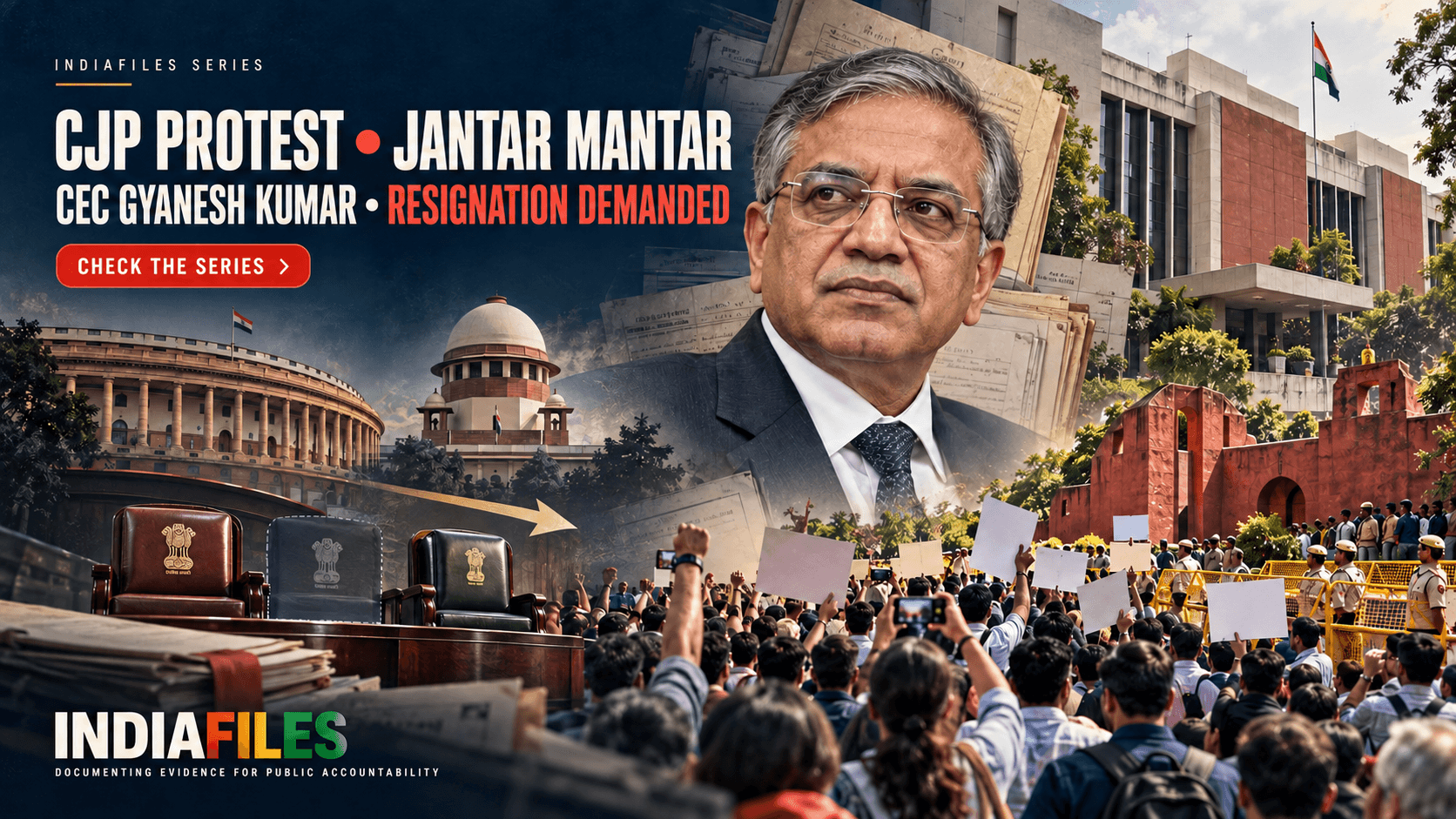
When Chief Election Commissioner Gyanesh Kumar defended withholding polling-station CCTV recordings in August 2025, he asked whether footage of voters, including women and family members, should be shared publicly. A video posted by INC Bihar on 28 August 2025 challenges that argument. Its speaker says election footage could help determine whether large numbers of people really arrived to vote late in the day, without needing to identify individual voters.
The disagreement is not simply about whether cameras should exist. It is about who can inspect election recordings, under what safeguards, and whether useful evidence is kept long enough to test a complaint.
What the Commission actually said
At a press conference on 17 August 2025, Kumar criticised allegations of electoral wrongdoing and warned against exposing voters’ images without consent. Reports of the event record his question about making CCTV videos of mothers, daughters-in-law, daughters and other voters public. This was a privacy argument against disclosure, not proof that the underlying allegations of vote theft were either true or false.
The reel’s speaker responds that polling stations are public election settings, not private rooms, and argues that recordings could be examined for crowd size and timing rather than faces. That is the reel’s central proposition. It does not itself provide a specific polling-station recording, reliable late-hour turnout figures or a demonstrated case of fraudulent voting.
Privacy is real, but public release and controlled inspection are different
People entering a polling station can be identifiable from footage. Publishing complete recordings online could expose their movements, enable harassment or reveal sensitive associations. It would also be wrong to assume that a camera inside a polling station records how someone voted: secrecy protections are meant to prevent that.
Yet publishing every frame to the public is not the only possible response to an election complaint. Where relevant footage exists, a narrowly defined review by a court or another properly authorised body could protect identities, limit copying and examine time-stamped arrivals or queues. Whether such a review can establish the particular claim depends on the camera’s angle, recording quality, time synchronisation and the records against which it is checked. Crowd size alone cannot prove how many valid votes were cast; queues, polling logs and other election records would also matter.
Why retention and access rules matter
In December 2024, the government amended Rule 93(2)(a) of the Conduct of Election Rules, narrowing the wording governing public inspection of election records. In May 2025, the Election Commission also instructed that CCTV, webcasting and photographic records be retained for 45 days after results, with preservation where an election petition is filed. The Commission cited misuse of selective recordings and misinformation as reasons for the change.
Those are separate issues: the legal scope of general public inspection, the time for preserving recordings and the conditions under which a court can demand them. The Election Commission’s own May 2025 instructions, later quoted in Delhi High Court proceedings, contemplated producing original material before the High Court hearing an election petition. They did not establish an unrestricted public right to receive recordings.
The 45-day rule creates a practical accountability problem where an issue is identified or litigated too late. A later 2025 Delhi High Court proceeding involving Mehmood Pracha examined preservation instructions, but should not be represented as a finding that the reel’s claims about late voting were correct.
What the reel establishes—and what it does not
The August 2025 political video makes a defensible distinction between checking a disputed election process and indiscriminately exposing voters. Its criticism has force where privacy is used as a blanket answer without explaining workable methods for evidence preservation and protected inspection. But the video does not establish election fraud, prove that particular late-hour figures were false or show that the Commission destroyed evidence to conceal wrongdoing.
Election authorities have a responsibility to protect voters and to make serious, specific complaints meaningfully testable. Neither blanket publication nor blanket secrecy is an adequate general rule. The strongest justified conclusion is that privacy safeguards and accountable examination must be designed together: preserve relevant recordings, enable lawfully supervised review when warranted, and explain clearly what such footage can and cannot prove.