MAIN MENU

At Delhi’s Tiranga March, a protester compares 2011 with 2026: what changed in policing dissent?
A woman at Delhi’s 16 October 2026 Tiranga March recalled joining anti-corruption protests before the BJP came to power and questioned today’s detentions. Records show police crackdowns under both governments, while the 2026 arrests and women’s justice protests raise fresh questions about necessary limits on peaceful dissent.
Listen to this article
Detecting language…
At the 16 October 2026 Tiranga March in Delhi’s Connaught Place, a woman interviewed by Foej Media explained why she had again come out carrying India’s national flag. She recalled joining anti-corruption protests as a college student during the Congress-led UPA government, when she hoped a change in power would improve the country. Now, she said, she felt angry about the treatment of protesters under the BJP-led government. Her comparison raised a serious question: have people become less free to protest, or does a fuller record show a more complicated history?
What brought protesters to Connaught Place?
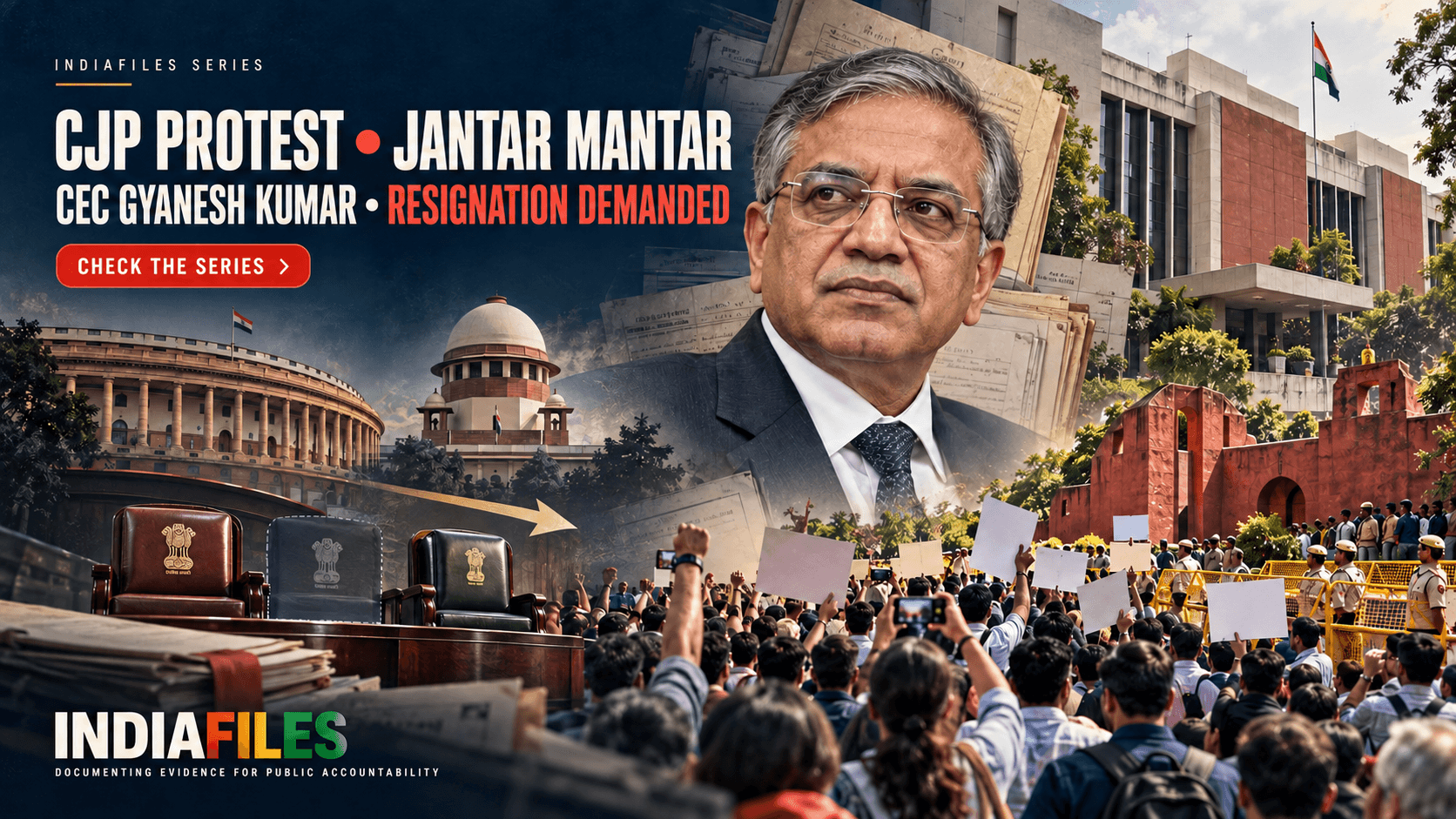
Organisers called the Lehra Do Tiranga march amid protests over electoral-roll revisions, demands for Chief Election Commissioner Gyanesh Kumar’s resignation, and the detention of activists associated with the Cockroach Janta Party (CJP). Demonstrators gathered with national flags despite police restrictions. Reuters and The Indian Express reported that CJP founder Abhijeet Dipke and All India Students’ Association (AISA) leader Neha Bora were detained around the march. Bora was released on 17 October; Dipke was subsequently released subject to peace-bond conditions. The groups’ allegations that electoral-roll revisions were politically biased are contested, not established by the march or this interview.
The woman’s point was not merely that she opposed one party. She described an experience of political disappointment: having supported change after the anti-corruption movement, she now believed protesters were being restrained instead of heard. She also argued that demonstrations can continue without a single organiser because others can step forward when leaders are detained. That is her account and political judgment, not proof of why each police action occurred.
Was protesting easier before 2014?
Her memory of personally protesting without being detained may be entirely genuine. But the broader claim that the Congress government respected protesters and did not detain them is contradicted by contemporary records. In August 2011, Delhi Police arrested Anna Hazare before his planned anti-corruption fast and detained many of his supporters. A statement to Parliament on 17 August 2011 set out the government’s justification: organisers had rejected conditions for the proposed gathering, prohibitory orders were imposed and police invoked preventive powers.
There was also a harsh police response to the mass demonstrations following the December 2012 Delhi gang rape: officers used tear gas and water cannons against protesters near Raisina Hill. Some protesters tried to breach barricades and there were incidents of damage, which form part of the context; they do not erase the need to assess whether police force against particular people was proportionate. These documented episodes mean neither the UPA years nor the present can be described fairly as an era in which dissent was always treated gently.
What has changed also includes where citizens can demonstrate. Jantar Mantar has long served as a visible protest site, but Delhi authorities’ more recent restrictions and designated-venue policy have become a particular focus of dispute. A protest restricted to a distant venue may remain technically possible while losing much of its ability to draw public attention. That practical effect deserves scrutiny alongside the formal question of permission.
What does the law allow the police to do?
Articles 19(1)(a) and 19(1)(b) of the Constitution protect expression and peaceful assembly, subject to reasonable restrictions, including for public order. Police need to protect other people’s safety, access to roads and businesses, and emergency services. These are genuine responsibilities. They do not automatically justify detention whenever a planned gathering lacks permission.
In its 2018 Mazdoor Kisan Shakti Sangathan decision, the Supreme Court recognised both the fundamental right to peaceful protest and the need to balance it with the rights of residents and other users of public space. The meaningful test is whether there was a specific risk and whether a narrower measure—such as an agreed route, limits on numbers, traffic arrangements or a nearby venue—could have addressed it.
Police cited restrictions and public-order considerations around the 16 October march. A court had also been asked to consider traders’ concerns about disruption in Connaught Place. Those concerns should be heard; equally, the fact that officers had legal powers does not settle whether each preventive detention was necessary. The public reporting establishes that named organisers were detained, but it does not establish that all demonstrators were violent or that holding a Tricolour was itself a crime. Neha Bora has since challenged a peace-bond notice, arguing it suppresses peaceful dissent. That is a pending legal challenge, not a judicial ruling in her favour.
Why did she link the march to women seeking justice?
In the interview, the woman referred to Ankita Bhandari’s family and to women wrestlers who protested against former wrestling federation chief Brij Bhushan Sharan Singh. These were separate cases, but she connected them through the question of whether women and their supporters can seek accountability without intimidation or unnecessary restraint.
The link to the Ankita Bhandari family is concrete: Delhi Police briefly detained Ankita’s parents following their overnight demonstration at India Gate on 15 October 2026. They were protesting the appointment of Dushyant Kumar Gautam as Sikkim governor and demanding further investigation into the murder case. Three men had been convicted in Ankita’s 2022 murder case; the family’s further allegations about the role of a politically connected person are not established criminal findings. Reporting also notes that Gautam’s name had not emerged in the investigation at that stage. Neither the family’s protest nor its detention proves the allegation against him.
The wrestlers’ protest likewise reflected a serious demand for accountability, but the legal outcome cannot be omitted: in August 2026, a Delhi court acquitted Brij Bhushan Sharan Singh and a co-accused in the criminal sexual-harassment case involving women wrestlers. Singh denied wrongdoing. The protests, the accused’s rights and the court’s decision are distinct facts. The interviewee’s sweeping assertion that the government ‘hates women’ is a political opinion about perceived conduct, not a demonstrable finding about every official’s motive.
What the comparison really tells us
The woman’s memory of marching hopefully more than a decade ago and angrily today captures a real political change in her own outlook. But it would be misleading to turn that memory into a claim that detentions began only after the BJP took power. Records from 2011 and 2012 show that governments of different parties have restricted demonstrations and used force against protesters.
The better-supported and more urgent finding concerns the conduct in these particular October 2026 protests: police detained people organising or taking part in dissent, including leaders of the Tiranga March and the grieving parents of a murder victim. These were substantial interferences with public participation. Where authorities cannot show a concrete threat and explain why less restrictive measures would not work, such detention is unjust and undermines the freedom to assemble, whatever party governs. A fair judgment requires the same standard for the UPA-era crackdowns and the current police actions—not nostalgia for one government or an assumption that every protest-related allegation is true.