MAIN MENU



Filters
An October protest reel questions Delhi Police personnel whose nameplates are not visible. Police uniform rules require identification, while officers have offered conflicting explanations involving lost badges and online targeting. The unresolved question is how officers can be safely identified and held accountable during protests.
ENTITIES : Delhi Police
GEOGRPAHY : Delhi
EVIDENCE : Primary Source
PERIOD : 2026
UPDATED : 19 Oct 26 / 7:36 pm
No comments on Missing Delhi Police nameplates at Jantar Mantar protests: identification rules, safety explanations and accountability
In a reel linked to the 10 October 2026 Delhi protests, a woman described as being from Manipur questions why police invoked Section 163 when she says she stood alone. Her challenge connects restrictions on peaceful dissent with the long-running violence and unfinished accountability in Manipur.
EVIDENCE : Primary Source
UPDATED : 19 Oct 26 / 7:20 pm
In a 10 October exchange, reporter Pranav Pradhi questioned police about stopping demonstrators under BNSS Section 163 while reportedly allowing threatening counter-groups to assemble. The restrictions are documented; the alleged groups’ identities, threats and police response remain unverified, raising a specific test of equal enforcement.
Journalists speaking at the Press Club of India describe obstruction, detention and mistreatment while covering protests against Chief Election Commissioner Gyanesh Kumar. Independent reporting and press bodies document wider detentions, while specific assault and harassment allegations remain subject to investigation—raising a concrete question about policing and the right to report.
ENTITIES : Delhi Police
GEOGRPAHY : Delhi
TYPE : Reporting
PERIOD : 2026
UPDATED : 19 Oct 26 / 7:10 pm
At the 12 October 2026 Delhi march over electoral-roll changes, women protesters and opposition supporters accused police of rough treatment while dispersing crowds. The footage raises a specific question: how far may police go to control a restricted protest, and what evidence is needed to assess allegations of excessive force?
TAGS : Right to Peaceful Protest
ENTITIES : Delhi Police
GEOGRPAHY : Delhi
TYPE : Event
EVIDENCE : Unverified
PERIOD : 2026
UPDATED : 19 Oct 26 / 7:07 pm
A reporter at the 16 October 2026 Connaught Place march says a counter-gathering chanted for ‘traitors’ to be shot. The allegation remains independently unconfirmed, but the documented counter-protest, police restrictions and electoral-roll dispute expose a central democratic distinction: questioning authorities is not disloyalty, and political disagreement cannot justify threats of violence.
After Delhi Police removed Jantar Mantar as a designated protest venue, a protester argued that shifting demonstrations away from central institutions makes dissent easier to ignore. Three alternative grounds, competing court positions and a pending Supreme Court challenge show why the real issue is whether protest remains accessible, visible and fairly regulated.
A 15 October 2026 confrontation near Shankar Market captures a sharper dispute: protesters say they were denied space to assemble peacefully, while Delhi Police cites security and public-order restrictions. The removal of Jantar Mantar as a protest venue has brought the balance between policing and democratic dissent under Supreme Court scrutiny.
Rajasthan’s 16 August 2026 order made government-school visits and recording subject to permission just as a citizen school-inspection campaign gathered attention. Children’s privacy warrants protection, but the broad discretion given to principals raises a real accountability question; the political motive alleged by critics remains unproved.
ENTITIES : Cockroach Janta Party (CJP)
GEOGRPAHY : Rajasthan
TYPE : Analysis
PERIOD : 2026
UPDATED : 19 Oct 26 / 5:30 pm
Author Series
From the 2023 election-commissioner appointment and legal-protection framework to voter-roll disputes, Delhi's CJP protests, detentions, the Tiranga March and a London demonstration, these connected records examine electoral accountability and the treatment of peaceful dissent. Verified restrictions and reported internal objections do not by themselves prove deliberate vote theft or politically directed suppression.
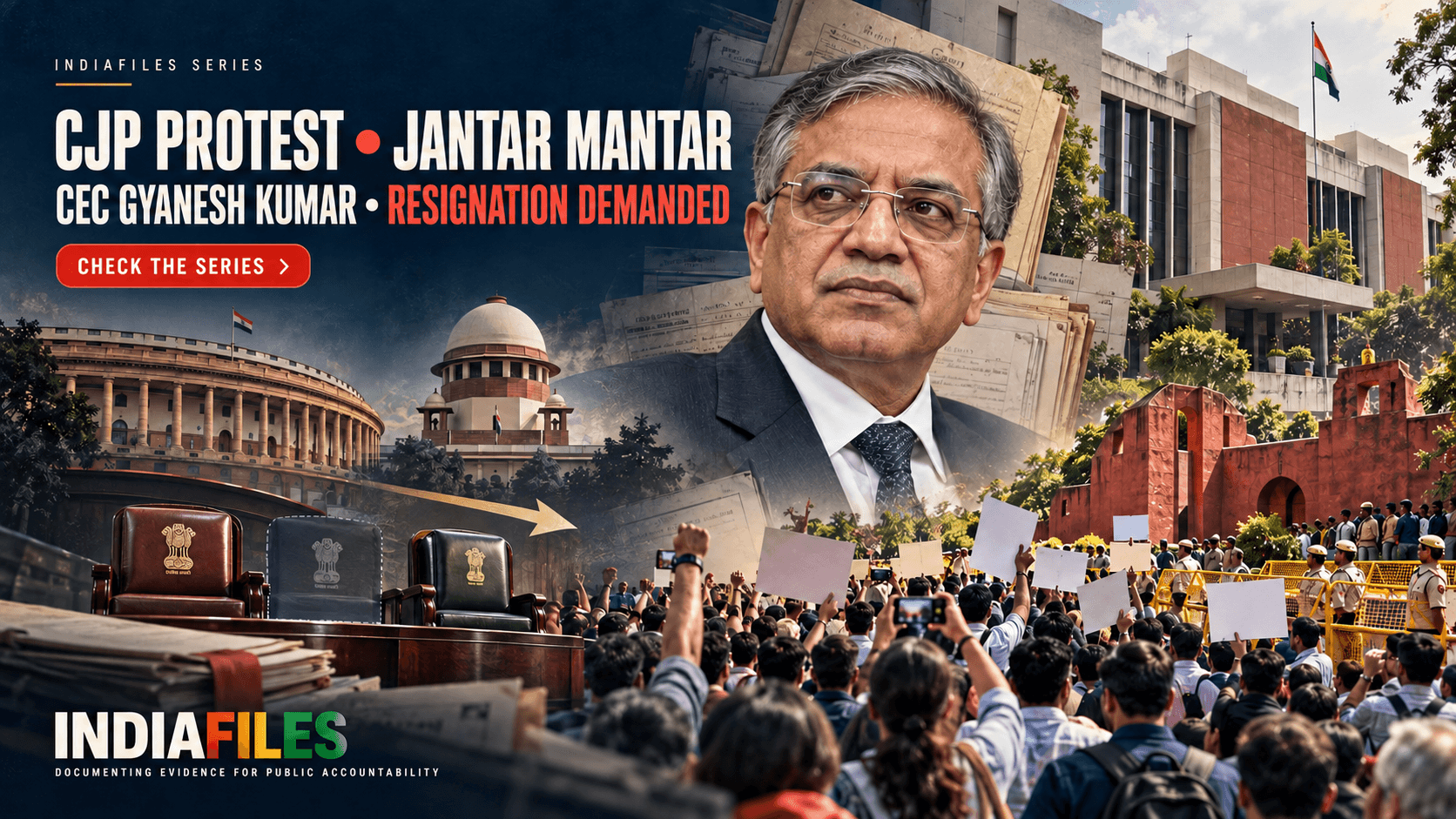
TAGS : Police Accountability, Election Commission independence, Right to Peaceful Protest, Election integrity, Freedom of expression, election-commission, Press Freedom
ENTITIES : Gyanesh Kumar, Cockroach Janta Party (CJP), Delhi Police, Election Commission of India, Supreme Court of India
EVIDENCE : Partially Verified
RANKINGS : Featured
CHECKOUT : CJP (Cockroach Janta Party)
UPDATED : 21 Oct 26 / 12:10 pm