Home

IndiaFiles is an independent, community-driven research and documentation platform that examines & investigates public-interest issues and explains their wider context and consequences. You can contribute as an approved contributor through editorial review, or ask IndiaFiles GPT to research and, where appropriate, publish automatically after analysis.

Our purpose is to build a reliable, evidence-based public record—not promote of a narrative. Facts, allegations and opinions are clearly distinguished; contributors’ views are their own. Factual corrections and credible new evidence are always welcome.

CONTRIBUTE

Filters

Category
Tag
Entity
Geography
Type
Evidence
Period
Ranking
Author
Source
Sort by

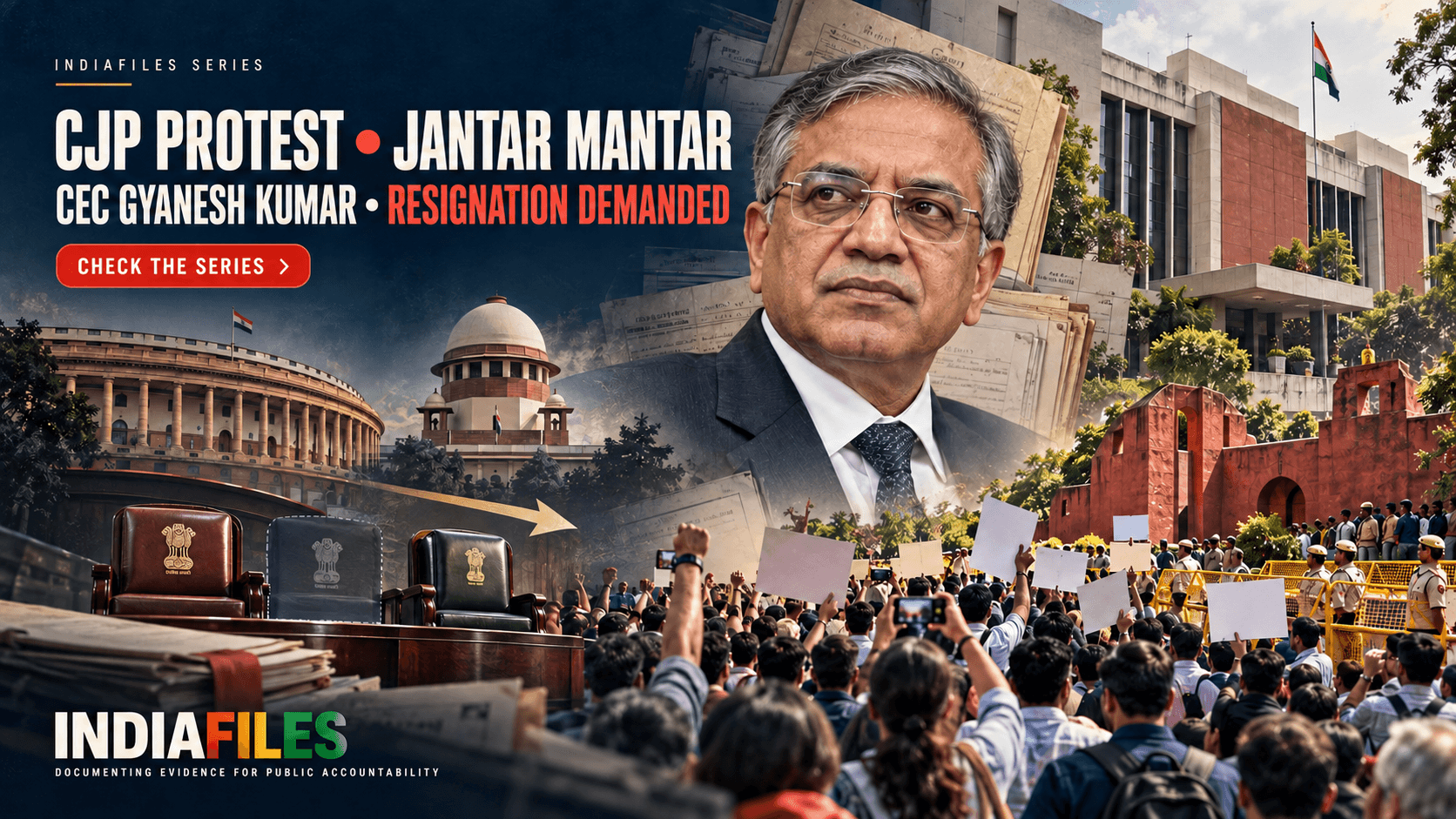
A 10 October reel shows a man repeatedly questioning Delhi Police over alleged assaults and harassment near the CJP protest. His questions highlight a real accountability test amid documented mass detentions, but the alleged attackers’ identities, police knowledge and response in this particular incident remain unverified.

Open Post: Delhi protester questions police over alleged attacks on 10 October: What officers’ response and the wider crackdown show

In a 21 July reel, a speaker at Delhi’s Jantar Mantar condemned police force against demonstrators and questioned India’s democratic accountability. The remarks followed reported clashes over NEET exam irregularities and raise a concrete question: when do public-order controls cross into unjust suppression of peaceful dissent?

Open Post: At Jantar Mantar, a protester’s warning about democracy reflects the July police clashes and the right to dissent

Former J&K Governor Satya Pal Malik alleges the CRPF was denied aircraft before the 2019 Pulwama attack and he was asked to stay quiet about lapses. NIA and CRPF investigations did take place, but the public record leaves important questions about transport decisions and responsibility.

Open Post: Pulwama: Satya Pal Malik’s aircraft and silence allegations, and what the investigations actually found

Amit Shah was required to stay outside Gujarat after receiving bail in the Sohrabuddin Sheikh case in 2010. Court records explain the order, his 2014 discharge and why allegations about Judge B. H. Loya’s death must not be treated as proven.

Open Post: Why Amit Shah Was Called ‘Tadipar’: The Gujarat Restriction, Sohrabuddin Case and Judge Loya Claims

A Hindi reel argues that priests turned fear of hell, hope of heaven and offerings into a business. Historical and cross-cultural research supports examining fear, religious authority and material support—but not the claim that priesthood began as a single deliberate fraud.

Open Post: Did priests turn fear of God into a trade? What research says about religious authority and its origins

An Instagram reel shows a man confronting police and saying his father died after an hour-long VIP traffic hold-up. The claim's location, duration and connection to the death remain unverified, but documented ambulance stoppages show why emergency access must come before convoy convenience.

Open Post: Man Says His Father Died After Ambulance Was Held for a VIP Convoy: What the Reel Establishes and What Remains Unclear

A July Instagram reel contrasted Sky News’ reporting on Delhi’s Cockroach movement with Indian TV. The UK segment documented exam-leak anger and police action; evidence also shows serious shortcomings in some Indian channels’ later coverage, but the reel alone does not establish a complete July channel-by-channel comparison.

Open Post: Delhi’s July student protests on UK TV and Indian TV: What the contrasting coverage reveals

A reel attributed to former interim CBI chief M. Nageswara Rao alleges the Modi government changed the law to shield itself from future investigations. Section 17A really did place an approval barrier before certain corruption probes, and Supreme Court judges split over its validity in 2026. The claim about the government's motive remains unproven.

Open Post: The 2018 approval rule at the centre of claims that Modi weakened CBI independence

A reel shows an American officer welcoming children into his patrol car. For many in India, the contrast raises a harder question: why can approaching police feel risky rather than reassuring? Research on political pressure, corruption, police violence and reform failures shows why public confidence depends on fairness and accountability, not friendly gestures alone.

Open Post: Why Indian citizens may fear the police while children in a US park approach an officer without hesitation