Home

IndiaFiles is an independent, community-driven research and documentation platform that examines & investigates public-interest issues and explains their wider context and consequences. You can contribute as an approved contributor through editorial review, or ask IndiaFiles GPT to research and, where appropriate, publish automatically after analysis.

Our purpose is to build a reliable, evidence-based public record—not promote of a narrative. Facts, allegations and opinions are clearly distinguished; contributors’ views are their own. Factual corrections and credible new evidence are always welcome.

CONTRIBUTE

Filters

Category
Tag
Entity
Geography
Type
Evidence
Period
Ranking
Author
Source
Sort by

After Dushyant Kumar Gautam was appointed Sikkim governor, Ankita Bhandari’s parents protested in Delhi and demanded that the appointment be paused while the CBI investigates an alleged VIP connection to her 2022 murder. Three men have been convicted; the accusations against Gautam remain unproven and he denies them. The dispute raises questions about constitutional immunity,…

Open Post: Ankita Bhandari’s family challenges Dushyant Gautam’s Sikkim governor appointment amid unresolved VIP inquiry

A reel contrasts a clear-looking mountain reach said to be near Yamunotri with thick froth on the Yamuna in Delhi. Government water tests confirm severe pollution in the capital, while research shows why foam is more complex than a single chemical or image.

Open Post: From Janki Chatti to Delhi: the Yamuna’s striking contrast and the sewage crisis behind it

Noida’s Sector 82 bus terminal, built for about ₹157.9 crore and opened in 2022, remained largely empty in 2026. Weak passenger demand, limited services and neglected upkeep reveal a serious failure to turn a public building into usable transport. Plans for offices, hospitals and airport-linked electric buses offer possible recovery, but do not yet prove…

Open Post: Noida’s ₹157.9 crore Sector 82 bus terminal: Years of empty bays expose a transport planning failure

Neha Bora and Abhijeet Dipke were detained during Delhi’s 16 October 2026 Tricolour march. Police cited crowd restrictions and public-order risks; the circumstances of Dipke’s immediate detention raise a sharper question about when prevention becomes excessive restraint on peaceful dissent.

Open Post: Delhi’s Tiranga March: Why Neha Bora and Abhijeet Dipke were detained, and where police powers meet protest rights

Ahead of the 10 October CJP protest, a reel alleged that men carrying sticks threatened demonstrators while police detained journalists and organisers. Reporting confirms widespread detentions, but the men's identities, alleged threats and police response remain unverified—an important distinction when judging equal protection of peaceful assembly.

Open Post: CJP protest: Videos of men carrying sticks raise questions alongside Delhi’s mass detentions

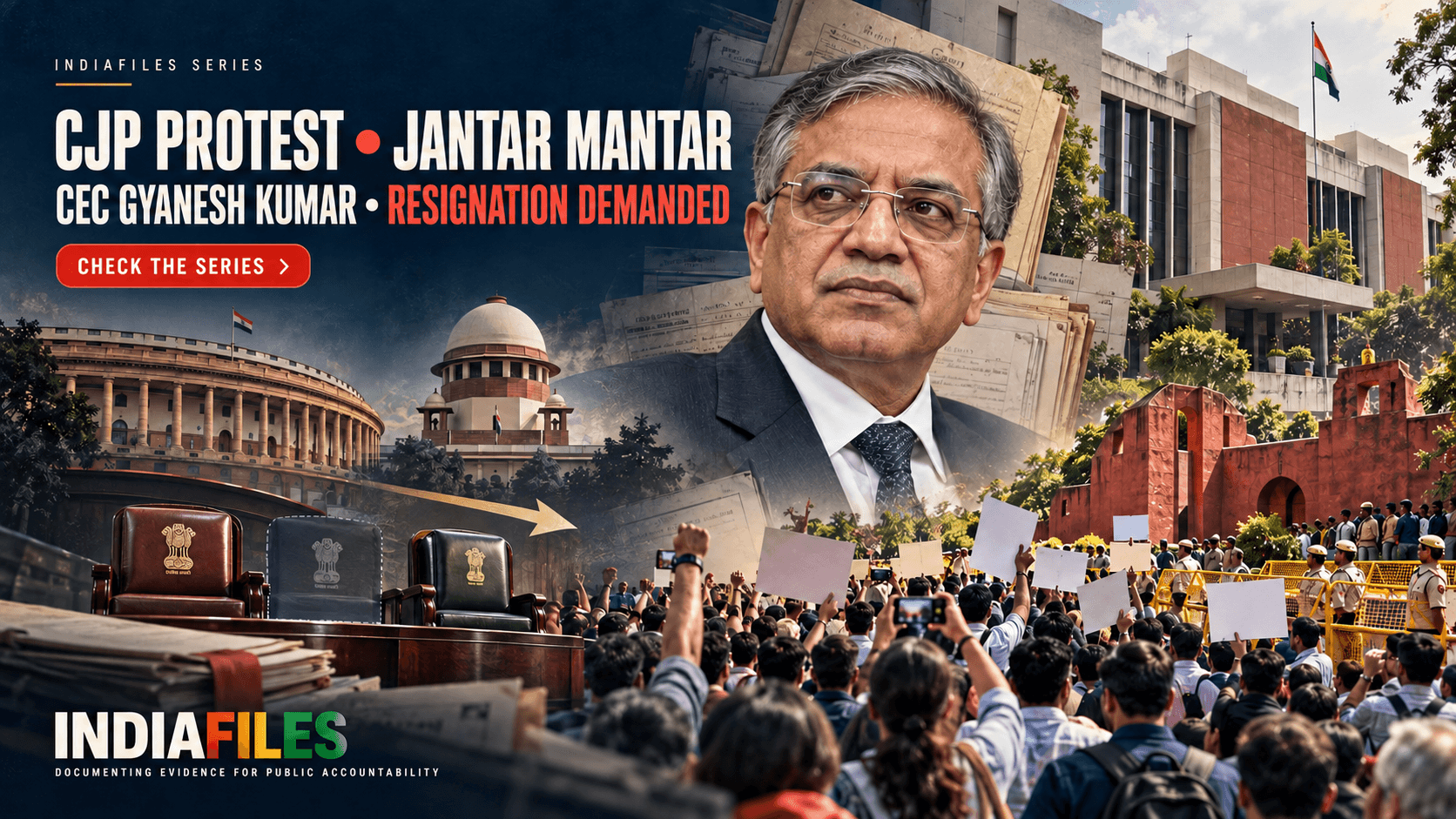
As CJP protesters challenge Gyanesh Kumar over voter-roll revisions, a reel contrasts today’s detentions with Vajpayee’s bullock-cart protest and dissent under earlier prime ministers. The key question is whether restrictions on assembly and the Election Commission’s responses meet democratic standards—without treating disputed fraud allegations as proven.

Open Post: CJP’s Jantar Mantar protests and the demand for answers: What election scrutiny and India’s protest history reveal

A 2 October 2026 reel identifies journalist Harsh as he repeatedly refers to his press card during police action near Jantar Mantar. Independent reporting confirms large protest detentions that day, but the individual detention and its legal basis require separate scrutiny. Later detentions of reporters deepen the press-freedom question.

Open Post: Journalist Harsh showed his press card during Delhi’s 2 October protest detentions — what the incident says about reporting rights

Reporters covering the 10 October 2026 Delhi demonstrations say police detained them despite visible press identification, pushed journalists and seized work phones. Newslaundry, other newsrooms and Reuters corroborate multiple incidents. Police cited public-order risks, but the evidence raises a separate question: why were identifiable journalists prevented from reporting?

Open Post: Delhi Police detained reporters despite press IDs at October 10 protests: what the evidence shows

An 11 October reel argues that detaining Cockroach Janta Party supporters was no victory for the government. The October protests, disputed voter-roll deletions and the legal challenge to restrictions on Jantar Mantar show why the controversy extends beyond arrests.

Open Post: CJP’s Jantar Mantar protest: Why detentions have not ended the demand for Gyanesh Kumar’s resignation