MAIN MENU

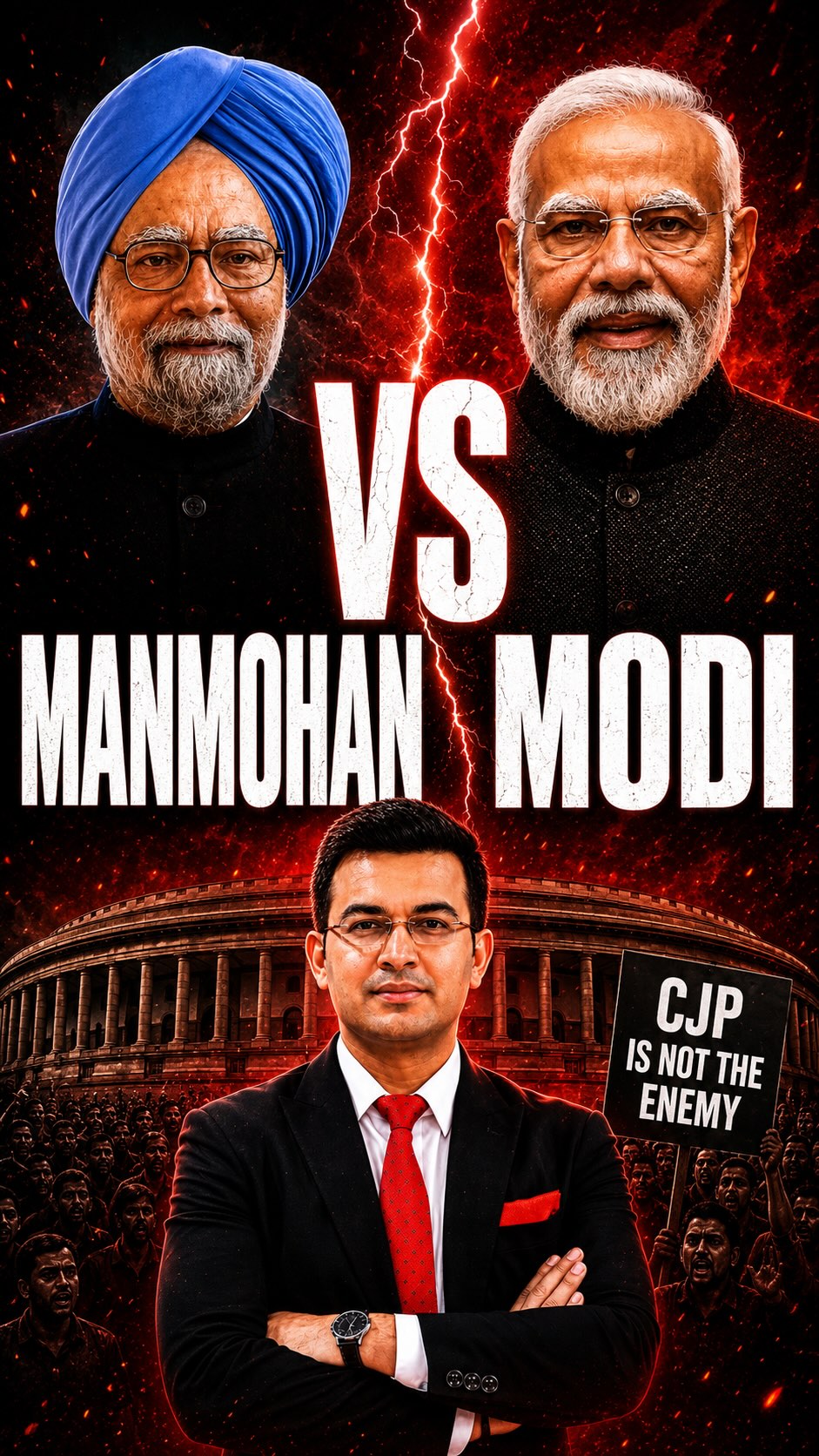
NEET 2026 protest pressure was followed by Modi’s response, Pradhan’s resignation and exam-reform steps
Shubhankar Mishra’s 20 July reel captured a real but time-bound criticism: at that point no direct public Modi response to the NEET-UG 2026 protest had been identified. Modi addressed the issue the next day inside the NDA parliamentary meeting and publicly announced fast-track courts on 23 July; Pradhan resigned on 25 July, an exam-reform task force followed, and later Supreme Court scrutiny extended to protest policing. The durable issue is the sequence of public accountability and institutional response, not a permanent “silent PM” claim or a like-for-like Manmohan Singh comparison.
The record is bigger than a “silent PM” reel
Shubhankar Mishra’s 20 July 2026 Instagram reel captured a real, time-specific accountability dispute during the NEET-UG 2026 paper-leak protests. The reel, captioned “Manmohan Singh vs Narendra Modi”, contrasted the two prime ministers and questioned why Narendra Modi had not directly addressed the agitation. The same-day long-form video made the broader argument explicit: the issue was not simply one politician’s communication style, but whether the head of government should answer publicly during a national student crisis.
The updated record shows that the “silence” criticism was not a durable description. It was true to the reel’s publication moment in the narrow sense that no direct public statement from Modi on the protests had yet been identified. But events changed quickly: on 21 July, a day after the Parliament march, Modi addressed the paper-leak issue at an NDA parliamentary meeting; Parliamentary Affairs Minister Kiren Rijiju publicly relayed his call for the strictest punishment and a “foolproof” examination system. On 23 July, Modi made a direct public statement announcing fast-track courts for paper-leak cases.
What the protest was about
The underlying crisis was independently established. The CBI registered a case in May 2026 over the alleged NEET-UG paper leak and later announced arrests of people it described as key accused in the leak. By July, the issue had become a broader student mobilisation over examination integrity, the treatment of protesters and political accountability. On 20 July, protesters marched from Jantar Mantar toward Parliament; clashes with police and the use of lathis and tear gas became part of the controversy.
This makes Mishra’s reel significant as a time-stamped intervention in a live accountability dispute, not as proof that one prime minister was categorically more democratic or responsive than another.
The Manmohan Singh comparison is illustrative, not like-for-like evidence
Mishra used Manmohan Singh as a contrast in political communication. There is historical evidence that Singh’s Prime Minister’s Office publicly appealed to protesting students during the 2006 anti-reservation agitation. But the 2006 agitation and the 2026 NEET paper-leak protests differed in cause, scale, institutions and political context. The comparison can illustrate different communication choices; it cannot by itself establish a general ranking of prime-ministerial accountability.
The reel’s associated criticism that Modi had held “zero press conferences” also needs literal qualification. Modi attended a BJP press conference in 2019 but did not take questions, and he has taken questions in joint press conferences abroad, including at the White House in 2023. The stronger, supportable criticism concerns his limited use of conventional unscripted domestic press conferences, not the claim that he has never appeared in any press-conference setting.
The government response accelerated after the July 20 march
The sequence after Mishra’s reel matters. On 21 July, Modi’s remarks at the NDA parliamentary meeting were reported publicly through Rijiju. On 23 July, Modi directly announced fast-track courts for paper-leak cases and said those who harmed young people’s futures would not be spared. On 25 July, Education Minister Dharmendra Pradhan resigned amid the protests. On 26 July, Modi announced a high-powered task force on examination reforms led by Nandan Nilekani.
By 28 August, the task force was formally inviting public suggestions on examination security, governance, technology, accessibility and student well-being. These developments make the original “silence” framing historically bounded: the more durable record is a sequence in which sustained protest, political pressure, criminal investigation and government action converged over exam-system credibility.
The accountability story continued beyond the minister’s resignation
The protests also produced a separate institutional question about policing and the treatment of demonstrators. By September, the Supreme Court was supervising a high-powered committee examining allegations of excessive force by police as well as alleged violence against security personnel during the July protests. That inquiry is not a finding of wrongdoing; it is evidence that the public-interest issue expanded beyond the paper leak itself into protest rights, policing and state accountability.
What the evidence supports — and what it does not
The evidence supports three conclusions. First, Mishra’s 20 July criticism captured a genuine moment before Modi’s first identified response to the agitation. Second, the criticism became outdated as a continuing claim within days, because Modi addressed the issue on 21 July and then publicly announced measures on 23 July. Third, the protest period was followed by a ministerial resignation, a reform task force and judicial scrutiny of protest policing, giving the episode wider archival significance than the original reel alone.
The evidence does not prove that Mishra’s reel caused any government action, that Modi’s earlier silence reflected a particular private motive, or that the Manmohan Singh and Modi episodes are directly comparable. The strongest public-interest finding is about timing and accountability: a large student protest over a verified exam-integrity crisis was met first by criticism of executive silence, then by increasingly direct political and institutional responses.
