MAIN MENU



Filters
Reporters covering the 10 October 2026 Delhi demonstrations say police detained them despite visible press identification, pushed journalists and seized work phones. Newslaundry, other newsrooms and Reuters corroborate multiple incidents. Police cited public-order risks, but the evidence raises a separate question: why were identifiable journalists prevented from reporting?
GEOGRPAHY : Delhi
TYPE : Analysis
EVIDENCE : Corroborated
PERIOD : 2026
UPDATED : 18 Oct 26 / 9:57 pm
No comments on Delhi Police detained reporters despite press IDs at October 10 protests: what the evidence shows
An 11 October reel argues that detaining Cockroach Janta Party supporters was no victory for the government. The October protests, disputed voter-roll deletions and the legal challenge to restrictions on Jantar Mantar show why the controversy extends beyond arrests.
Ahead of the 10 October 2026 Jantar Mantar protest, Delhi authorities restricted Metro access and cancelled many railway services. Subsequent court proceedings exposed the difference between planned closures and actual operations—and raised serious questions about whether security restrictions went too far.
GEOGRPAHY : Delhi
TYPE : Protest
EVIDENCE : Primary Source
PERIOD : 2026
UPDATED : 18 Oct 26 / 9:36 pm
A September 2026 protest clip accuses Chief Election Commissioner Gyanesh Kumar of escaping accountability while critics face action. India's 2023 law does protect commissioners over official acts, but allegations of vote theft are not proven by the speech. Appointment rules, voter-roll challenges and protest arrests reveal the wider accountability test.
A 9 October reel asks how Indians can exercise their right to protest when permission is refused even at designated venues. Delhi Police gave public-order reasons for rejecting a 10 October rally; the later closure of Jantar Mantar and Supreme Court scrutiny raise a harder question about whether workable space for dissent remains.
CJP’s 48-hour demand for Gyanesh Kumar’s resignation: Why the deadline passed but protests continued
Akash Banerjee’s satirical response questioned whether CJP understood the Chief Election Commissioner’s position. The deadline did not bring a resignation, but later protests, police detentions and opposition demands show that the accountability dispute continued.
ENTITIES : Abhijeet Dipke, Cockroach Janata Party (CJP), Election Commission of India, Gyanesh Kumar
GEOGRPAHY : India
EVIDENCE : Primary Source
PERIOD : 2026
UPDATED : 18 Oct 26 / 8:50 pm
Two Election Commissioners reportedly objected at least 14 times to voter-registration changes, centralised software controls and appeals against restored voters. The Election Commission says decisions were unanimous, but documented cases and subsequent corrections raise serious questions about lawful oversight and voters’ rights.
TYPE : Analysis
UPDATED : 18 Oct 26 / 8:25 pm
Rahul Gandhi’s August 2025 allegation of 1,00,250 suspect voter entries in Mahadevapura prompted a real ground check of 80 names at one tiny address. The findings expose voter-roll maintenance failures, but neither prove 1,00,250 fraudulent votes nor establish BJP–Election Commission collusion.
Two Election Commissioners reportedly objected at least 14 times to decisions involving voter registration, roll software and SIR. More than 13 crore draft-roll exclusions and problems restoring eligible voters show why collective oversight, transparent records and effective correction routes matter. The Election Commission disputes that its decisions lacked collective approval.
Author Series
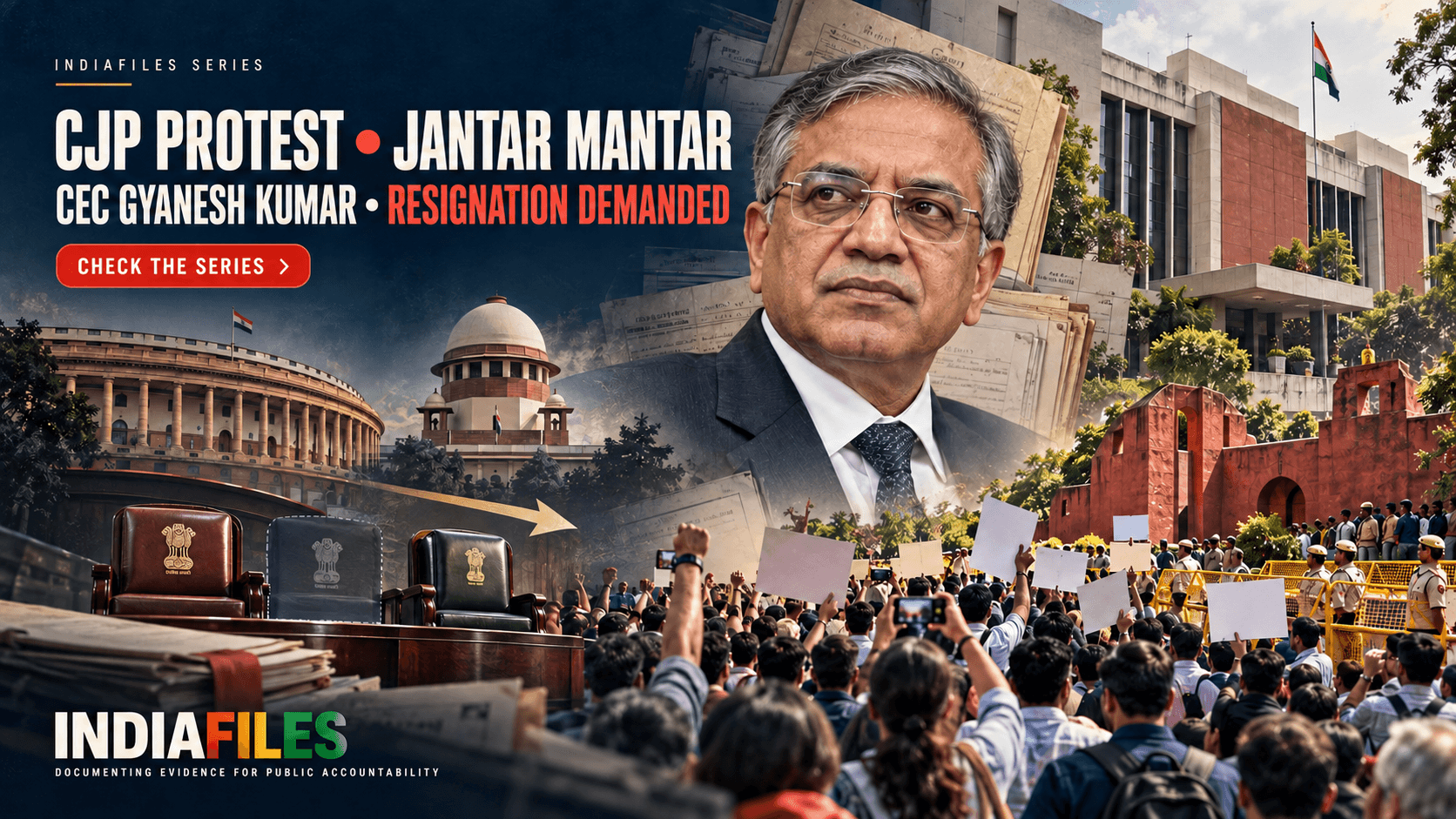
From the 2023 election-commissioner appointment and legal-protection framework to voter-roll disputes, Delhi's CJP protests, detentions, the Tiranga March and a London demonstration, these connected records examine electoral accountability and the treatment of peaceful dissent. Verified restrictions and reported internal objections do not by themselves prove deliberate vote theft or politically directed suppression.
TAGS : Police Accountability, Election Commission independence, Right to Peaceful Protest, Election integrity, Freedom of expression, election-commission, Press Freedom
ENTITIES : Gyanesh Kumar, Cockroach Janta Party (CJP), Delhi Police, Election Commission of India, Supreme Court of India
EVIDENCE : Partially Verified
RANKINGS : Featured
CHECKOUT : CJP (Cockroach Janta Party)
UPDATED : 21 Oct 26 / 12:10 pm