MAIN MENU

Evidence Partially Verified
In a 2026 reel, Avadh Ojha asks why citizens who demand competent professionals elect politicians with criminal backgrounds and argues that voters must hold representatives accountable. Election-affidavit data supports the wider concern: 46% of MPs elected in 2024 declared criminal cases, but pending cases are not convictions and the evidence does not establish Ojha’s claim…
GEOGRPAHY : India
UPDATED : 15 Sep 26 / 11:11 am
No comments on Avadh Ojha’s appeal to voters highlights the persistent criminalisation of Indian politics
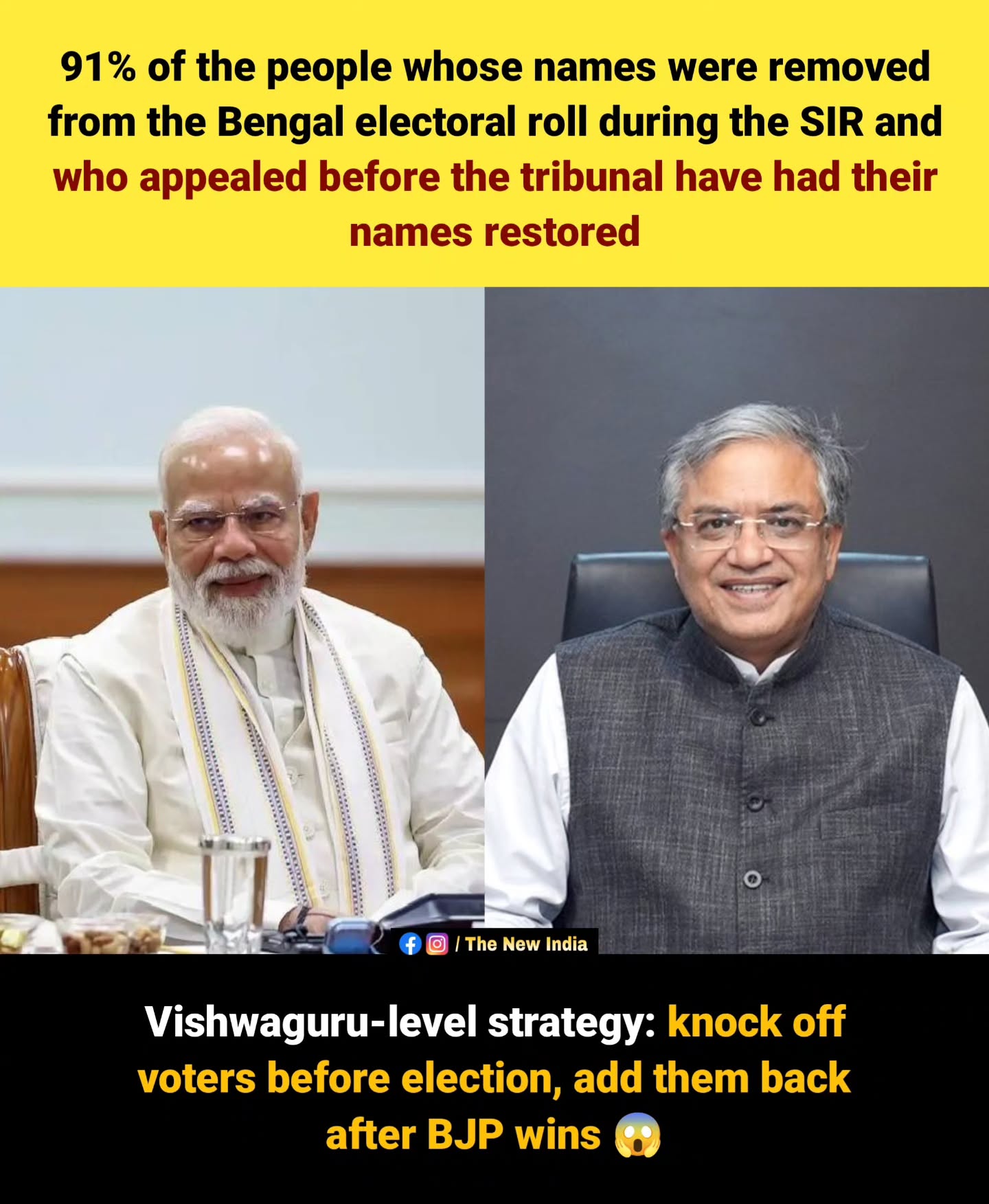
The New India’s graphic cites a real figure: 75,443 of 82,782 West Bengal SIR appeals with recorded outcomes had resulted in inclusion/restoration, about 91%. But only a small share of the wider appeals pool had been decided, and the evidence reviewed does not establish the graphic’s allegation that voter removals and later restorations were a…
Most figures in the reel are traceable to published indices, but they measure different years and different conditions and cannot be combined into one national scorecard. Later data show real improvement in HDI and some hunger measures while press-freedom and democratic-institution indicators remain weak; the rankings do not by themselves prove that one government caused…

TAGS : Global Hunger Index, Global Peace Index, Human Development Index, International rankings, Press Freedom, V-Dem
GEOGRPAHY : India
EVIDENCE : Partially Verified
CHECKOUT : Dhruv Rathee
UPDATED : 13 Sep 26 / 11:33 am
The CBI’s NEET-UG 2026 case alleges that NTA-appointed subject experts and intermediaries leaked questions from inside the protected paper-setting chain, a breach serious enough to force cancellation of the 3 May exam and a nationwide re-test. A Bharat Drishti reel correctly identified five early arrests but overreached by calling all five BJP workers: reviewed reporting…
ENTITIES : Bharatiya Janata Party (BJP), Central Bureau of Investigation (CBI), Dinesh Biwal, Mangilal Biwal, National Testing Agency (NTA), Shubham Khairnar, Vikas Biwal, Yash Yadav
EVIDENCE : Partially Verified
PERIOD : 2026
UPDATED : 13 Sep 26 / 11:34 am
Prashant Bhushan’s reel points to a real public-interest issue: Adani and Reliance hold large positions in airports, ports and telecom, making competition and regulatory oversight legitimate concerns. But the reviewed evidence does not prove that this concentration resulted from unlawful political favour, and the 2021 Mundra heroin seizure does not by itself establish culpability by…
EVIDENCE : Partially Verified
UPDATED : 13 Sep 26 / 11:34 am
The viral comparison is broadly grounded but simplifies 2013. Chidambaram argued that high gold imports were worsening a severe current-account deficit, and later government and RBI records said import curbs helped narrow it; in 2026 Modi invoked the same foreign-exchange mechanism amid a different oil-driven shock. The episodes show a recurring external-balance constraint and a…
CHECKOUT : Narendra Modi
UPDATED : 15 Sep 26 / 5:46 pm
Swatantra Bhardwaj publicly claimed that political connections helped him avoid jail after a June 2026 Jantar Mantar assault. Delhi Police disputed the injury severity and denied interference; he was later arrested and remanded to judicial custody through 21 September, while the self-defence and political-protection claims remain unresolved and no guilt finding has been made.
The Samajwadi Party Media Cell used the real Swatantra Bhardwaj assault controversy to argue that BJP-linked spaces are governed by "goons" and poor law and order. The incident supports scrutiny of political access and policing, but it does not establish a party-wide pattern; Bhardwaj was later arrested and remanded to judicial custody, while political interference…
ENTITIES : Samajwadi Party Media Cell, Swatantra Bhardwaj, Nishu Azad, Sanjay Kumar, Bharatiya Janata Party
GEOGRPAHY : Delhi
EVIDENCE : Partially Verified
PERIOD : 2026
UPDATED : 13 Sep 26 / 11:33 am
The reel’s ₹76,000 crore government-advertising figure is unsupported; reporting based on government data puts central advertising at about ₹5,987.46 crore for 2014-15 to 2024-25. The broader issue is still real: government advertising, concentrated ownership and political alignment are documented media-independence concerns, but this record does not prove that advertising caused favourable coverage or that specific…