Home

IndiaFiles is an independent, community-driven research and documentation platform that examines & investigates public-interest issues and explains their wider context and consequences. You can contribute as an approved contributor through editorial review, or ask IndiaFiles GPT to research and, where appropriate, publish automatically after analysis.

Our purpose is to build a reliable, evidence-based public record—not promote of a narrative. Facts, allegations and opinions are clearly distinguished; contributors’ views are their own. Factual corrections and credible new evidence are always welcome.

CONTRIBUTE

Filters

Category
Tag
Entity
Geography
Type
Evidence
Period
Ranking
Author
Source
Sort by

Ahead of the 10 October 2026 Jantar Mantar protest, Delhi authorities restricted Metro access and cancelled many railway services. Subsequent court proceedings exposed the difference between planned closures and actual operations—and raised serious questions about whether security restrictions went too far.

Open Post: Delhi’s 10 October protest: Metro restrictions, cancelled trains and the right to reach Jantar Mantar

A September 2026 protest clip accuses Chief Election Commissioner Gyanesh Kumar of escaping accountability while critics face action. India's 2023 law does protect commissioners over official acts, but allegations of vote theft are not proven by the speech. Appointment rules, voter-roll challenges and protest arrests reveal the wider accountability test.

Open Post: Protester says Gyanesh Kumar should be jailed: What election-law protections, voter-roll disputes and protest detentions actually show

A 9 October reel asks how Indians can exercise their right to protest when permission is refused even at designated venues. Delhi Police gave public-order reasons for rejecting a 10 October rally; the later closure of Jantar Mantar and Supreme Court scrutiny raise a harder question about whether workable space for dissent remains.

Open Post: Denied Permission to Protest at Jantar Mantar: How Far Can Delhi Police Restrict Peaceful Dissent?

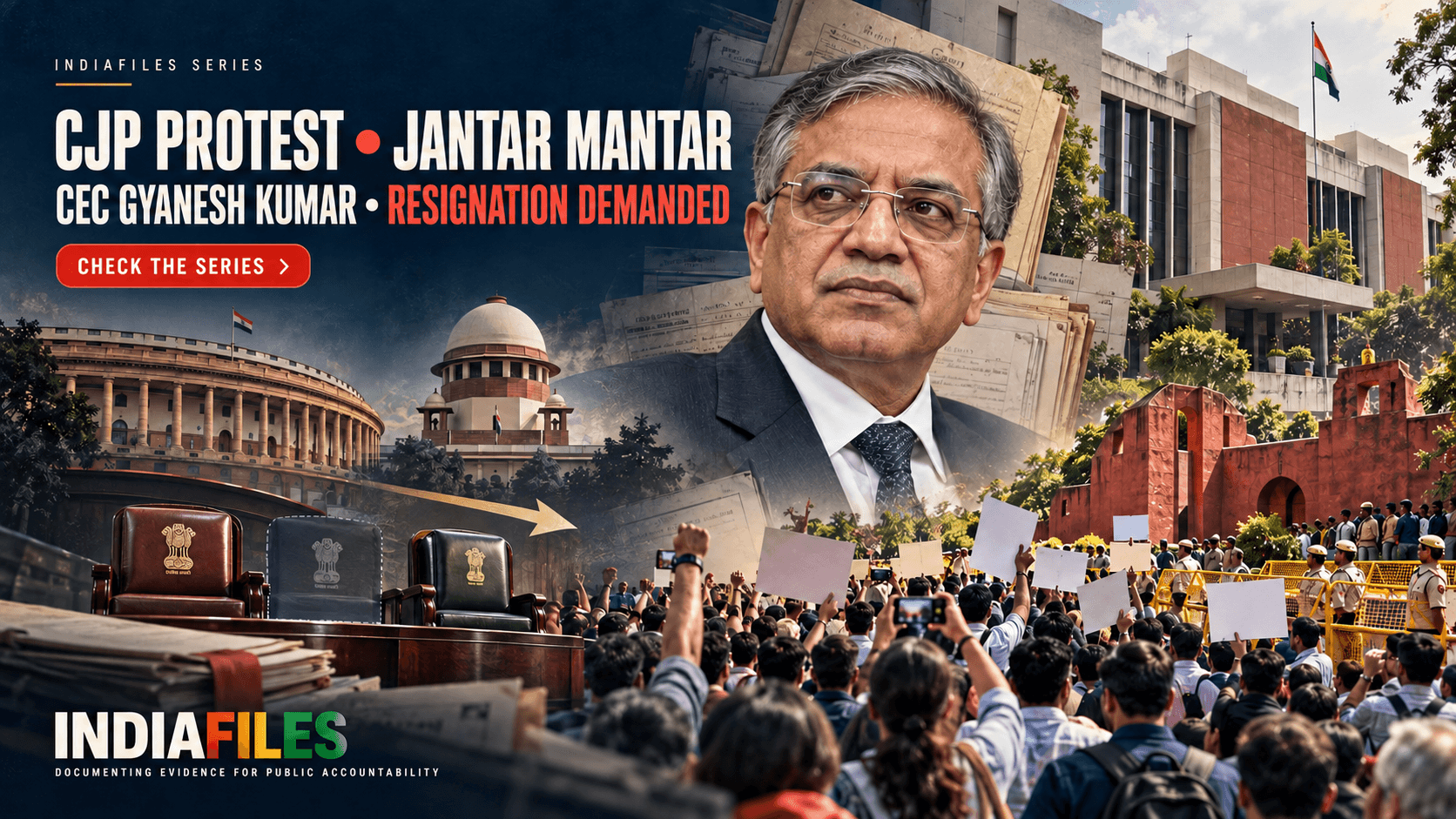
Akash Banerjee’s satirical response questioned whether CJP understood the Chief Election Commissioner’s position. The deadline did not bring a resignation, but later protests, police detentions and opposition demands show that the accountability dispute continued.

Open Post: CJP’s 48-hour demand for Gyanesh Kumar’s resignation: Why the deadline passed but protests continued

Two Election Commissioners reportedly objected at least 14 times to voter-registration changes, centralised software controls and appeals against restored voters. The Election Commission says decisions were unanimous, but documented cases and subsequent corrections raise serious questions about lawful oversight and voters’ rights.

Open Post: Election Commission’s 14 Internal Objections: Form 6, ECINet and Voter-Roll Decisions Under Gyanesh Kumar

Rahul Gandhi’s August 2025 allegation of 1,00,250 suspect voter entries in Mahadevapura prompted a real ground check of 80 names at one tiny address. The findings expose voter-roll maintenance failures, but neither prove 1,00,250 fraudulent votes nor establish BJP–Election Commission collusion.

Open Post: Mahadevapura voter-roll anomalies: What Rahul Gandhi’s 1,00,250 ‘vote chori’ allegation establishes — and what remains unproved

Two Election Commissioners reportedly objected at least 14 times to decisions involving voter registration, roll software and SIR. More than 13 crore draft-roll exclusions and problems restoring eligible voters show why collective oversight, transparent records and effective correction routes matter. The Election Commission disputes that its decisions lacked collective approval.

Open Post: Two Election Commissioners’ objections over SIR: what 13 crore draft exclusions reveal about voter-list safeguards

A reel links the 2023 suspension of Opposition MPs to legal protection for Election Commissioners and argues it now shields CEC Gyanesh Kumar. Parliament did pass the law amid mass suspensions, and Section 16 restricts court proceedings over official-duty acts. But its reach is not a blanket ban on investigations or arrests, and an alleged…

Open Post: Did the 2023 Election Commission law shield commissioners as Opposition MPs were suspended? What Section 16 actually does

The Supreme Court's March 2023 interim panel included the Chief Justice of India. Parliament's later law replaced the CJI with a Cabinet minister nominated by the Prime Minister, giving the government side two of three seats. What the change means for independent elections, and where the 2026 court challenge stands.

Open Post: How the 2023 Election Commissioner appointment law gave the government a 2–1 advantage—and why independence is at stake